Well Water Smells Like Sewage or Fish? Causes
Raleigh Water Pros • September 26, 2026 • 10 min read
You turn on the bathroom tap and get a smell like a drain. Or the kitchen sink smells faintly of fish, or the shower smells swampy and stale. On a private well, a smell like that is unnerving, because the first thought is that something has got into the water you drink.
Sometimes it has. More often it has not, and the smell is coming from the drain under the tap or from the water heater. Well water that smells like sewage or fish has a short list of causes, and a thirty-second test at the sink tells you which half of the list you are on.
If the smell is plainly rotten eggs, that is hydrogen sulfide and it has two guides of its own: why well water smells like rotten eggs and, if only the hot water smells, rotten egg smell only in hot water. This post covers the other odours: sewage, fishy, musty and earthy, and how each is traced and fixed.
Where Is the Smell Actually Coming From?
Start by finding out whether the smell is in the water or in the drain, because the drain is the most common answer. University of Georgia Extension gives the test: “Fill a glass with water from the sink that has the smell, then step away from the sink and swirl the water around inside the glass few times. If the problem is in the drain, the tap water in the glass should not have an odor” (UGA Extension, Circular 1016).
Two more checks narrow it down. Is it hot water only, or hot and cold? And is it one tap or every tap? UGA’s rule of thumb: “If odor occurs in all water faucets, the problem is probably in the main water supply. If it occurs only in certain faucets, the problem is likely in the fixtures or pipes supplying those specific faucets.”
| What the tests show | Most likely source | First step |
|---|---|---|
| Glass smells clean away from the sink | The drain | Clean the drain and trap |
| Hot water only, every tap | The water heater | See the hot-water guide |
| Hot and cold, every tap | The well or the water supply line | Bacteria test |
| One tap only, glass smells | That tap’s fixture or line | Flush and clean the fixture |
| Smell plus foaming or a soapy odour | Possible sewage system leakage | County health department, then a bacteria and nitrate test |
Not sure which row you are in? Request a free consultation and we test first, then quote in writing.
Why Does My Well Water Smell Like Sewage?
The four usual causes are a dirty drain, bacteria in the water heater, bacteria in the well, and, least often but most seriously, a nearby sewage system. They are in roughly that order of likelihood, and the glass test above rules out the first.
The drain. UGA explains that hair, soap and food waste build up on drain walls and “serve as a food for bacteria to grow.” The gas rises out of the drain and you smell it at the tap. A glass of the same water smells of nothing.
The water heater. “Bacteria growing in the water heater can also produce a rotten egg or sewage smell,” UGA says, especially “if the hot water is unused, if the water heater is turned off for a significant period of time or if the thermostat on the heater is set too low.” If the cold water is clean, this is your answer.
Bacteria in the well. When hot and cold both smell at every tap, the source is upstream of the house. UGA’s remedy for well bacteria is to “shock chlorinate the well and pump out water until the chlorine odor disappears.” A persistent smell in a well that keeps coming back usually has a way in, such as a damaged cap or cracked casing, and NC DHHS names cracked or unsealed wells as a route for bacteria (NC DHHS coliform fact sheet).
A nearby septic system. UGA lists “detergent odor or foaming water” as the sign of leakage into a water supply, and its advice for a sewage smell with a nearby system is blunt: “A defective or improperly located septic system may be present near your well. Contact your county health department.” North Carolina sets a minimum 100 feet between a well and a sewage disposal system, reducible to 50 feet on a restricted single-family lot (NCDHHS private wells FAQ). Some counties with their own local well rules may enforce their own setbacks. Those repairs are for a septic contractor; we do not work on them.
Why Does My Well Water Smell Fishy?
Most fishy, musty or earthy smells come from decaying organic matter, and the most common place for it is, again, the drain. UGA groups these odours together and says: “By far, the most common cause of this type of problem is the decaying organic matter deposited over time in the drain.”
When the glass test says the water itself smells fishy, two causes are worth checking.
Organic matter in the water. Shallow wells and wells in low, wet ground carry more dissolved organic material, which can give a musty or earthy edge. Yellow colour alongside the smell points toward tannins, covered in our guide to tannins and yellow well water.
A tannin system that needs cleaning. If you already have an anion exchange unit for tannins, a fishy smell is the classic sign it is overdue. The Water Systems Council’s wellcare sheet says that when cleaning is needed “the water will have a ‘fishy’ odor caused by the fouled anion resin” (Water Systems Council, Tannins and Well Water). That is maintenance, not a new problem.
Pro tip: smell the cold water from an outside spigot that feeds straight from the pressure tank, before any filter, softener or water heater. If that water is clean and the kitchen tap is not, the smell is being created inside the house, and treating the well will not touch it.
Is Well Water That Smells Like Sewage Safe to Drink?
You cannot tell from the smell, so if the water itself smells of sewage, use another source for drinking and cooking until a bacteria test comes back. The EPA treats odour as a secondary, non-enforceable standard at 3 threshold odour number, covering “rotten-egg, musty or chemical” smells (EPA secondary standards). A drain smell is a nuisance. A sewage smell in the water itself is a reason to test.
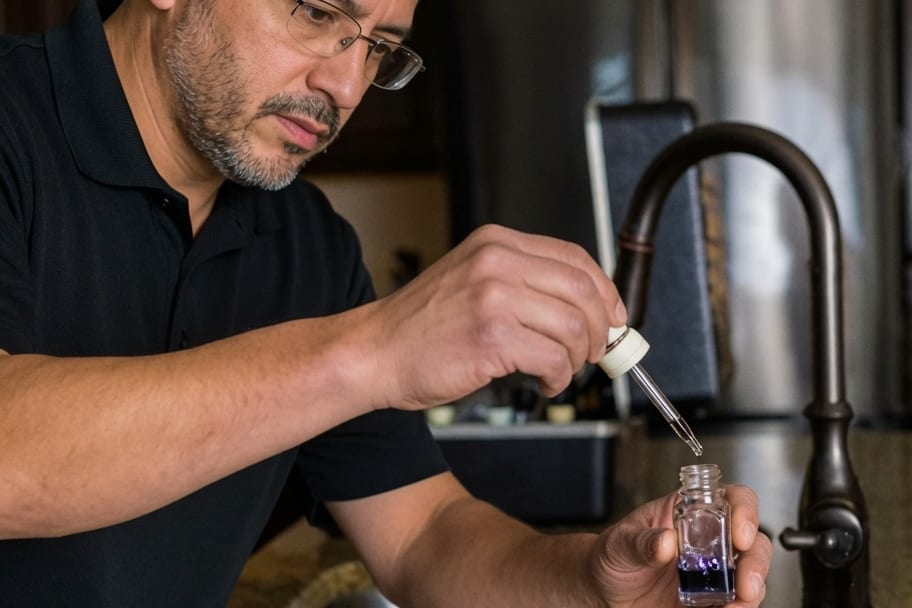
Two tests matter most. A total coliform and E. coli test tells you whether bacteria are in the water, and a nitrate test is the usual companion where sewage is a possibility. NC DHHS publishes a fact sheet on nitrate in private wells if your result comes back high. If the coliform result is positive, our guide to what happens after a coliform positive well test walks through North Carolina’s disinfection procedure and retest timing, and our water testing and analysis page covers how to order the tests.
A specific health question goes to your doctor or your county health department, not a water treatment company.
How Do You Fix Well Water That Smells Like Sewage?
You fix the source first, then decide whether the water needs treatment at all. Most of these smells need no equipment.
Drain smells are a cleaning job on the drain and trap.
Water heater smells are handled at the heater, often by flushing it or changing the anode rod, covered in our hot-water guide.
Bacteria in the well start with shock chlorination under the state procedure and a retest. If the well has a physical entry point, a certified well contractor fixes the cap, seal or casing. That order matters: treating the water while contamination is still getting in is paying for a symptom.
A leaking sewage system is a county health department and contractor matter before it is a water treatment one.
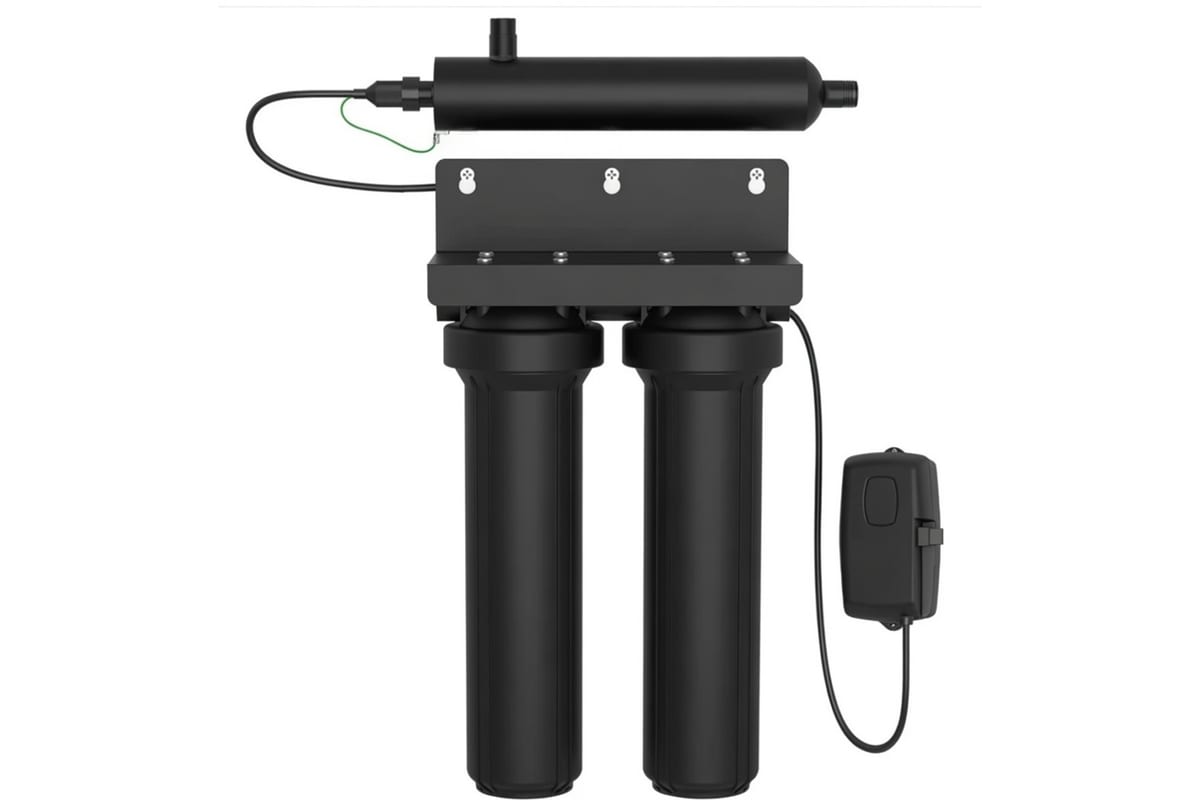
Recurring bacteria after the entry point is fixed is where continuous disinfection comes in. A UV system treats every gallon as it passes and runs $700 to $1,500 installed on the band in our Raleigh water filtration cost guide. That is a planning range, not a quote. Our UV water purification page covers what UV needs ahead of it to work.
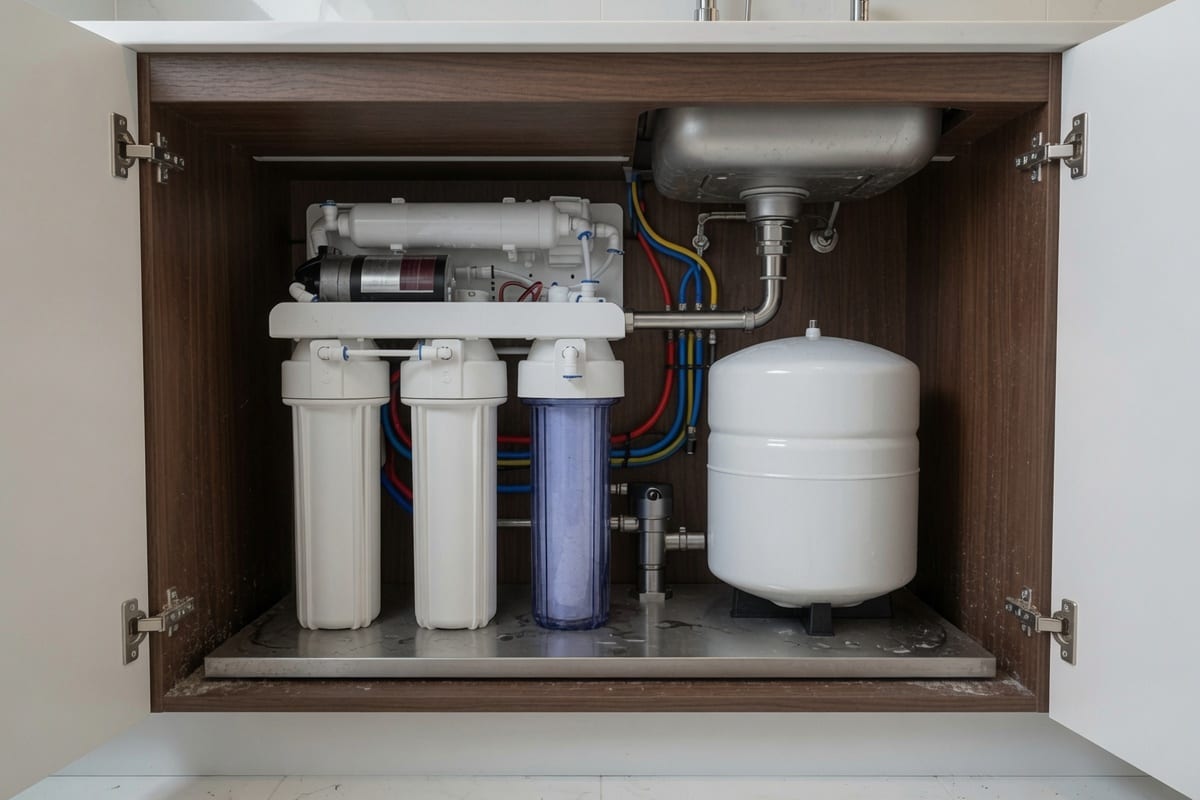
Musty or earthy smells that are truly in the water respond to activated carbon, and UGA lists “an activated carbon filter OR an automatic chlorinator followed by an activated carbon filter” as the remedy. Our well water treatment page covers how those fit on a well line.
Frequently Asked Questions
Why does my well water smell like sewage only in one bathroom?
A smell in one room points to that room’s drain or fixture, not the well. Run the glass test at that sink. If the glass smells clean, clean the drain and trap, and if the room is rarely used, running the tap to refill the trap often fixes it.
Can a nearby sewage system make well water smell?
It can. UGA names foaming or a detergent-like odour as the sign of leakage into a water supply, and advises contacting your county health department. For a well on the rural edge of Knightdale or Wake Forest, that is Wake County’s environmental services office.
Does shock chlorination get rid of a sewage smell?
If bacteria in the well are the cause, it often does, at least for a while. If the smell returns within weeks, something is letting contamination in, and that needs a well contractor before any more chlorine or any equipment.
Why does my well water smell fishy after my tannin system regenerates?
A fishy smell is a known sign that an anion resin used for tannins is fouled and needs cleaning. It is a maintenance issue on the unit rather than a new water problem.
Will a UV system remove a sewage smell?
No. UV kills bacteria as water passes the lamp but does not remove odour. It belongs after the source is fixed, as protection against bacteria returning, and it is priced at $700 to $1,500 installed on our cost band.
Who should I call first about a sewage smell in my well water?
If the glass test says the water itself smells, call your county health department for a bacteria and nitrate test first, since they also handle on-site sewage questions. For a well outside Garner or elsewhere in Wake County, that is Wake County’s environmental services office. Once results are back, you can book a free consultation to decide whether any treatment is needed.
Sources
- UGA Cooperative Extension, Circular 1016, Your Household Water Quality: Odors in Your Water, last reviewed 7 October 2024: the glass test, drain and water heater causes, septic signs and remedies.
- Water Systems Council, wellcare sheet: Tannins and Well Water, observed 26 September 2026: fishy odour from fouled anion resin.
- NC DHHS, Protect Yourself from Coliform Bacteria in Well Water, Private Well Water Fact Sheet 3: cracked or unsealed wells as a route for bacteria.
- NCDHHS, Private Wells Frequently Asked Questions, January 2015: the 100-foot well to septic setback.
- EPA, Secondary Drinking Water Standards, observed 26 September 2026: odour at 3 TON, not enforced.
Getting a Sewage or Fishy Smell Out of Your Well Water
A bad smell at the tap is a location problem before it is a water problem. Find out whether it is the drain, the heater, the well or something nearby, test for bacteria if it is the water itself, fix the source, and only then decide whether equipment is needed.
We test, size and install well water treatment and UV disinfection across Raleigh, Knightdale, Wake Forest, Garner and Clayton, and we read the water before quoting anything. Well repairs stay with your well contractor, and sewage system work with the right contractor.
Call (984) 384-6991 or schedule a free consultation for an up-front written price on well water that smells like sewage or fish.