Iron Filter vs Water Softener: Which Removes Iron?
Raleigh Water Pros • September 20, 2026 • 10 min read
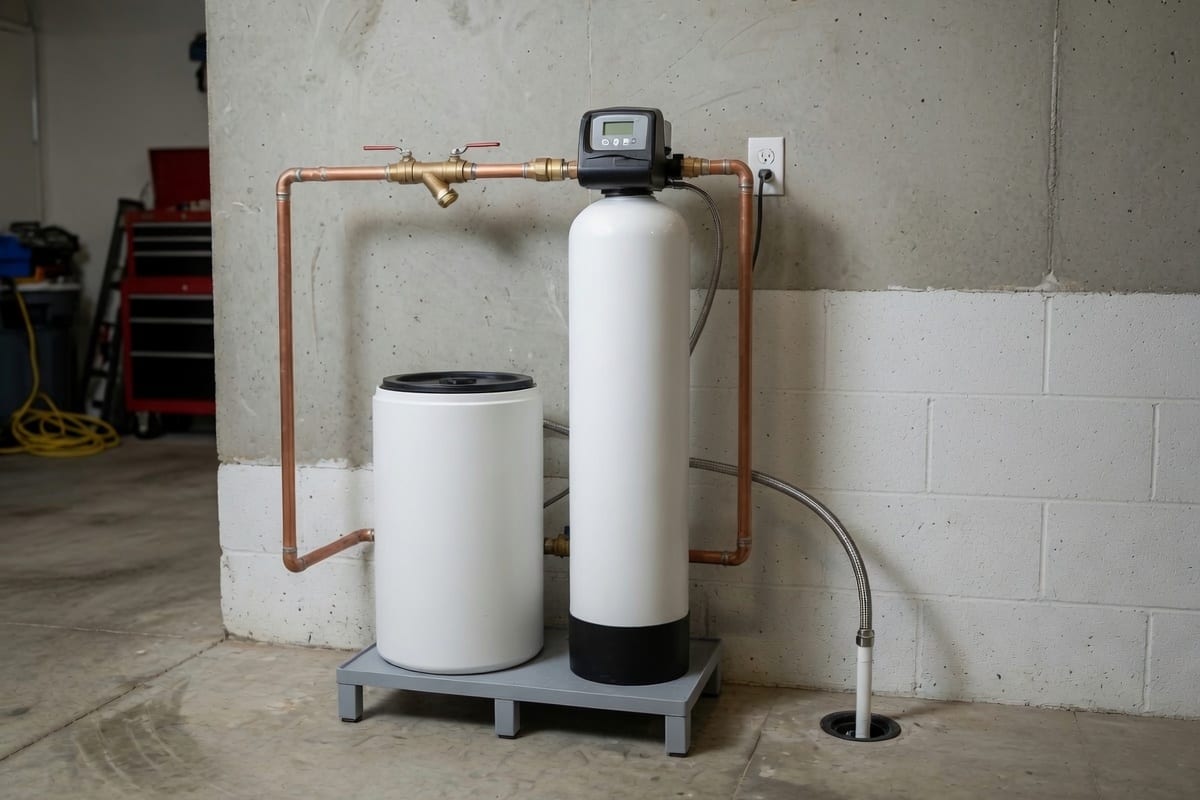
Orange rings in the toilet tank, rust staining down the tub, and a water softener already sitting in the garage doing nothing about either. That combination turns up in well houses all over the rural Triangle, and it almost always means one machine was bought for a job a different machine does.
The iron filter vs water softener question has a clean technical answer, and a lot of pages soften it because the softer version sells more softeners. A softener does pull a small amount of one specific form of iron out of your water, and it pays for that with its own life. An iron filter is built for iron and is the right tool past a fairly low threshold.
Below: how to tell which form of iron you have, what each machine does, where iron bacteria fit, what to do when hardness and iron arrive together, and whether a resin cleaner rescues a fouled softener.
Does a water softener remove iron from well water?
A water softener removes dissolved iron, in small amounts, and then it starts to foul. It is an ion exchange machine, not a filter. Water passes through a bed of resin beads loaded with sodium, the beads grab positively charged minerals and release sodium in their place, and a brine rinse strips the collected minerals off during regeneration. Dissolved iron carries a positive charge, so the resin grabs it the same way it grabs calcium and magnesium.
That works right up until the iron stops staying dissolved. Penn State Extension sets the boundary explicitly: a softener is recommended for iron only where pH is above 6.7, hardness sits between 3 and 20 grains per gallon, and dissolved iron is under 5 mg/L. It is blunt about what happens past that line: “Oxidized forms of iron and manganese will foul the softener resin. Thus, it is critical that the raw water not come in contact with any oxidizing agents like air or chlorine before entering the softener.”
Fouling is gradual rather than dramatic. Iron coats the beads, sites that used to exchange hardness stop exchanging anything, capacity falls, regeneration comes more often, salt use climbs, and hard water eventually breaks through between cycles. What you bought was a shorter softener life.
Manufacturers do publish a maximum clear-water iron rating per model, and those ratings vary widely. Treat them as what they are: a performance claim for that machine on a known feed water, verified under NSF/ANSI 44, the residential softener standard, which covers “reduction of hardness and specific contaminants from a known quality source.” A rating is not a physical constant, and not a promise about your well.
For scale, the EPA’s secondary standard for iron is 0.3 mg/L, a non-enforceable aesthetic guideline set where “rusty color; sediment; metallic taste; reddish or orange staining” begin.
Clear-water iron or red-water iron? The twenty-minute glass test
Fill a clear glass from a cold tap, set it on the counter, and look again twenty minutes later. That one observation tells you which machine is even in the conversation.
| What you see | What it is | What treats it |
|---|---|---|
| Clear from the tap, orange particles settle as it stands | Ferrous, or clear-water iron. Still dissolved | A softener takes a little. An iron filter takes all of it |
| Orange, red or yellow the moment it leaves the tap | Ferric, or red-water iron. Already oxidised | Filtration only. A softener fouls fast |
| Rusty, yellow or grey slime in the tank or well cap | Iron bacteria. A living biofilm | Neither machine. See below |
| Black staining alongside the orange | Manganese as well | Media rated for both, sized on a test |
Minnesota’s health department draws the line in the same words: ferrous iron means “water comes out of the faucet clear, but turns red or brown after standing,” while ferric iron means “water is red or yellow when it first comes out of the faucet.” Its treatment guidance puts softeners in the clear-water column only, and hands every bit of the red-water column to filters.
Want the exact number rather than a guess from a glass? Request a free consultation and we test the water first, then quote in writing.
Iron filter vs water softener, side by side
An iron filter works on the opposite principle. It oxidises dissolved iron on purpose, traps the resulting particle in a bed of media, and flushes the collected iron to drain on a backwash cycle. Oxidation is the step that ruins a softener and the step an iron filter is built around.
| Iron filter | Water softener | |
|---|---|---|
| How it works | Oxidises iron, filters the particle out | Ion exchange on the dissolved mineral |
| Clear-water (ferrous) iron | Yes, its main job | A little, then capacity falls away |
| Red-water (ferric) iron | Yes | No, and it fouls the resin |
| Hardness | No | Yes, this is what it is for |
| Iron bacteria | No | No |
| Hydrogen sulfide | Many units, same tank | No |
| Consumable | Media, on a long cycle | Salt, through the year |
| Installed range | $1,800 to $3,500 | $1,500 to $3,500 |
Both are planning ranges rather than quotes, from our water filtration cost guide for Raleigh. The left column is a combined iron and sulfur unit, usually what a Triangle well needs; the iron filter cost breakdown goes system by system.
Where do iron bacteria fit?
Neither machine is the answer to iron bacteria, because iron bacteria are not a mineral problem. They are a living biofilm growing in the well, the pump, the drop pipe and the plumbing, and they keep producing slime no matter what you bolt on downstream.
You recognise them by texture and smell rather than colour. Minnesota’s health department lists “sticky rusty, yellow, brown, or grey slime,” feathery growths, an oily rainbow sheen, and odors described as “swampy, oily or petroleum, cucumber, sewage, rotten vegetation, or musty.” The bacteria “are not known to cause disease,” but they “can create conditions where other disease-causing organisms may grow.”
Its treatment list is physical removal (pulling and scrubbing the pumping equipment and casing), chemical treatment, and shock chlorination. All of that happens at the well, and pulling the pump is a well contractor’s job. Iron and sulfur removal earns its place afterwards.
Pro tip: If the slime smells like cucumber or swamp rather than rotten eggs, stop shopping for filters and get the well looked at first. An iron filter installed ahead of untreated iron bacteria just hands the biofilm a warm tank and a fresh media bed to colonise.
What if you have both hardness and iron?
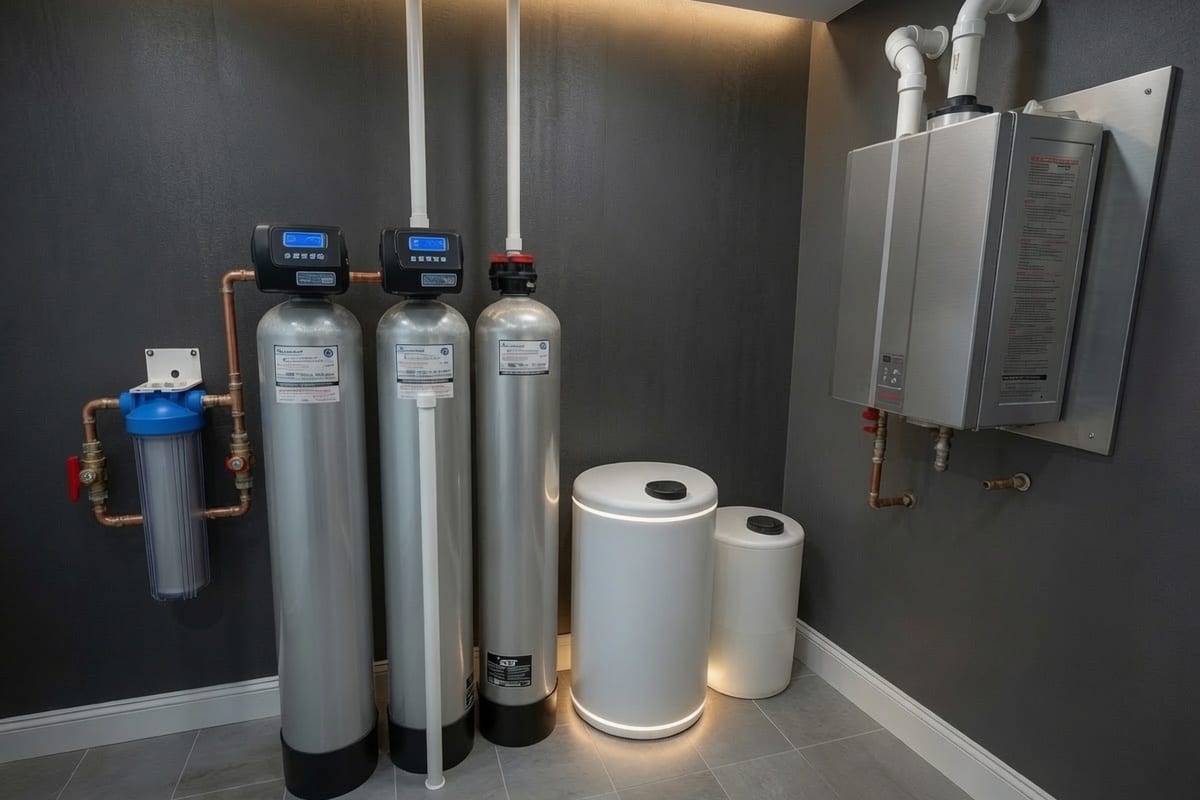
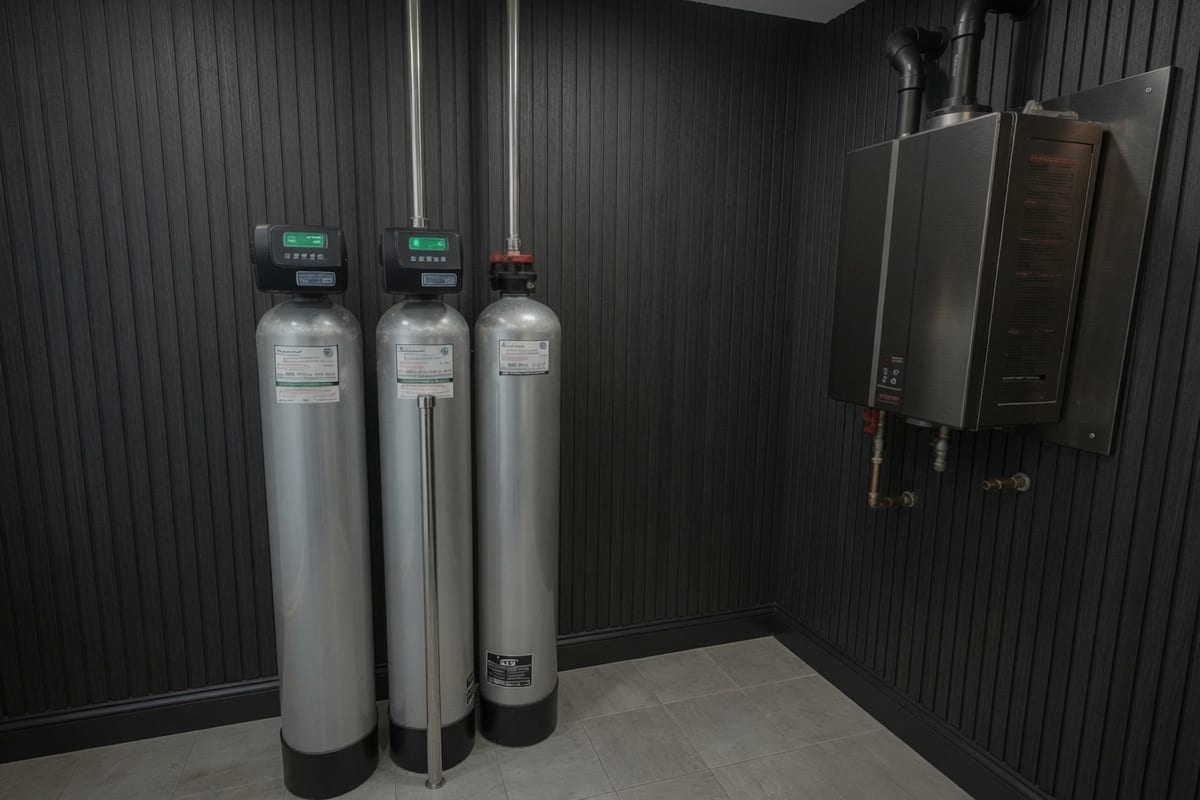
Then you need both machines, in that order: iron out first, softener second. It follows from the chemistry above. A softener sitting on raw well water with meaningful iron in it is being slowly wrecked. Put the iron filter upstream, let it oxidise and strip the iron, and the softener gets the clean feed water its capacity rating assumes.
That sequencing is the most common mis-specification we see on wells around Fuquay-Varina, Holly Springs and Clayton: a softener sold alone into a well that needed iron treatment first, replaced a few years later, same mistake repeated.
Now the hardness half, honestly. North Carolina publishes no private well hardness dataset, so nobody can tell you what your well runs before it is measured. Private wells around the Triangle commonly run far harder than city water, though we have no representative dataset behind that, and yours could land anywhere. The reason no dataset exists is in the statute: the panel the state requires on a newly constructed private well covers iron, manganese, lead, copper, nitrate, sodium, pH and bacterial indicators among others (G.S. 87-97). Iron is on that list. Hardness is not. Measure it.
A full well water system combining iron treatment, softening and whatever else the test turns up runs $4,000 to $8,000 or more installed, again as a planning range.
Can a resin cleaner save a fouled softener?
Partly, and only sometimes. Resin cleaners are reducing agents dosed into the brine tank or blended into the salt. They dissolve iron plated onto the beads so the next regeneration carries it to drain, and on a softener caught early they recover a useful share of lost capacity.
What they cannot do is undo the rest. Beads coated long enough lose physical condition as well as exchange sites, and no rinse puts that back. A cleaner also does nothing about the iron still arriving every time the pump runs, so the clock restarts the moment you stop dosing. Behind a properly sized iron filter, a resin cleaner is sensible maintenance. Instead of the iron filter, it is a subscription to the same problem. Try it first if the softener is burning extra salt, since it is cheap, but do not read a partial recovery as proof the softener can carry the iron.
Frequently Asked Questions
Will a water softener remove iron from well water?
Only dissolved, clear-water iron, and only at low concentration. Penn State Extension puts the ceiling for recommending a softener at under 5 mg/L of dissolved iron, with pH above 6.7. Above that, or with any iron already oxidised, the resin fouls and the softener loses capacity instead of clearing the staining.
How much iron can a water softener handle?
Manufacturers publish a maximum clear-water iron rating per model and those ratings differ widely, so the number that matters is on your own unit’s specification sheet. Even inside the rating, the iron is being taken by a machine not designed to release it cleanly, which is why an iron and sulfur removal system upstream lasts better.
Do I need both an iron filter and a water softener?
If your test shows meaningful iron and meaningful hardness, yes, because they do different jobs. Iron alone needs only a filter. Hardness alone needs only a softener, which is the situation on most city supplies in Wake County. Our post on whether a water softener is worth it in NC covers that split.
Which goes first, the iron filter or the softener?
The iron filter goes first, always. It removes the iron that would otherwise coat the resin, so the softener sees clean water and reaches the service life you paid for.
Will an iron filter fix orange slime in the toilet tank?
Not on its own, because slime points to iron bacteria rather than dissolved iron, and the biofilm lives in the well and the plumbing. Treat the well first, then filter the iron that remains. Well owners in Wake Forest and rural Garner see it most after a wet spring.
How do I find out how much iron is in my water?
A laboratory panel reporting milligrams per litre, because the glass test tells you the form of iron but never the concentration, and concentration sizes the equipment. Ask for iron, manganese, hardness, pH and hydrogen sulfide together. Our water testing service covers the set, and the water testing cost guide has what independent labs charge.
Sources
- Softener iron limits and resin fouling: Penn State Extension, Iron and Manganese in Private Water Systems.
- Ferrous and ferric definitions, treatment by form: Minnesota Department of Health, Iron in Well Water and Iron Bacteria in Well Water.
- Iron at 0.3 mg/L: US EPA Secondary Drinking Water Standards.
- Softener performance claims: NSF/ANSI 44 technical requirements.
- New-well testing panel: N.C.G.S. 87-97.
Get the iron question answered before you buy either machine
Iron is the well problem where the test genuinely decides the purchase. Form, concentration, pH and whether manganese or sulfur ride along all change the answer, and all are cheap to establish before anyone quotes equipment. We size and install iron treatment and water softener systems for well homes across Raleigh, Fuquay-Varina, Clayton and Wake Forest.
Start with a free consultation at the house. We test the water, show you the readings, and give an up-front written price for only what the numbers support. Call (984) 384-6991 or book your free consultation.