Well Water Filtration in Chatham County, NC (2026)
Raleigh Water Pros • September 26, 2026 • 9 min read
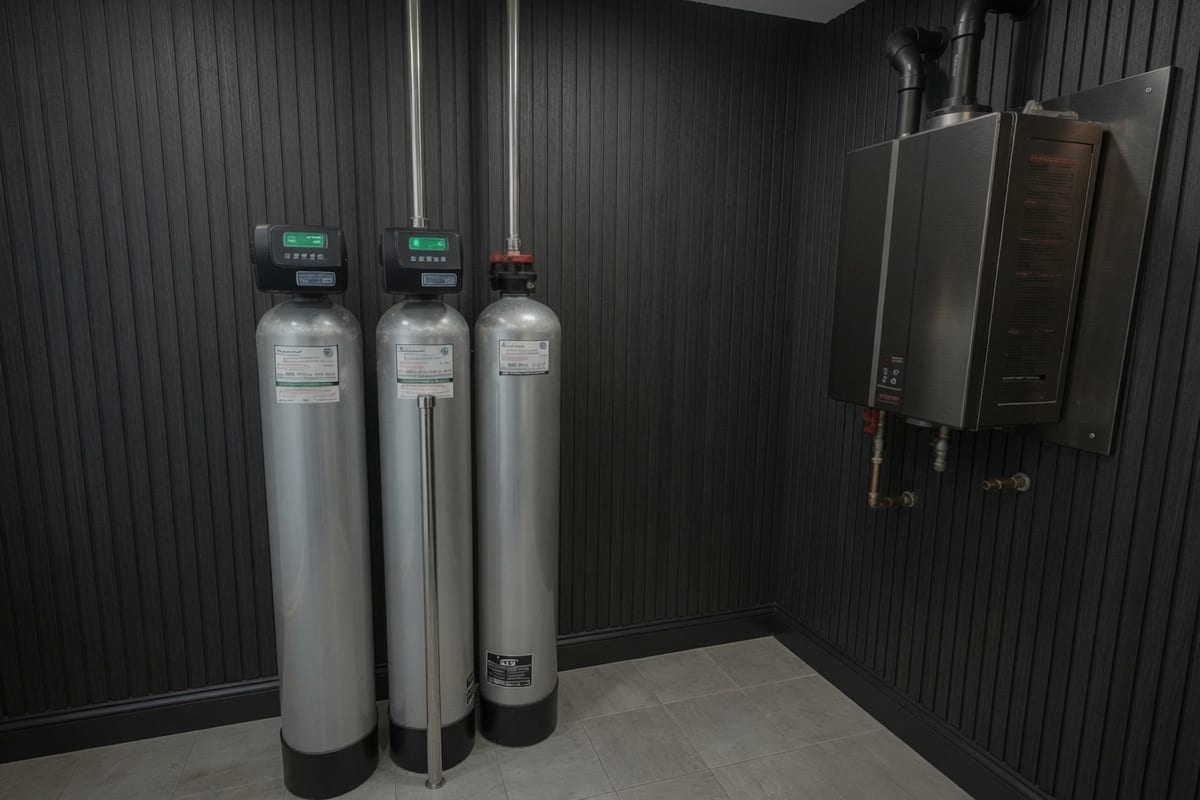
Chatham County has far more of its people on private water than Durham or Orange County. USGS figures for 2015 put about 41 percent of residents on self-supplied water, against about 27 percent in Orange County and about 8.5 percent in Durham. On private wells around Siler City, Goldston, Bynum and Moncure, nobody treats the water before it reaches the tap except the homeowner.
That makes well water filtration in Chatham County a different job from the town-water work around Pittsboro. No utility report describes your well, and the North Carolina Department of Health and Human Services is blunt about who is responsible: “it is the responsibility of the homeowner to monitor the quality of their private well water.”
Below: how to tell whether you are on a well or on TriRiver Water, what state lab data shows in Chatham wells, which filter fixes each problem, and what each costs.
Are you on a well or on TriRiver Water?
Check for a water bill. If one arrives from TriRiver Water or another water utility, this is not your post; if you pay no water bill to any utility, you are on a private well.
Chatham’s public water changed hands recently. Pittsboro merged its utility with Sanford’s on 1 July 2024 to form TriRiver Water, and Chatham County’s water system joined TriRiver on 1 July 2025. Neither the town nor the county runs its own water any more.
| Your supply | Who runs it | Source | Where to read next |
|---|---|---|---|
| Pittsboro town water | TriRiver Water, since 1 July 2024 | Haw River | Pittsboro water filtration cost and our 1,4-dioxane and PFAS in Pittsboro guide |
| Northern and eastern Chatham, including Carolina Meadows and Governors Village | TriRiver Water, Chatham County North, since 1 July 2025 | Jordan Lake, plus about 30 percent from Durham | TriRiver’s annual report |
| A private well anywhere in the county | You | Groundwater | This post |
Two current notes for Chatham County North customers, both dated. That district has been under Durham’s Stage 2 water restrictions since 15 June 2026, because about 30 percent of its water comes from Durham by contract. And on 24 September 2026 TriRiver reported a Jordan Lake algae bloom “causing an earthy taste and smell in the drinking water for some customers,” adding that “The water remains safe to drink and use.”
What is in Chatham County well water?
Manganese and iron most often, low pH in about one sample in ten, and the highest arsenic rate of the three counties around Chapel Hill and Durham.
The NCDHHS State Laboratory of Public Health summarised private well samples from Chatham County between 1998 and 2010:
| State lab result, Chatham County wells, 1998 to 2010 | Share of samples |
|---|---|
| Manganese above 0.05 mg/L | 32.71% of 1,544 |
| Iron above 0.3 mg/L | 21.38% of 1,539 |
| pH below 6.5 | 10.82% |
| Lead above 15 ug/L | 2.89% of 1,627 |
| Arsenic above 10 ug/L | 2.20% of 1,547, maximum 127 ug/L |
These are samples homeowners chose to send to the state lab, not a random survey of wells, so treat them as a picture of what turns up rather than odds for your own well. Still, the pattern matches neighbouring Durham and Orange: manganese is the most common finding in all three counties.
Arsenic is where Chatham stands out. Its 2.20 percent rate and 127 ug/L maximum are the highest of the three. Parts of the county sit in the Sanford sub-basin of the Deep River Triassic basin, where NC DEQ notes that “Water well yields are typically very low, and many dry holes have been drilled.” Low yield matters to filtration too, because a backwashing filter needs enough flow to clean itself.
Want your own numbers instead of county odds? Request a free consultation and we measure your well water first, then quote in writing.
How do you filter a Chatham County well?
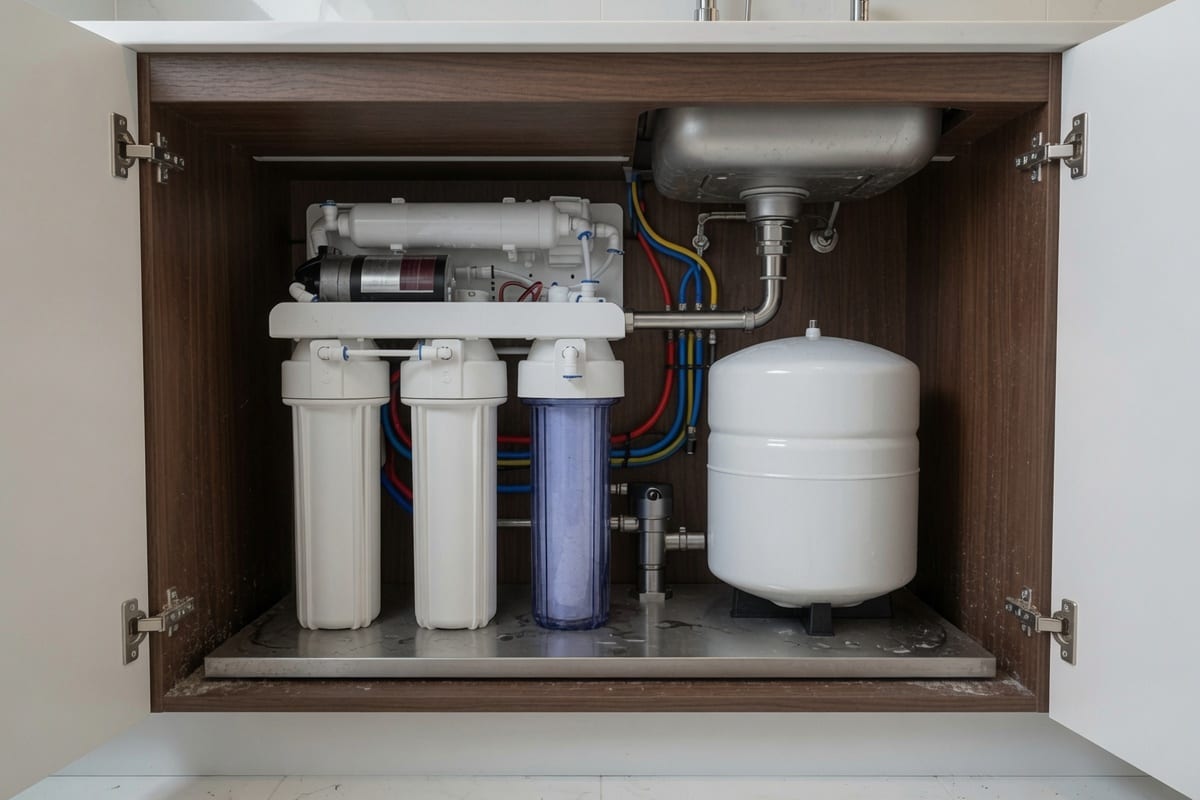
Match the equipment to the measured problem, one stage per problem, in the right order. Each row below uses the planning ranges on our water filtration cost page:
| Measured problem | What fixes it | Installed, typical |
|---|---|---|
| Manganese (black staining) or iron (orange staining) | Oxidising iron and manganese filter | $1,800 to $3,500 |
| Rotten-egg smell | Iron and sulfur filter | $1,800 to $3,500 |
| pH below about 6.5 | Acid neutralizer | $1,200 to $2,200 |
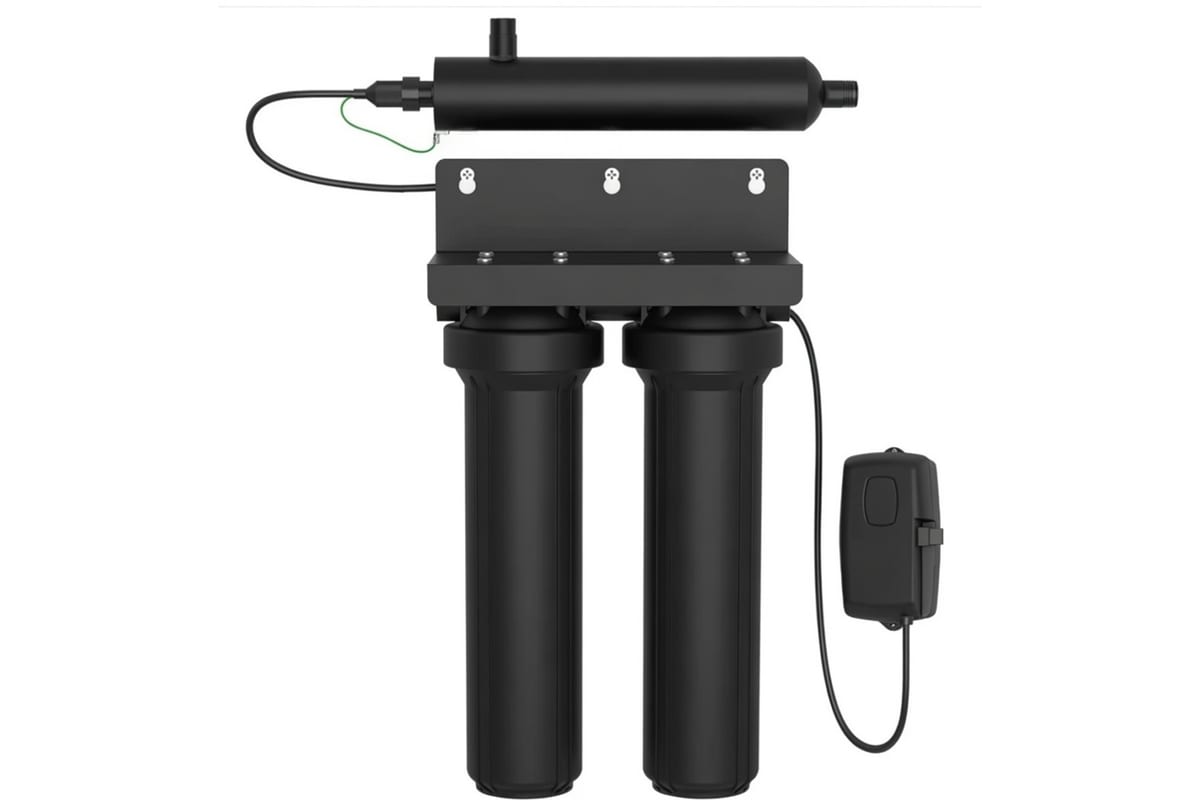
| Positive bacteria test | UV disinfection, after the well itself is checked | $700 to $1,500 |
| Arsenic above 10 ug/L | Under-sink reverse osmosis at the drinking tap | $350 to $900 |
| Measured hardness | Water softener | $1,500 to $3,500 |
| Several of the above at once | Full well water system | $4,000 to $8,000+ |
Manganese and iron are handled by iron and sulfur removal equipment, but manganese needs a higher pH than iron to oxidise. A well at pH 6.9 can lose its orange stains and keep its black ones, which our guide to manganese and black slime explains.
Low pH comes first when it is present, because acidic water corrodes copper and holds back the filters downstream. Our acid neutralizer cost guide covers sizing.
Arsenic is a drinking-water problem, so an RO unit at the kitchen tap is the usual answer. Whole-house arsenic media exists, but we publish no price for it. Our arsenic in NC well water guide covers the options.
Hardness has no county figure at all. We will not guess one for your well; if a reading supports a softener, we size it from the number.
Put together, a Chatham well with low pH, manganese and a bacteria history is three stages, which is how well water treatment reaches the full-system range. Our guide to what order well water systems go in covers sequencing.
Pro tip: find the report from your well’s completion test. Every private well built in North Carolina since July 2008 had to be sampled after completion, so a well of that age already has a baseline for manganese, iron and pH. Comparing it with a fresh reading shows whether the water is changing before you spend anything on equipment.
Why does a Chatham well need a test before a filter?
Because the only numbers that describe your well are ones measured from it, and the state’s required test list skips some that decide the equipment.
State law, G.S. 87-97(h), requires a new well to be tested for metals including arsenic, iron and manganese, plus nitrate, pH and bacteria. Hardness is not on the list, and neither is hydrogen sulfide. So a well can pass its completion test and still need a softener or a sulfur filter.
For an existing well, Chatham County Environmental Health listed these homeowner test prices in its schedule effective 1 July 2024: bacteria $70, inorganic mineral $110, nitrate $70, and a full panel for an existing well $150. The county offers no PFAS, VOC or radiological test. Current fees can differ, so confirm them with Environmental Health. NCDHHS recommends testing for bacteria every year and for metals and nitrates every two years.
What to test for, and how to read the report, is covered in our Chatham County well water testing guide. The same schedule listed a new well permit at $340, including the required bacteriological, inorganic and nitrate analysis. The permit process is in our Chatham County well permits guide. Pump, pressure tank and well casing repairs belong to a well contractor.
Frequently Asked Questions
What is the most common problem in Chatham County well water?
Manganese. In state lab samples from 1998 to 2010, 32.71 percent of Chatham County samples were above the 0.05 mg/L level, where it causes black staining. Iron came second at 21.38 percent. Both are handled by iron and sulfur removal equipment sized to the measured level.
Is arsenic a problem in Chatham County wells?
In a minority of wells. The state lab found 2.20 percent of Chatham samples above the 10 ug/L federal limit, the highest rate of Chatham, Durham and Orange counties, with a maximum of 127 ug/L. Arsenic is on the required new-well test, so check your completion report first.
Do Chatham County wells have hard water?
Nobody can say without a reading. Hardness is not on the state’s required new-well test and no county dataset publishes it. If a measured result supports one, a softener runs $1,500 to $3,500 installed.
How much does well water filtration cost in Chatham County?
$700 to $3,500 for a single stage, and $4,000 to $8,000+ for a full well water system. The Pittsboro water filtration page covers local service, and every figure is a planning range until your water is measured.
Is Pittsboro town water run by the town?
No. Pittsboro merged its utility with Sanford’s on 1 July 2024 to form TriRiver Water, and Chatham County’s water system joined TriRiver on 1 July 2025. Town water draws from the Haw River and has its own guide.
Should I test a Chatham County well for PFAS?
It is worth considering, and it has to go to a private lab. Chatham County’s PFAS page says “PFAS has been identified in some drinking water in Chatham County” and points well owners to NCDHHS guidance, but the county runs no PFAS well test, so a private certified lab is the route. Under-sink reverse osmosis is the household option if a result calls for it.
Sources and reporting dates
- NCDHHS State Laboratory of Public Health, Chatham County well water summary, private well samples 1998 to 2010, and the NCDHHS well water FAQ for testing frequency.
- USGS 2015 county water use estimates, for the share of residents on self-supplied water.
- Chatham County Environmental Health well permits page and fee schedule effective 1 July 2024 (read from an archived copy of June 2026), and its PFAS page (archived copy of February 2025).
- NC General Statute 87-97 for the new-well test list; the NC DEQ Geological Survey guide to the Triassic basins.
- TriRiver Water news releases of 10 June and 24 September 2026, and NC DEQ’s 2025 Local Water Supply Plans, for the merger dates and Chatham County North notes.
Prices are planning ranges as of 26 September 2026, never quotes.
Well water filtration in Chatham County, done in order
A Chatham well is its own water system, and the owner is its operator. The work is the same every time: measure it, fix pH first if it is low, take out manganese and iron, disinfect if bacteria shows up, and treat the drinking tap if arsenic does.
Every visit starts with a free consultation, whether you are near Pittsboro, Siler City, Moncure or the Chapel Hill edge of the county. We read your water, explain each number, and give an up-front written price for only the stages your well needs. Call (984) 384-6991 or book your Chatham County consultation.