Is Southern Pines Tap Water Safe to Drink? (2026)
Raleigh Water Pros • September 14, 2026 • 9 min read
The Town of Southern Pines drinks from a creek called Drowning Creek. That is its real name, it is the headwater of the Lumber River, and it is a Sandhills blackwater stream, the tea-coloured kind that runs off sand and pine litter carrying a great deal of dissolved plant matter and almost no dissolved rock.
Nearly everything distinctive about Southern Pines water follows from that one fact. It is astonishingly soft. It is lightly buffered and slightly acidic. And it gives the plant an unusual disinfection byproduct profile that shows up plainly in the town’s own numbers.
It is also, as it happens, a surface water system in a region where almost everyone else pumps from the ground.
Is Southern Pines tap water safe to drink?
Yes. The town states that its plant was compliant with federal and state drinking water regulations throughout 2025, and its numbers back that up.
Turbidity came in at 0.14 NTU with 100 percent of samples under the 0.3 threshold. Trihalomethanes were 12 parts per billion against an 80 limit. Fluoride 0.32. Iron 0.029 and manganese 0.007, both well under their secondary standards.
One item on the federal record deserves stating rather than skipping. In October 2024 the system picked up a health-based treatment technique violation under the Lead and Copper Rule. It was closed on 7 November 2024, three weeks later, and it is the only health-based entry in this system’s entire violation history.
The plant opened in 1986, is rated at 8 million gallons a day and could physically do 11, and averaged 3.3 million a day last year. It draws through a 140 million gallon raw reservoir and a 20 million gallon one before treatment. The town’s own report counts more than 35,000 people across over 11,500 connections; federal records list 24,102. The likeliest explanation for the gap is that the town also sells water wholesale to Camp Mackall, Moore County, Pinebluff and Whispering Pines.
Does Southern Pines have hard water?
No. The town publishes 9.5 parts per million on a daily sampling basis, which is 0.56 grains per gallon.
It takes 17.1 parts per million to make a single grain, so Southern Pines does not reach one. Even the high end of its published range, 18.2, only just clears a grain.
| Southern Pines, 2025 report | Value |
|---|---|
| Hardness, average | 9.5 ppm, 0.56 grains |
| Hardness, range | 4.6 to 18.2 ppm |
| Alkalinity | 8.2 ppm |
| pH, range | 6.1 to 8.5 |
| Sodium | 2.5 ppm |
| Iron | 0.029 ppm |
A softener has nothing to do here. If someone knocks on your door in Moore County offering one for town water, that first row is the end of the conversation. Want the reading at your own tap rather than the plant average? Request a free consultation and we will measure it and give you the numbers in writing.
The real issue is what soft water does to pipes
Look at the second and third rows of that table, because they matter more than the first.
Alkalinity of 8.2 parts per million is very low. Alkalinity is the water’s capacity to resist a change in pH, and at single digits there is almost none. The published pH range runs from 8.5 down to 6.1, which sits below the 6.5 floor of the secondary standard. The town prints no average pH at all, only that range.
Soft, unbuffered, sometimes-acidic water is chemically aggressive toward metal plumbing. It does not make the water unsafe as it leaves the plant. It does mean the pipes, solder and fittings inside your own house have more say over what reaches your glass than they would in a mineral-rich town.
The town’s own lead sampling shows this exactly. In August 2025 the system-wide 90th percentile came back not detected, which is a clean pass. In the same round, one home measured 28 parts per billion, nearly double the 15 action level.
Pro tip: those two results are not in conflict, and the difference matters. A 90th percentile of not detected means the water the town distributes is fine. A single home at 28 means that home’s own plumbing is contributing lead. Aggressive water finds the weak joint, and it will not be the same house as your neighbour’s.
If your house has copper pipe with lead solder, galvanized line, or a service line of unknown vintage, the town’s lead service line inventory is the place to start, and a test at your own kitchen tap is the only thing that answers it for your address.
The blackwater signature in the byproduct numbers
Here is a detail that almost never appears in a city water post, because in most cities it does not happen.
Southern Pines reports trihalomethanes at 12 parts per billion and haloacetic acids at 29. In nearly every system we have looked at, that order is reversed and trihalomethanes run higher. The haloacetic acid figure also reached 53.4 at its peak, within seven of the 60 limit, while trihalomethanes never got past 14.5 out of 80.
That inversion is what a high-organic blackwater source does. Disinfectant meeting a lot of dissolved plant matter produces a different mix of byproducts than disinfectant meeting reservoir water. The plant’s organic carbon removal ratio also runs close to its required floor, at an annual 1.05 against a required 1.0.
None of that is a violation and none of it is alarming. It is simply the thing in Southern Pines water that a carbon filter is actually for.
Zero PFAS, across every test
Southern Pines returned no PFAS detections at all. Under the federal monitoring round, the plant produced 120 results covering all 29 PFAS compounds plus lithium, sampled across seven dates in 2023. Every single one came back below the reporting limit, including PFOA, PFOS and GenX.
The town also appears in none of the state’s PFAS sampling datasets for municipal or small systems.
That is about as clean as this particular question gets, and it is a sharp contrast with Fayetteville an hour down the road, whose treated water carries PFOA and PFOS above the federal limit. Our statewide PFAS table sets every city side by side.
One honest caveat on wording: below the reporting limit means below what the method can measure, not literally zero. It is the strongest result a laboratory can return.
Which carbon to buy, and the one thing we cannot confirm
The town’s compliance table reports a chloramine residual averaging 2.35 parts per million, running higher than its chlorine residual of 1.35. That pattern means a chloraminated distribution system, the same as Fayetteville.
We should be straight about the limit of that: the report never says in words which disinfectant is primary, unlike Fayetteville’s, which states it outright. The conclusion here rests on the town’s own residual figures rather than a sentence. Before buying media, a call to the plant at (910) 281-4719 settles it in a minute.
On that basis, catalytic carbon is the media to specify, not standard activated carbon, which does not strip chloramine at household contact times.
What to buy in Southern Pines
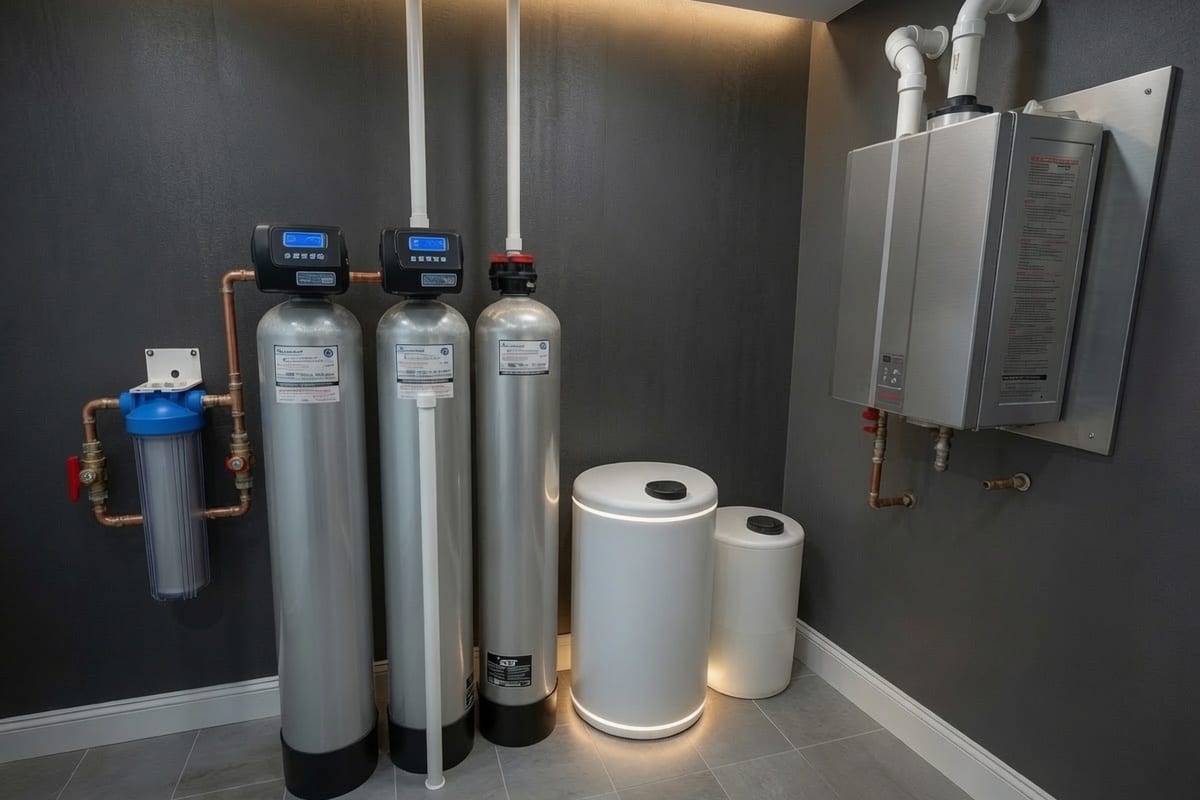
Catalytic carbon, whole house. It handles the chloramine and the haloacetic acids together, at every tap including the shower, which matters because these byproducts are the one genuinely notable thing in the report. A whole house system runs $1,500 to $3,500 installed, and our cost guide covers what moves that.
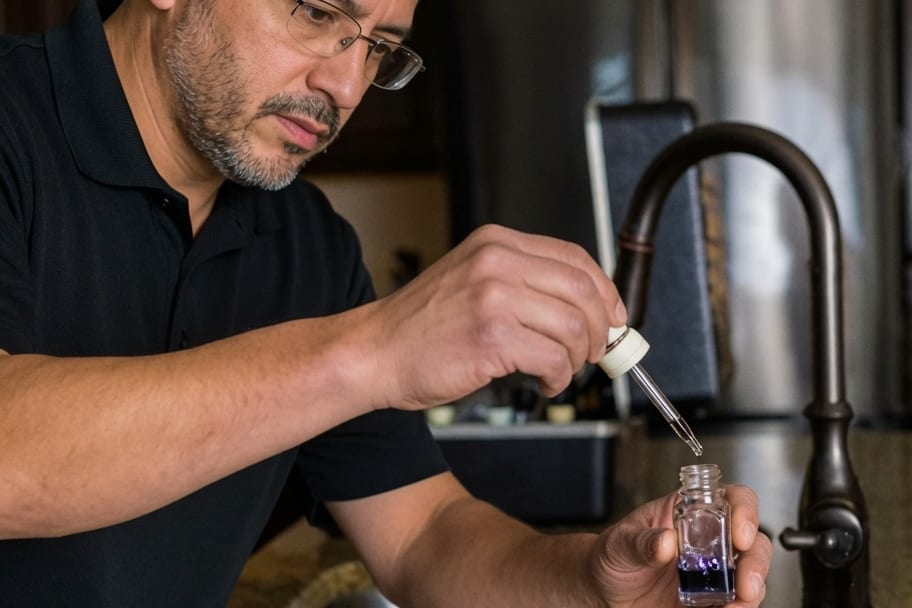
A lead test before anything else, if your house is older. Not a product, just the right first step. Our water testing visit covers it.
Reverse osmosis at the sink, optionally. At $350 to $900 installed it is a second barrier for drinking and cooking water and it covers anything your own plumbing contributes. See our reverse osmosis page.
Not a softener. At 0.56 grains, and with alkalinity already at 8.2, softening this water would be both pointless and unhelpful.
Frequently Asked Questions
Southern Pines is in the Sandhills. Is this well water?
No, and this catches people out. Most of the Sandhills runs on groundwater, but the town is a surface water system drawing from Drowning Creek. Federal records classify it as surface water and the town says so in its own report.
What does the 2024 lead violation mean?
It was a treatment technique violation under the Lead and Copper Rule, recorded in October 2024 and returned to compliance three weeks later in November. It is the only health-based item in the system’s history, and everything since has been compliant.
Why is my water sometimes slightly acidic?
Blackwater streams are naturally acidic and carry very little dissolved mineral to buffer them. The published pH range dips to 6.1 at the low end. The plant treats for this, but the water arrives with almost no natural buffering capacity to work with.
Should I test my water if I am on a well in Moore County?
Yes. Sandhills wells sit in a different setting from the creek and commonly carry low pH and iron, neither of which is on the state’s required panel. Our guide to what NC well testing misses sets out the additions worth paying a laboratory for, and our water testing visit covers the readings that decide equipment.
I am in Pinebluff or Whispering Pines. Is this my water?
Possibly. The town sells water wholesale to Pinebluff, Whispering Pines through Carolina Water, Moore County and Camp Mackall. The treatment and source described here are the same, though residuals and byproducts shift with distance through the pipes.
Is the haloacetic acid number something to worry about?
It is compliant, with an annual average of 29 against a limit of 60. The reason to mention it is that it is the number carbon actually addresses in this town, which makes the filter decision straightforward rather than speculative.
Sources and reporting dates
Every figure above comes from the sources below. Water quality changes between reports, and a reported average does not describe conditions at every address on every day, so check the current report before acting on any number here.
- Town of Southern Pines annual water quality report, covering calendar year 2025. Source of the hardness, disinfectant, byproduct, lead and copper figures.
- EPA Safe Drinking Water Information System, for population served, violation history and compliance dates.
- EPA UCMR5 occurrence data, the national PFAS monitoring round, for any result described as federal monitoring.
- NC DEQ Source Water Assessment Program, for source water susceptibility ratings.
- EPA PFAS drinking water rule, for the limits and their compliance dates.
Getting Southern Pines water right
Southern Pines has clean, PFAS-free, nearly mineral-free water out of a blackwater creek. There is no softener case here at all. What there is, is a byproduct profile that carbon suits, and water soft enough to be hard on the pipes inside older houses.
Start with a lead reading if your home has any age on it. Then decide on carbon, and make sure whoever quotes you names catalytic rather than standard.
Compare this supply with other cities in our North Carolina water quality guide, or see how we approach city water treatment.
We serve Southern Pines, Fayetteville, Raleigh and the rest of North Carolina. Every visit starts with a free consultation: we test your water, compare it against what the town publishes, and give you an up-front written price for only what the numbers support. Call (984) 384-6991 or request a free consultation.