Is Fayetteville Tap Water Safe to Drink? (2026)
Raleigh Water Pros • September 14, 2026 • 9 min read
Almost everyone gets the geography backwards. The Chemours Fayetteville Works sits on the Cape Fear River, the plant has Fayetteville in its name, and the obvious conclusion is that Fayetteville drinks its discharge.
It does not. The Public Works Commission says so plainly in its own report: the GenX discharges are below the Fayetteville service area and more than 20 miles downstream of where the utility takes water out of the river. Whatever the Chemours outfall does, it does it to Wilmington and Leland, not to Fayetteville.
And Fayetteville still measures PFAS in its treated water, above the limit that is coming. That is the part worth understanding.
Is Fayetteville tap water safe to drink?
Yes, by every standard currently in force. The 2025 report records no violation in any category, and federal records show five items in the system’s entire history, none of them health-based.
The clean results are genuinely broad. Iron, manganese, nitrate, nitrite, arsenic, barium, cadmium, chromium, mercury, selenium, every listed pesticide and every volatile organic compound came back not detected. So did all four radiological tests. Trihalomethanes came in at 38 parts per billion against an 80 limit.
Lead is better than clean. In the 2023 sampling round every site came back not detected, and the utility has now identified the pipe material for more than 95,800 services and found no lead service lines at all.
Fayetteville Public Works Commission serves roughly 226,000 people and treated more than 10.5 billion gallons last year, all of it surface water, from two plants.
The PFAS numbers, which the utility publishes every quarter
Most utilities report PFAS once a year in a report almost nobody opens. Fayetteville publishes a live quarterly table with five years of history on it, which is unusual and to its credit.
Here is the April 2026 round, running annual averages at the point treated water leaves each plant, in parts per trillion.
| Plant | PFOA | PFOS | Federal limit |
|---|---|---|---|
| P.O. Hoffer | 4.83 | 8.60 | 4.0 each |
| Glenville Lake | 5.55 | 14.65 | 4.0 each |
All four figures are above the 4 parts per trillion limit EPA set in April 2024. The utility’s own page states the limit takes effect in 2029, which is why this is not a violation today. As of May 2026, EPA has proposed pushing that date to 2031.
Want to go through these numbers for your own address? Request a free consultation and we will review what PWC publishes with you and set out the testing options. PFAS analysis needs a laboratory equipped for it, which is not something any in-home reading can do.
The trend is real but uneven. Glenville Lake’s PFOS average peaked at 24.23 in January 2021, fell to 10.53 by January 2025, and has come back up to 14.65. Source-water spikes run far higher, to 73.50 in one 2022 sample. The hazard index covering the other compounds sits below 1 at both plants, which is the passing side of that particular measure.
So where is it coming from, if not the outfall downstream? The utility attributes the broader PFAS load to consumer and industrial products: cosmetics, shampoos, paints, food packaging, cleaning products, stain and stick resistant coatings. That is the unglamorous answer, and it is why PFAS shows up in river water that has no single industrial source above the intake.
What Fayetteville is building about it
Powdered activated carbon is already in service at both plants, and a dosing upgrade for higher PFAS removal finished in spring 2026. That is the treatment working for you today.
Granular activated carbon is the real fix, and it is not built yet. The utility studied the options and determined GAC was the most effective route for its plants. The project runs roughly $133 million in capital, with $10 to $12 million a year in added running cost. About $84 million in federal and state money is secured, leaving $49.6 million to find. Construction started in 2026 and the target for operation is summer or autumn 2029, which lines up with the compliance deadline rather than getting ahead of it.
Pro tip: the honest window here is the next three years. Fayetteville’s utility has told you the number, told you the fix, and told you the date. A unit at your kitchen tap covers the gap between now and then. After 2029, the argument for one weakens considerably.
Fayetteville chloraminates, with one month off every March
The plants add ammonia and chlorine together to form chloramines, which is the disinfectant that travels through the pipes. The 2025 running average was 2.91 parts per million.
That means catalytic carbon is the correct filter media here, not the standard activated carbon that suits a free-chlorine city like Hickory. Standard carbon will not strip chloramine at household contact times, and a salesperson who does not know which one your city needs is not worth listening to.
There is a local quirk worth knowing. State regulators require every chloraminated system to suspend ammonia for one month a year to stop biological growth in the mains, and Fayetteville does this every March. For those weeks the water is on free chlorine and tastes noticeably more like a swimming pool. It is deliberate, it is annual, and it is not a problem.
The utility also flags the two groups who must remove chloramine regardless: kidney dialysis patients and fish owners.
Does Fayetteville have hard water?
The utility does not publish a hardness figure. There is no hardness, calcium or alkalinity entry anywhere in the 2025 report, and none on its water FAQ either.
Softener vendor sites will quote you a number for Fayetteville. Those numbers do not come from the utility, they disagree with each other, and none of them measured your house. The parameters Fayetteville does publish look mild: pH 7.8, sodium 26.6 parts per million, sulfate 37, iron and manganese both not detected.
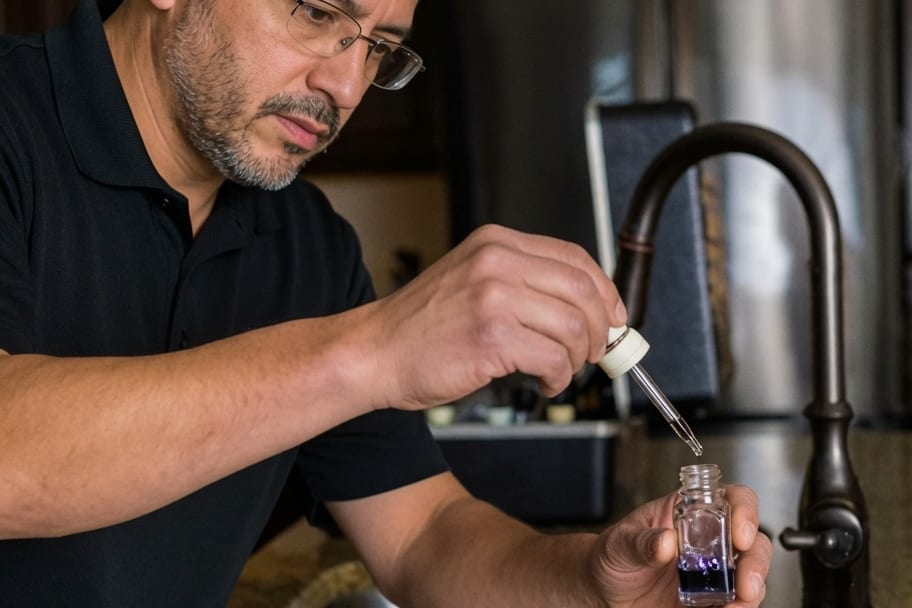
The only hardness figure worth spending money on is one taken at your own tap. Request a free consultation and we will measure it and give you the number in writing, along with whether it justifies anything.
What to buy in Fayetteville
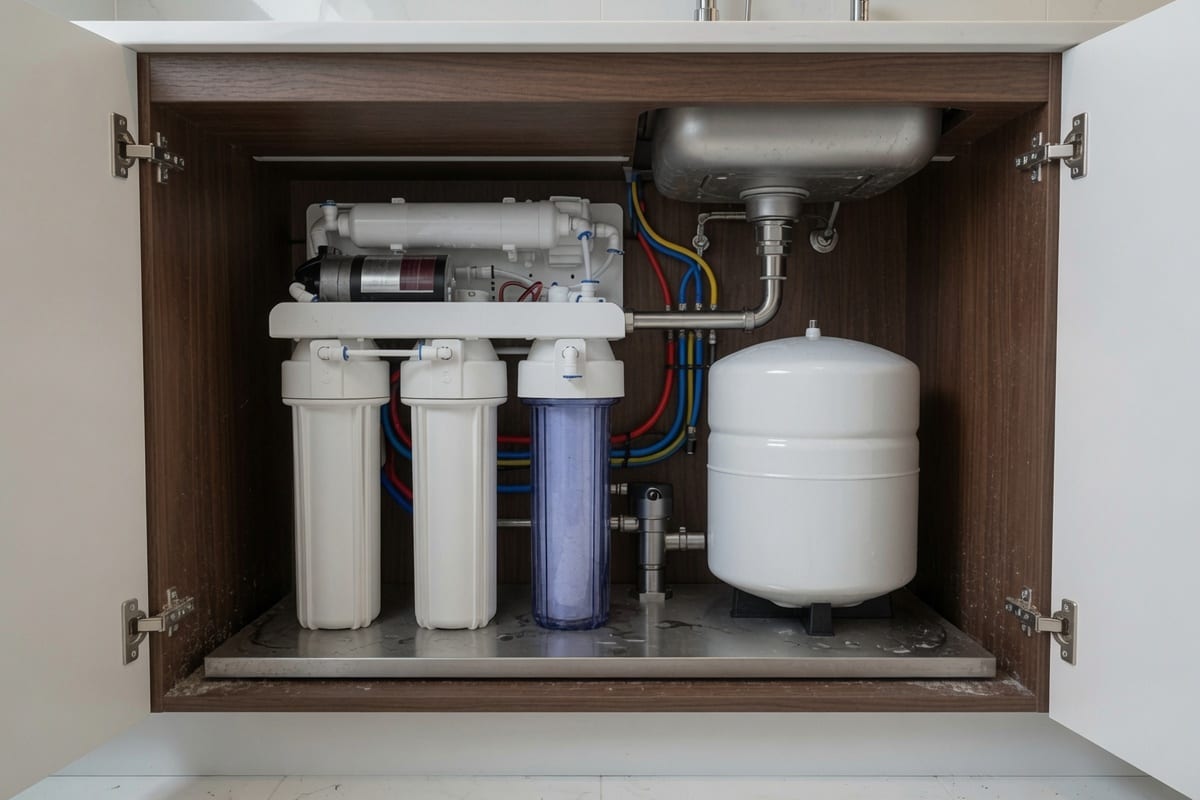
Reverse osmosis at the kitchen sink. This is the clear first move while the carbon plants are under construction. Reverse osmosis is the usual household route for PFOA and PFOS, and at $350 to $900 installed it covers drinking and cooking water. Buy a unit whose certification specifically lists the compound you want reduced, and check its rated flow, capacity and cartridge schedule: a general reverse osmosis label does not by itself establish a PFAS reduction claim. See our reverse osmosis page and our cost guide.
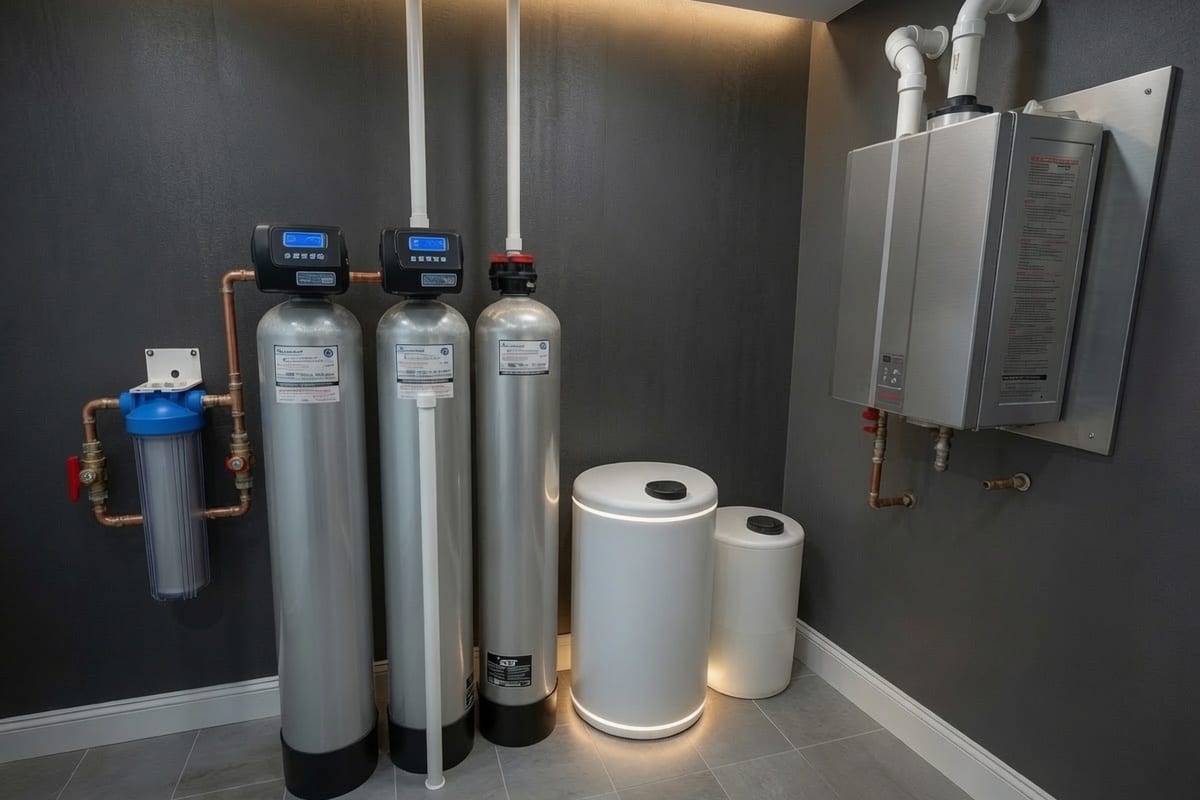
Catalytic carbon if you want the whole house done. A whole house system runs $1,500 to $3,500 installed and handles chloramine at every tap. Insist the quote names catalytic carbon.
Not a softener, until someone has actually measured your hardness.
Frequently Asked Questions
Is Fayetteville water affected by GenX from Chemours?
Not through the river intake. The discharges are more than 20 miles downstream of where the utility draws water, which the utility states in its own report. GenX is also absent from its federal monitoring detections. The Chemours story is real and serious, and it belongs to the river below Fayetteville. Our Chemours and Cape Fear guide covers who it actually affects.
Then why does Fayetteville have PFAS at all?
Because PFAS is not only an outfall problem. These compounds are in consumer and industrial products across the whole watershed and reach rivers through many small paths. That is the utility’s own explanation, and it is consistent with what other systems find on rivers with no single upstream discharger.
Where does my water actually come from?
Both plants feed one distribution system, so your tap gets a blend. The P.O. Hoffer plant draws the Cape Fear River. The Glenville Lake plant draws the river plus Big Cross Creek and the Little Cross Creek watershed, which holds Bonnie Doone Lake, Kornbow Lake, Mintz Pond and Glenville Lake.
Why does my water taste different in March?
That is the annual switch to free chlorine while ammonia is suspended, required of every chloraminated system in the state. Fayetteville schedules it for March each year. A carbon filter will blunt the taste, and the change reverses itself.
Should I be worried about lead?
Less than almost anywhere. Every tap in the last sampling round came back not detected, and the pipe survey covering more than 95,800 services has turned up no lead service lines.
I am on a private well in Cumberland or Bladen County. Is that different?
Completely different, and the Chemours geography that protects the city supply does not protect wells near the plant. Eligible properties in that area qualify for company-funded testing at no cost, covered in our Chemours guide. Beyond PFAS, the state’s required well panel leaves out hardness, hydrogen sulfide and several other things worth knowing, which our NC well testing guide sets out, and our water testing visit covers the readings that decide equipment.
How does Fayetteville compare with the rest of the state?
It is at the higher end on PFAS among the systems we have read, alongside Greensboro and Greenville, while several cities report nothing at all. The statewide PFAS table puts every one of them side by side.
Sources and reporting dates
Every figure above comes from the sources below. Water quality changes between reports, and a reported average does not describe conditions at every address on every day, so check the current report before acting on any number here.
- Fayetteville Public Works Commission annual water quality report, covering calendar year 2025. Source of the hardness, disinfectant, byproduct, lead and copper figures.
- EPA Safe Drinking Water Information System, for population served, violation history and compliance dates.
- EPA UCMR5 occurrence data, the national PFAS monitoring round, for any result described as federal monitoring.
- NC DEQ Source Water Assessment Program, for source water susceptibility ratings.
- EPA PFAS drinking water rule, for the limits and their compliance dates.
Getting Fayetteville water right
Fayetteville has a utility that tests more than it has to, publishes more than it has to, has no lead in its pipes, and has a real PFAS number it is spending $133 million to fix by 2029. None of that makes the water unsafe today. It does make a reverse osmosis unit at the kitchen sink a reasonable thing to own between now and then.
Compare this supply with other cities in our North Carolina water quality guide, or see how we approach city water treatment.
We serve Fayetteville, Southern Pines, Wilmington and the rest of North Carolina. Every visit starts with a free consultation: we test your water, compare it against what your utility publishes, and give you an up-front written price for only what the numbers support. Call (984) 384-6991 or request a free consultation.