Is Hickory Tap Water Safe to Drink? (2026)
Raleigh Water Pros • September 13, 2026 • 8 min read
Most water plants buy their chlorine. Hickory makes it. The city was the first in North Carolina to install its own sodium hypochlorite generator, a two-unit system rated to 1,600 pounds a day that splits brine electrochemically rather than taking delivery of chlorine by truck.
That is a small operational detail with a direct consequence for anyone choosing a filter here, because on-site generated hypochlorite yields free chlorine rather than chloramine. It decides which carbon you should buy.
Is Hickory tap water safe to drink?
Yes. The city’s 2024 report states plainly that the system had no violations during the reporting period, and all 29 PFAS compounds tested came back non-detect.
Hickory Public Utilities serves about 71,393 people, and its plant does considerably more than that: it is a regional supplier feeding three counties, and its single annual report covers four public water systems, including Alexander County, southeastern Catawba County and the Town of Catawba.
The source is Lake Hickory, an impoundment of the Catawba River held between two Duke hydroelectric dams, Rhodhiss upstream and Oxford downstream. The plant is conventional: coagulation, flocculation, six to twelve hours of sedimentation, then filtration through gravel, sand and anthracite, rated to 32 million gallons a day.
Does Hickory have hard water?
No. It is some of the softest municipal water in the state, at 15.0 milligrams per litre, which works out to 0.88 grains per gallon.
One caveat worth stating: that figure comes from a single sample dated 17 January 2024 rather than an annual average. It is the number the city published, and the city’s own description of its water elsewhere is that it has low iron and hardness content so that it washes clothes better.
At under one grain per gallon there is essentially nothing for a softener to remove. Iron measured 0.01 milligrams per litre against a secondary standard of 0.3, so the staining problems that drive softener sales on well water are absent here too.
| Hickory, 2024 report | Value | Standard |
|---|---|---|
| Hardness | 15.0 mg/L, 0.88 grains | no standard |
| Iron | 0.01 mg/L | 0.3 secondary |
| Alkalinity | 14.1 mg/L | no standard |
| pH | 7.6 | 6.5 to 8.5 secondary |
| Sodium | 21.2 mg/L | no standard |
| PFAS, all 29 compounds | not detected | 4.0 ppt for PFOA and PFOS |
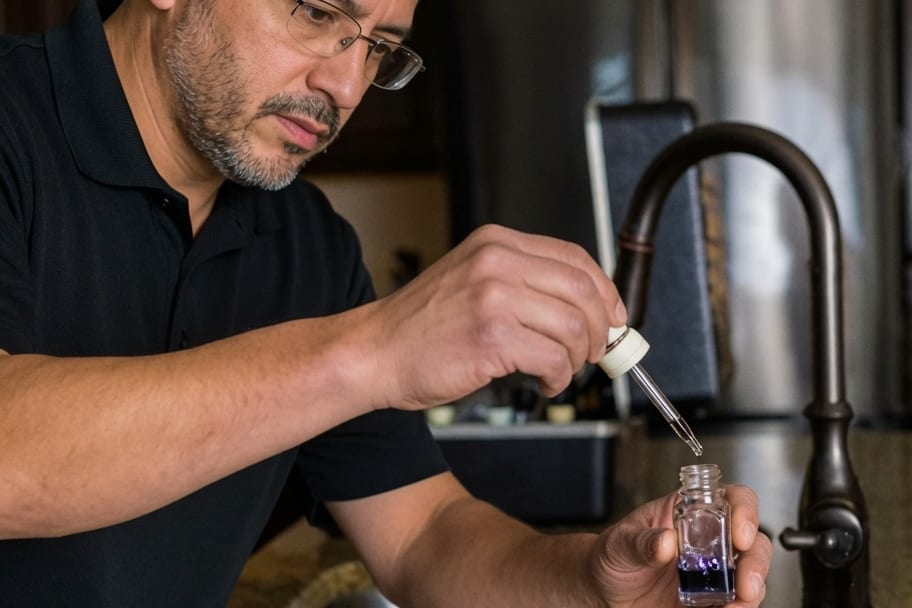
Want a current reading at your own tap rather than a January grab sample? Request a free consultation and we will measure it and give you the numbers in writing.
The number that is actually worth watching
Trihalomethanes. Hickory’s compliance figure for 2024 was a running annual average of 44 parts per billion against an 80 limit, which is comfortably inside. But the individual samples behind that average ranged from 29 all the way to 100 parts per billion.
That needs explaining rather than alarming, because it looks worse than it is. Compliance for disinfection byproducts is judged on a locational running annual average, not on any single sample, so a system can record an individual result above 80 and remain fully compliant. Hickory did, and the report correctly shows no violation.
What it tells you is that the range runs hot. Trihalomethanes form when chlorine meets organic material from lake water, and they rise with warm weather, longer travel time through the mains and higher organic load. Hickory’s own report shows the haloacetic acid group behaving similarly, at a 36 average against a 60 limit with samples up to 47.
Pro tip: if you are going to filter anything in Hickory, filter this. Trihalomethanes are volatile, which means you take some of your exposure in a hot shower rather than a glass, and that is an argument for treating the whole house rather than only the kitchen tap.
Who else drinks Hickory’s water
Hickory does not only serve Hickory. The city describes its plant as a regional supplier, and one annual report covers four public water systems: the city itself, Alexander County, southeastern Catawba County and the Town of Catawba.
Everything above about the source and the treatment applies to all four. If your tap is in Taylorsville or the Town of Catawba, the lake is the same lake, the disinfectant is the same free chlorine, and the water is just as soft.
What differs is the distribution. Chlorine residual falls and byproducts rise as water sits in pipes, and the report prints those figures separately for each system, which is why a household at the far end of the network can see numbers a household near the plant never sees. It is also why a whole-house filter is a more reliable answer than waiting for a system-wide average to move.
What to buy here, and what not to
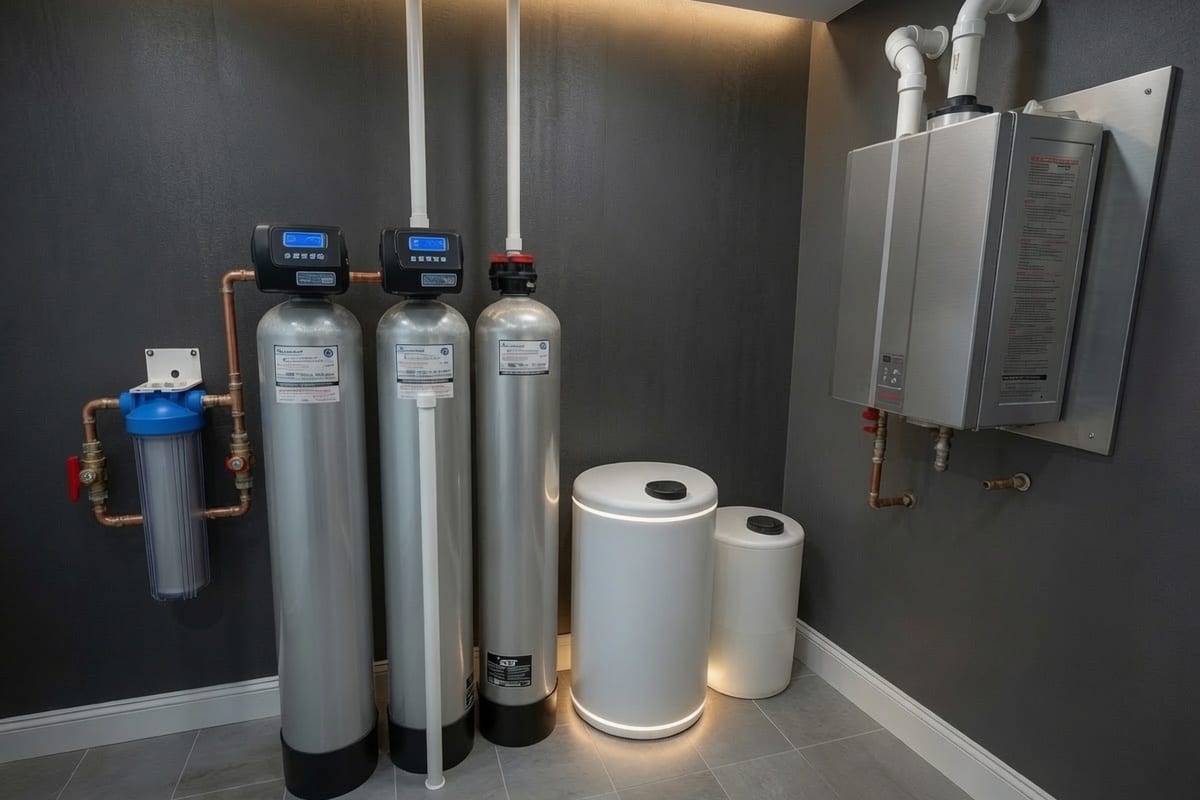
Activated carbon, standard grade. Hickory does not chloraminate, so you do not need the catalytic carbon that Greensboro or Monroe require. A whole house carbon filtration system at $1,500 to $3,500 installed addresses both the chlorine taste and the byproducts, at every tap. Our cost guide covers what moves that figure.
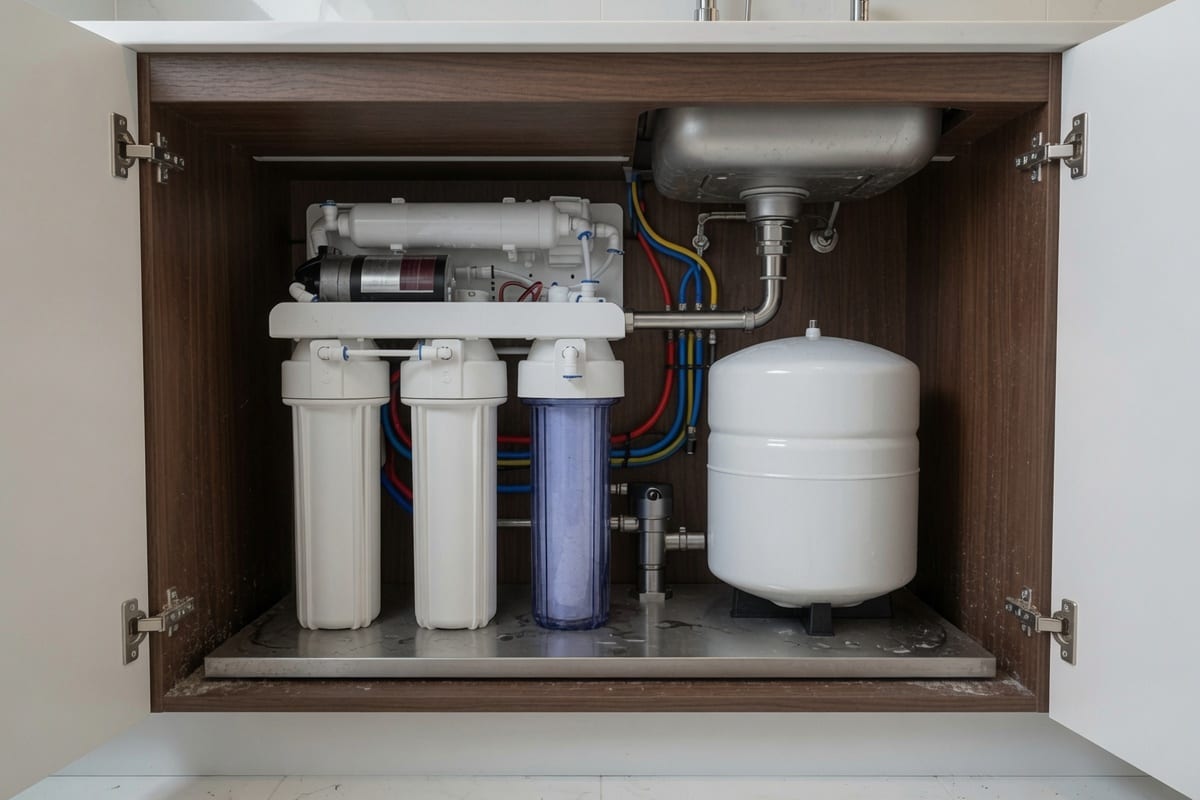
Reverse osmosis at the sink, if you want a second barrier. At $350 to $900 installed, it covers drinking and cooking water, including anything the household plumbing contributes that its certification lists. See our reverse osmosis page.
Not a softener. At 0.88 grains per gallon there is nothing to soften. This is one of the clearest cases in the state.
Not a PFAS system. Every one of the 29 compounds tested came back non-detect, including GenX, in October 2024 sampling.
Frequently Asked Questions
Why is Lake Hickory rated “Higher” for susceptibility?
The city’s report attributes it to the proximity of US Highway 321 and NC Highway 127, road run-off and development around the reservoir. The report also says explicitly that a higher rating does not mean the source has poor water quality, and that is the right reading: the rating describes exposure in the watershed, not the water leaving the plant.
An individual sample hit 100 ppb. Should I be worried?
Not on the basis of one sample. The federal limit applies to a running annual average, which was 44, and single samples vary with season and location in the system. It is worth knowing because it shows the range is wide, and a carbon filter is the ordinary household response.
My water bill is from Alexander County. Does this post apply?
Partly. Hickory’s plant supplies several neighbouring systems and its single report covers four of them, so the treatment and source are the same. The distribution figures differ: Alexander County’s chlorine and byproduct numbers are reported separately in the same document, and its own table has an internal inconsistency worth ignoring rather than interpreting.
Does the low alkalinity matter?
It is worth knowing. At 14.1 milligrams per litre the water is lightly buffered as well as soft, which is why the plant adds sodium hydroxide and phosphate for corrosion control. That treatment is doing real work protecting household plumbing, and it is another reason not to soften water that is already this soft.
Is there fluoride in Hickory water?
The 2024 report lists fluoride as non-detect in its January sample, while the plant’s own process description includes fluoride addition. Those two can both be true at different points in the year, and the city’s water quality staff are the right people to settle it for the current period.
Should I test if I am on a private well in Catawba County?
Yes, and for different things than the city tests. Piedmont wells here sit in fractured crystalline bedrock and commonly carry hardness, iron and low pH that no municipal report covers. The statewide guide to what North Carolina’s required well panel misses sets out which extras are worth paying a laboratory for, and our water testing visit covers the readings that decide equipment.
Sources and reporting dates
Every figure above comes from the sources below. Water quality changes between reports, and a reported average does not describe conditions at every address on every day, so check the current report before acting on any number here.
- City of Hickory Public Utilities annual water quality report, covering calendar year 2024. Source of the hardness, disinfectant, byproduct, lead and copper figures.
- EPA Safe Drinking Water Information System, for population served, violation history and compliance dates.
- EPA UCMR5 occurrence data, the national PFAS monitoring round, for any result described as federal monitoring.
- NC DEQ Source Water Assessment Program, for source water susceptibility ratings.
- EPA PFAS drinking water rule, for the limits and their compliance dates.
Getting Hickory water right
Hickory has soft, iron-free, PFAS-free water from a well-run regional plant that makes its own disinfectant. The one thing in its report that deserves attention is the byproduct range, and the answer to that is carbon.
If anyone tries to sell you a softener in Hickory, ask them what hardness figure they are working from. The city published 0.88 grains per gallon.
Compare this supply with other cities in our North Carolina water quality guide, or see how we approach city water treatment.
We serve Hickory, Charlotte, Mooresville, Winston-Salem and the rest of North Carolina. Every visit starts with a free consultation: we test your water, compare it against what the city publishes, and give you an up-front written price for only what the numbers support. Call (984) 384-6991 or request a free consultation.