Is Greenville NC Tap Water Safe to Drink? (2026)
Raleigh Water Pros • September 14, 2026 • 9 min read
Greenville Utilities Commission started testing its water for PFAS in 2018. Nobody made it. There was no federal limit then, no monitoring requirement, and no consequence for not looking. It looked anyway, and it has published what it found every year since.
That is why this post can tell you a number when most cities of this size cannot. It is also why the number is uncomfortable.
Is Greenville NC tap water safe to drink?
Yes, by every standard in force today. The 2026 report, covering 2025, shows the system meeting all federal and state drinking water standards.
Trihalomethanes came in at 30 parts per billion against an 80 limit. The haloacetic acid group also at 30, against 60. Turbidity stayed under 0.3 NTU in 100 percent of samples. Lead’s 90th percentile was 0.0 parts per billion with no site above the action level, which is not surprising given what the utility found when it went looking, covered below.
There was one violation in 2025, and it is worth stating exactly what it was. In May the utility was required to collect 100 bacteriological samples from the distribution system. A tallying error meant it collected 99, and it did not notice until the monitoring period closed. That produced a Tier 3 violation for failure to monitor. No contamination, no exceedance, one sample short of a hundred.
Greenville Utilities has been community-owned since the state legislature chartered it in 1905. It treats about 15 million gallons a day through 730 miles of main, and won its tenth consecutive state award for treatment plant performance in 2025.
The PFAS numbers, exactly as reported
Here is the 2025 monitoring table, in parts per trillion.
| Compound | Highest detected | Federal limit |
|---|---|---|
| PFOA | 7.6 | 4.0 |
| PFOS | 6.3 | 4.0 |
| PFBA | 6.9 | none |
| PFBS | 6.1 | none |
| PFPeA | 5.1 | none |
| PFHxA | 5.1 | none |
| PFNA, PFHxS, GenX | not detected | 10 for PFNA and PFHxS |
PFOA and PFOS are both above the 4 parts per trillion maximum contaminant level that EPA confirmed in April 2024. The utility names that limit in its own report, alongside its own results, which is more candour than most systems manage.
What it is not is a violation. The federal rule sets a compliance deadline rather than an immediate one, and as of May 2026 EPA has proposed pushing that deadline from April 2029 out to April 2031. So the honest description is: measured above a standard that is coming, in a system that has time to respond and says it will comply with whatever is adopted.
Pro tip: one number in the report will mislead you if you read it quickly. The PFOA row prints a health advisory level of 70 parts per trillion beside the result. That is the superseded 2016 advisory, not the current limit. Against 70, the result looks trivial. Against the 4 that actually applies, it does not.
For how every other city in the state compares, see our statewide PFAS table. Greenville sits second only to Greensboro among the systems we have read.
Greenville chloraminates, so ordinary carbon is the wrong filter
This is the second thing that makes Greenville different, and it changes what you should buy.
The plant uses ozone as its primary disinfectant, which is unusual and effective. Then, on the way out, it adds chlorine and ammonia together to form chloramines, which carry the residual through 730 miles of pipe. The 2025 system average for chloramines was 2.75 parts per million.
Chloramine is more stable than free chlorine, which is exactly why utilities like it and exactly why it is harder to filter out. Standard activated carbon strips free chlorine quickly. Chloramine needs catalytic carbon and longer contact time. A filter sized for a chlorinated city like Hickory will underperform here.
The utility is direct about the two groups who must remove it: kidney dialysis patients and anyone keeping fish. Chloramine is toxic to fish and must be taken out of dialysis water, exactly as chlorine must.
Does Greenville have hard water?
Greenville Utilities does not publish a hardness figure, and we are not going to supply one. The words hardness, grains, calcium and magnesium do not appear anywhere in the 2026 report.
There is a specific trap here. Search for Greenville water hardness and you will find several confident numbers on filter vendor sites. They disagree with each other, and at least some of them are describing Greenville, South Carolina, which is a different city in a different state drawing from a different watershed. We found figures of 6.8, 2.14 and “1 to 4” grains per gallon in the same afternoon. None is usable.
What can be said honestly: the plant treats Tar River surface water by coagulation, settling, ozone and filtration. It does not soften. So the only hardness number worth acting on in Greenville is one measured at your own tap. Request a free consultation and we will take that reading and give it to you in writing.
Where the water comes from
The Tar River, essentially all of it. Raw water is pumped into a 63 million gallon pre-settling reservoir where the heavy sediment drops out before treatment even begins, then runs through two parallel trains: the original settling basins, and a high-rate clarifier called a superpulsator that came online in 2023 and handles 10 million gallons a day on its own.
The utility also holds three deep wells as a peaking resource, but they were not in service at all during 2025. If you drank Greenville tap water last year, you drank treated river water.
One consequence worth knowing: Coastal Plain rivers carry a lot of dissolved organic material, and Greenville’s treated total organic carbon ran 3.8 parts per million. That is the reason for the ozone-then-chloramine strategy, and it is why the byproduct numbers come out as low as they do.
What to buy in Greenville
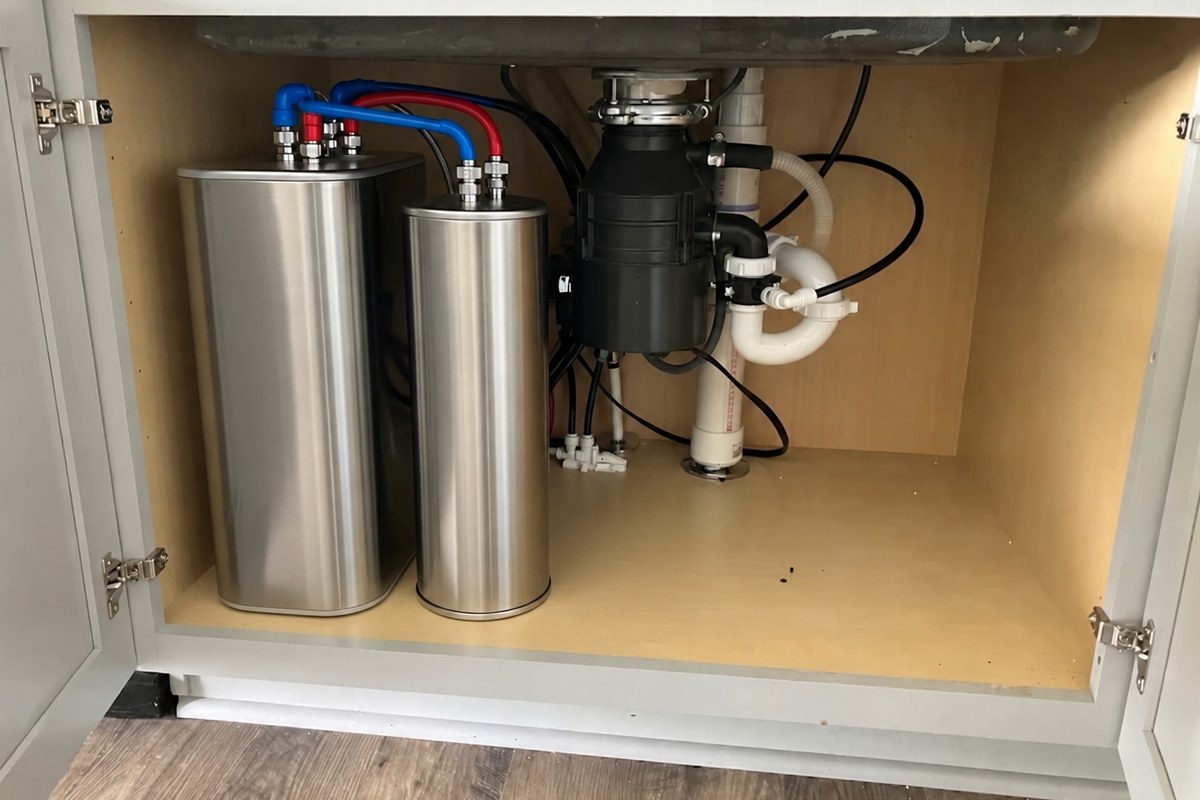
Reverse osmosis at the kitchen sink, first. This is the one city in our coverage where the drinking-water case makes itself. Reverse osmosis is the usual household route for PFOA and PFOS, and at $350 to $900 installed it covers drinking and cooking water. Choose a unit certified for the specific compound you want reduced, and check its rated flow, capacity and cartridge schedule rather than relying on the category label. See our reverse osmosis page and our cost guide.
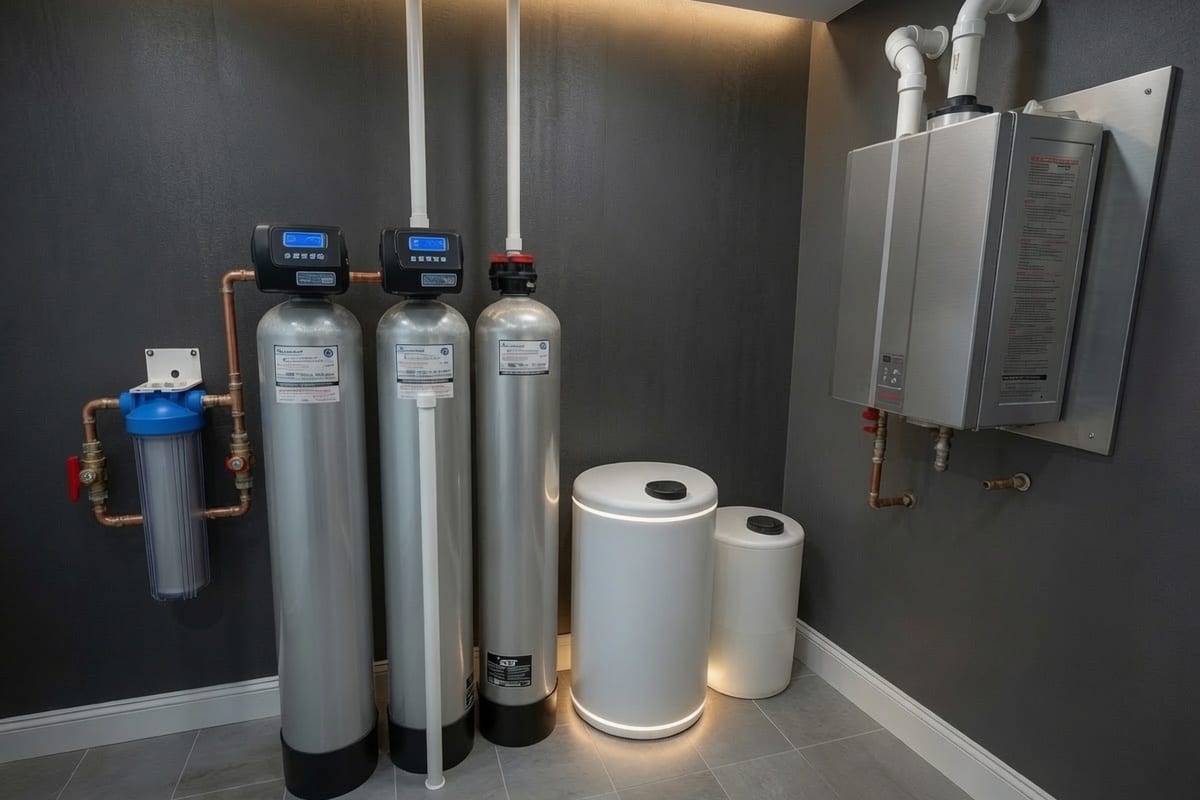
Catalytic carbon if you filter the whole house. Not standard carbon. A whole house system at $1,500 to $3,500 installed handles the chloramine taste at every tap, and a PFAS-rated carbon block adds a second barrier. Make sure whoever quotes you names the media.
Not a softener, at least not on published evidence, because there is none. Get a reading before anyone sells you one.
Frequently Asked Questions
Should I stop drinking Greenville water because of PFAS?
No, and the utility is not telling you to. The measured levels are single-digit parts per trillion against a limit of 4 that does not take effect for years. The proportionate response is a unit at the kitchen tap if you want the exposure reduced now, not bottled water and not alarm.
Why does the report say 70 parts per trillion?
That figure is the 2016 health advisory level, which EPA superseded when it set enforceable limits in April 2024. The report prints it in the table and then explains the change in its own text. Read both together, or you will draw the wrong conclusion.
Is the 2025 violation something to worry about?
No. The utility collected 99 distribution samples where 100 were required, caught it late, and reported it. Tier 3 is the lowest notification category and covers monitoring and reporting failures rather than anything found in the water.
I am in Bethel. Does this apply to me?
Partly. Bethel is a separate public water system with its own number and its own annual report, published from the same page. The treatment described here is the Greenville plant, so check the Bethel report for figures that apply to your tap.
What about lead pipes in Greenville?
Greenville went looking and found none. The service line inventory that began in February 2023, covering homes built before 1986, reported zero lead service lines on either the utility side or the customer side. That is an unusually clean result for a system this old.
Does the report tell me the pH or the iron level?
No. The 2026 report publishes no finished-water pH, no iron, no manganese and no sodium. The utility does state that it adds caustic soda to raise pH and phosphate for corrosion control. Iron and manganese genuinely do matter in Pitt County, but on private wells rather than on city water, and those are different numbers entirely.
I am on a well outside the city. What should I test for?
Coastal Plain wells here commonly carry iron and manganese, and neither appears on the state’s required panel. Our guide to what NC well testing misses sets out the additions worth paying a laboratory for, and our water testing visit covers the readings that decide equipment.
Sources and reporting dates
Every figure above comes from the sources below. Water quality changes between reports, and a reported average does not describe conditions at every address on every day, so check the current report before acting on any number here.
- Greenville Utilities Commission annual water quality report, covering calendar year 2025. Source of the hardness, disinfectant, byproduct, lead and copper figures.
- EPA Safe Drinking Water Information System, for population served, violation history and compliance dates.
- EPA UCMR5 occurrence data, the national PFAS monitoring round, for any result described as federal monitoring.
- NC DEQ Source Water Assessment Program, for source water susceptibility ratings.
- EPA PFAS drinking water rule, for the limits and their compliance dates.
Getting Greenville water right
Greenville has a well-run plant, a clean lead inventory, low byproducts and an award cabinet, and it also has PFOA and PFOS above a limit that is coming. Both are true, and the utility published both.
The correct response is small and specific: reverse osmosis where you drink, catalytic carbon if you filter the house, and a real hardness reading before anyone sells you a softener.
Compare this supply with other cities in our North Carolina water quality guide, or see how we approach city water treatment.
We serve Greenville, New Bern, Jacksonville and the rest of North Carolina. Every visit starts with a free consultation: we test your water, compare it against what your utility publishes, and give you an up-front written price for only what the numbers support. Call (984) 384-6991 or request a free consultation.