Is Asheville Tap Water Safe to Drink? (2026)
Raleigh Water Pros • September 14, 2026 • 9 min read
Very few American cities own the land their water falls on. Asheville does. The City owns the forested mountains around the North Fork and Bee Tree reservoirs outright and keeps the public off them, which is about as close as a utility gets to controlling what enters its own supply. The 2025 water quality report puts that holding at 20,000 acres. The water department’s own page says 22,500. Either way it is a rare thing to own.
In September 2024, none of it helped.
Is Asheville tap water safe to drink?
Yes. The 2025 report, covering all of last year and approved by state regulators in February 2026, contains no violations section at all.
Turbidity topped out at 0.39 NTU. Lead and copper came in below both action levels in each half of the year. Hardness held at 5.52 parts per million. The system tested for PFAS every quarter of 2024 under the federal monitoring rule and recorded no detections.
City of Asheville Water Resources serves 157,431 people through more than 1,700 miles of pipe, reaching well past the city limits into Buncombe County and down into Henderson County. Three plants do the work: North Fork in Black Mountain, William DeBruhl in Swannanoa, and Mills River near the regional airport, which sits in a watershed that is three quarters Pisgah National Forest.
What Helene did, and what it did not
This is the question behind most Asheville water searches, so here is the record.
Helene hit on 27 September 2024. Something like 17 and a half inches of rain fell over the North Fork watershed in three days. The flood tore out both main transmission lines under the North Fork dam, a 24 inch and a 36 inch, along with miles of distribution pipe along the Swannanoa.
The reservoir went cloudy, and that is where the plant design mattered. North Fork and William DeBruhl are direct filtration plants, meaning water goes to the filters without a sedimentation step ahead of them to drop solids out first. Against reservoir turbidity running 15 to 28 NTU when the limit is 5, direct filtration has nowhere to send the sediment.
From 4 October to 30 October 2024 the plant fed untreated water into the system, under EPA staff on site and with state regulators informed, because the city needed fire protection and working toilets more than it needed treated water. Boil water notices ran from 4 October to 18 November, 52 days. Treated water resumed on 30 October, and EPA confirmed the all-clear on samples taken 16 and 17 November.
Two violations came out of it, both for October 2024: turbidity above the limit, and failure to meet the cryptosporidium removal requirement. Both returned to compliance on 28 March 2025. No total coliform and no E. coli were detected through any of it.
Pro tip: the honest reason to consider a filter in Asheville is not what is in the water today. It is that the permanent fix at the plants is not built yet.
The city got $25 million from FEMA for pre-treatment at William DeBruhl, with construction expected to start in spring 2027 and take about two years. North Fork is the bigger problem and is still unfunded: the city is seeking roughly $260 million, split between a pre-treatment system and an alternate bypass line. A year after the storm, officials were still describing the system as very vulnerable to a lesser event.
Does Asheville have hard water?
No, and it is not close. Asheville published 5.52 parts per million in 2025, which is 0.32 grains per gallon.
That is the softest figure any North Carolina city publishes today. Only Hendersonville has ever published lower, at 0.25 grains, and that was in its 2020 report. The conventional soft band runs from zero to 60 parts per million, so Asheville sits at about one eleventh of the top of it. The number is also stable: the same table read 5.48 the year before.
| Asheville, 2025 report | Value |
|---|---|
| Hardness | 5.52 ppm, 0.32 grains |
| Alkalinity | 23.82 ppm |
| pH | 7.61 |
| Sodium | 12.4 ppm |
| Chlorine, annual average | 1.21 ppm |
| PFAS, 2024 federal monitoring | no detections |
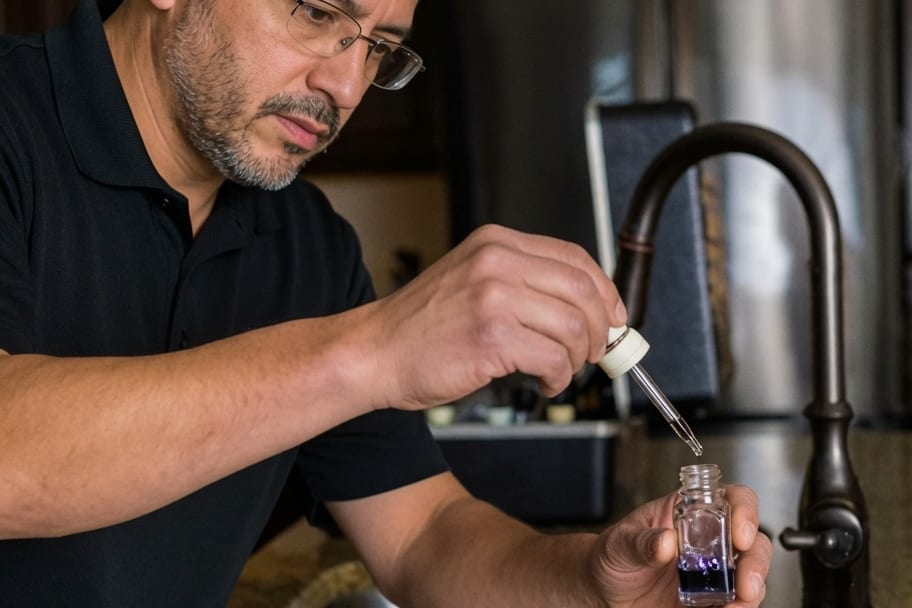
If anyone quotes you a price on a softener in Asheville, that first row is your answer. Want the reading at your own tap instead of the citywide average? Request a free consultation and we will measure it and put the numbers in writing.
The two numbers that do deserve attention
Disinfection byproducts. Asheville’s 2025 running annual average for trihalomethanes was 68 parts per billion against an 80 limit, and the haloacetic acid group came in at 52 against 60. Both are compliant, and both sit closer to their limits than most systems in this state. Soft reservoir water carries a lot of dissolved organic material, chlorine reacts with it, and this is the result. Worth noting: the report prints a highest average above its own stated sample range on both rows, which are different statistics but still read oddly on the page.
Corrosion, which is the flip side of very soft water. Alkalinity under 24 parts per million means the water has little buffering capacity, and soft, lightly buffered water is aggressive toward lead solder and copper pipe. Asheville treats for this with zinc orthophosphate, and that treatment is doing real work.
You can see exactly how much work, because it stopped. During the 19 days the plant could not feed corrosion control, the November to December 2024 sampling round found 12 homes above the 15 parts per billion lead action level, with one result at 81. The city-wide 90th percentile still came in under the action level, so no system exceedance was triggered, and the rounds since have been clean. But it is a clear demonstration that in Asheville the pipe in your own house matters more than the water leaving the plant.
The city hands out lead test kits at no charge to its water customers, at the City Hall customer service window, and publishes a service line inventory. If your house predates the mid-1980s, start there.
What to buy in Asheville, and what to skip
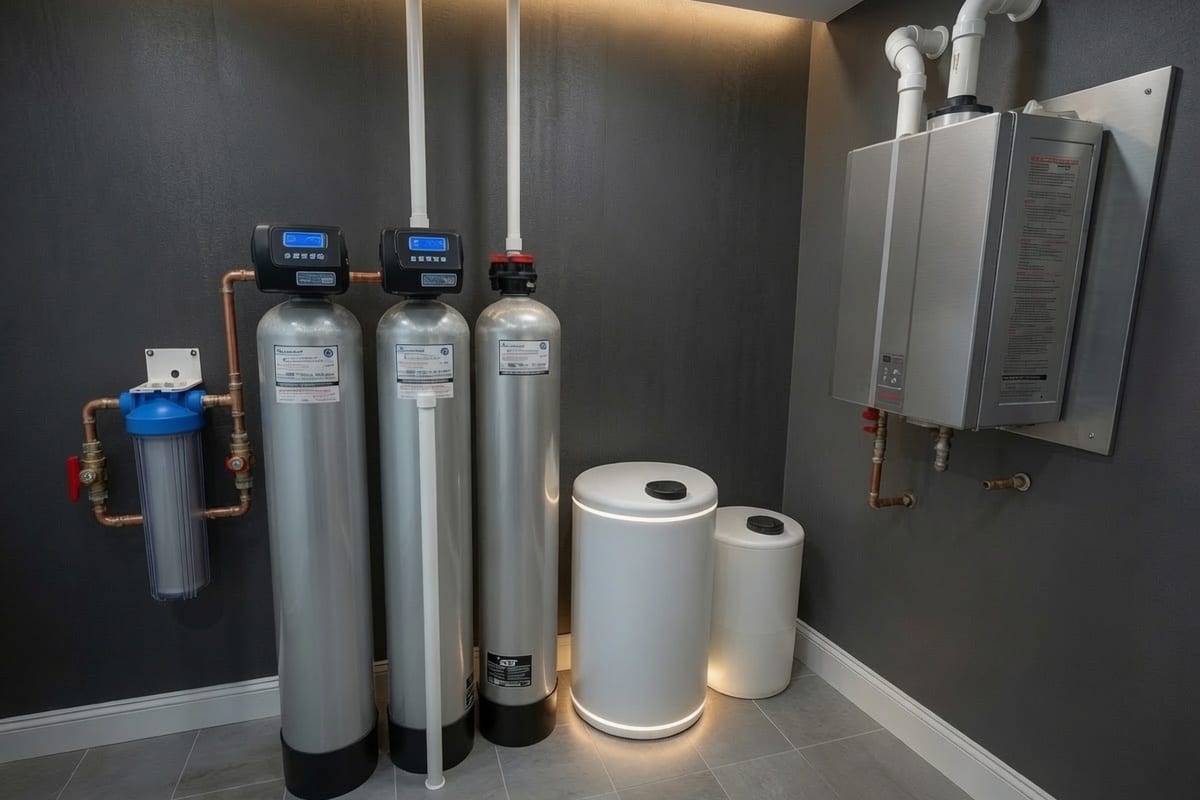
Activated carbon, standard grade. Asheville runs free chlorine, not chloramine, so the catalytic carbon that Greensboro and Monroe need is not required here. The Mills River plant adds ozone as its primary disinfectant, but chlorine still carries the residual through the pipes. A whole house carbon system at $1,500 to $3,500 installed addresses the byproducts at every tap, showers included, which matters because trihalomethanes are volatile. Our cost guide covers what moves that figure.
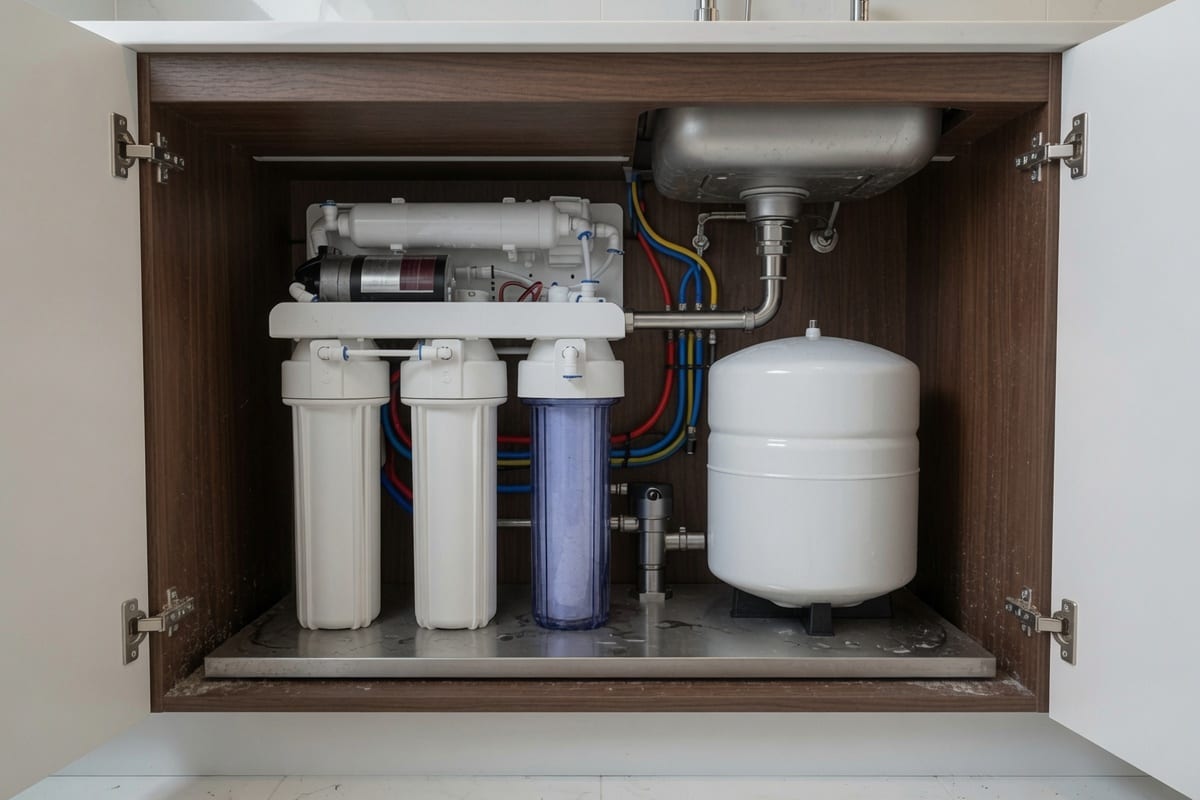
Reverse osmosis at the kitchen sink. At $350 to $900 installed it covers drinking and cooking water, and it is the sensible choice if lead from your own plumbing is the thing you want handled rather than anything the utility sends. See our reverse osmosis page.
Not a softener. At 0.32 grains per gallon there is nothing to remove, and softening water this soft and this lightly buffered would be actively unhelpful.
Not a PFAS system. Every quarterly sample in 2024 came back non-detect. See where every NC city landed on PFAS.
Frequently Asked Questions
Is Asheville water safe after Hurricane Helene?
Yes. The boil water notice was lifted on 18 November 2024 after confirmatory sampling, both storm violations returned to compliance in March 2025, and the full 2025 calendar year passed with no violations of any kind. The open question in Asheville is resilience against the next storm, not the quality of what is coming out of the tap now.
Why is North Fork rated “Higher” for susceptibility?
The state assessment rates North Fork and the emergency French Broad intake as Higher, and Bee Tree and Mills River as Moderate. The report is explicit that the rating describes a source’s potential to be affected by activity in its assessment area, not a finding about water quality. It is not a reason to buy anything.
My water comes from Mills River. Is it different?
Somewhat. Mills River is a separate plant on a separate watershed in Henderson County, and it uses ozone alongside chlorine. The published quality figures in the annual report cover the system as a whole, so the hardness and byproduct numbers above are system averages rather than plant-specific ones.
Should I worry about lead in my Asheville home?
It depends on your plumbing, not your utility. The system has stayed under the action level in every published round. What the post-Helene results showed is that individual houses with lead solder, galvanized pipe or lead service lines can read high when corrosion control lapses. The city’s no-charge lead test kit and its service line inventory are the right first steps.
Do I need a filter on a private well in Buncombe or Henderson County?
Different question entirely, and often yes. Mountain wells here commonly run acidic, and Henderson County is one of eight EPA Zone 1 radon counties in the state. A study of private wells across Buncombe, Henderson and Transylvania found a median radon of 6,060 picocuries per litre. None of that is on the state’s required well panel, which our guide to NC well water testing sets out, and our water testing visit covers the readings that decide equipment.
Is the water still discoloured sometimes?
Elevated iron and manganese after the storm caused discoloration and a metallic taste, which is an appearance and taste issue rather than a safety one. The city’s in-reservoir treatment at North Fork works to reduce both, and the 2025 turbidity figures are back to normal.
Sources and reporting dates
Every figure above comes from the sources below. Water quality changes between reports, and a reported average does not describe conditions at every address on every day, so check the current report before acting on any number here.
- City of Asheville Water Resources annual water quality report, covering calendar year 2025. Source of the hardness, disinfectant, byproduct, lead and copper figures.
- EPA Safe Drinking Water Information System, for population served, violation history and compliance dates.
- EPA UCMR5 occurrence data, the national PFAS monitoring round, for any result described as federal monitoring.
- NC DEQ Source Water Assessment Program, for source water susceptibility ratings.
- EPA PFAS drinking water rule, for the limits and their compliance dates.
Getting Asheville water right
Asheville has exceptionally soft, PFAS-free water from a watershed the city owns, delivered by plants that are compliant today and not yet rebuilt for the next storm. The two things worth acting on are disinfection byproducts, which carbon handles, and the age of the pipe inside your own house, which the utility cannot touch.
Compare this supply with other cities in our North Carolina water quality guide, or see how we approach city water treatment.
We serve Asheville, Hendersonville, Hickory and the rest of North Carolina. Every visit starts with a free consultation: we test your water, compare it against what the city publishes, and give you an up-front written price for only what the numbers support. Call (984) 384-6991 or request a free consultation.