Is Winston-Salem Tap Water Safe to Drink? (2026)
Raleigh Water Pros • September 13, 2026 • 8 min read
Winston-Salem has been drinking from the same river since 1897, when a hydro-electric plant and a ten-foot dam went in at Idols on the Yadkin. That intake made the Yadkin the town’s primary water source, and it still is, now feeding three treatment plants with a combined 91 million gallons a day of capacity.
Longevity is not the interesting part. What matters for anyone choosing a filter here is that Winston-Salem sits in the Yadkin basin, not the Cape Fear, and that single geographic fact keeps it out of the story that dominates water news across the rest of the state.
Is Winston-Salem tap water safe to drink?
Yes, and it comes in better than most of its neighbours on the two things people ask about. Every PFAS result the utility published for 2025 was at or below 2.1 parts per trillion, against the 4.0 ppt figure the report cites for PFOS and PFOA. PFOA itself was not detected at all.
Winston-Salem/Forsyth County Utilities serves more than 381,000 customers through 2,330 miles of water line, 14 tanks and seven pumping stations.
| Plant | Capacity | Source | Opened |
|---|---|---|---|
| R.W. Neilson | 48 MGD | Yadkin River | 1964 |
| P.W. Swann | 25 MGD | Yadkin River | 2004 |
| R.A. Thomas | 18 MGD | Yadkin River and Salem Lake | 2011 |
The utility holds up to ten days of raw water in off-river storage, which lets it ride out changing river conditions rather than treating whatever the Yadkin is doing that day. Treatment takes about sixteen hours from withdrawal to distribution.
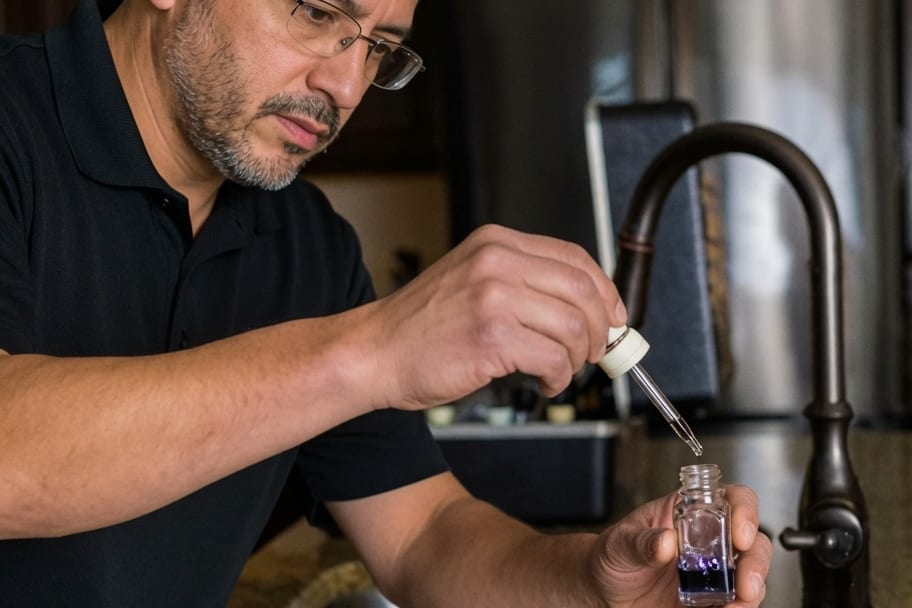
Want to see what your own tap reads against those plant figures? Request a free consultation and we will test it and give you the numbers in writing.
Does Winston-Salem have hard water?
No, and it is the softest city water we have measured anywhere in the Triad. The 2025 report puts hardness at 17.5 parts per million on average, a range of 9.0 to 28.0, which is about 1.0 grains per gallon.
For comparison, Greensboro runs about 2.7 grains and Charlotte about 1.9. Winston-Salem is softer than both, and softer than most municipal supplies in the state.
A water softener here is close to indefensible. There is essentially no hardness to remove, and installing one adds salt, a drain line and a monthly cost in exchange for nothing you will notice. If a salesperson runs a demonstration in your kitchen that turns a glass cloudy, ask them for a reading in grains per gallon and compare it against the 17.5 ppm in the city’s own report.
Pro tip: very soft water can be mildly corrosive to household plumbing, which is why Winston-Salem adds zinc orthophosphate during treatment to build a protective coating inside the pipes. Softening it further would work against that, another reason a softener is the wrong tool on this supply.
What is worth filtering in Winston-Salem?
Less than in most North Carolina cities, honestly. Three things are worth knowing.
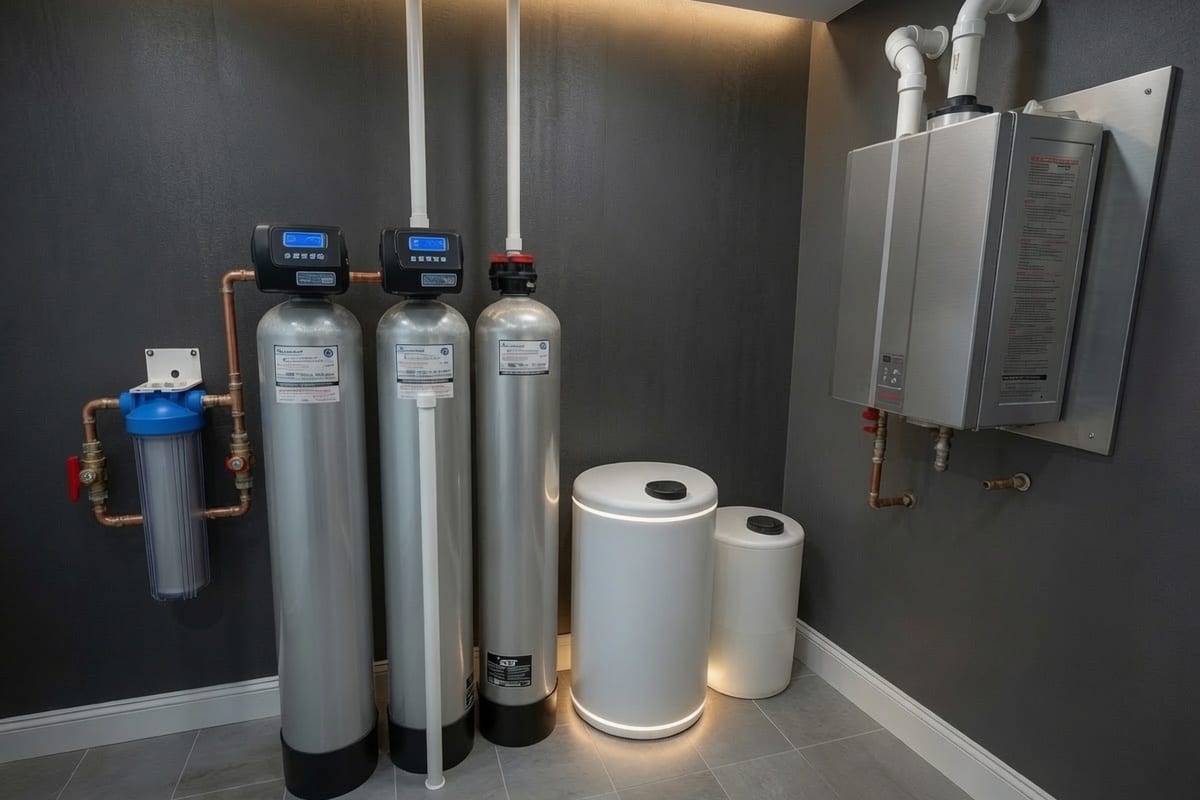
Chlorine taste. The 2025 report lists a chlorine residual averaging 1.02 ppm with a range up to 1.98, against a 4.0 limit. That is enough to taste in a glass of water and in coffee, and a whole house carbon filtration system at $1,500 to $3,500 installed removes it at every tap. Our cost guide covers what changes that number.
Ask the utility one question before you buy. Winston-Salem’s reports list the residual as chlorine and never mention chloramine or ammonia, which points to free chlorine, and free chlorine means standard activated carbon is the correct and cheaper media. The reports do not use the phrase “free chlorine” in so many words, so before committing to a whole-house system, call City Link on 311 and ask whether the distribution system is chloraminated. A one-line answer decides whether you want standard or catalytic carbon, and any installer worth hiring will want to know too.
A barrier at the drinking tap, if you want one. Nothing in the published data demands it. If you would rather have a last line for drinking and cooking water, an under-sink reverse osmosis system at $350 to $900 installed is the proportionate answer, and it also covers lead from household plumbing, which no treatment plant can reach.
What about the PFAS numbers?
They moved in the right direction, and the utility publishes both years so you can see it.
| Compound | 2024 average | 2025 average |
|---|---|---|
| PFOS | 1.68 ppt, range to 3.10 | 0.175 ppt, range to 2.100 |
| PFOA | 0.83 ppt, range to 2.60 | not detected |
| PFBS | 0.75 ppt | not detected |
| PFHxS | 0.30 ppt | not detected |
Every 2025 figure sits comfortably under the 4.0 ppt the report names for PFOS and PFOA. Winston-Salem samples at all three plants and prints the results rather than burying them, which is worth crediting.
This is a noticeably different position from the city forty miles east. Greensboro’s monitoring put PFOS at 27 parts per trillion at one of its plants and it is now building carbon contactors to comply. Winston-Salem is not in that situation, and it does not need to be.
Frequently Asked Questions
Is Winston-Salem affected by the 1,4-dioxane in the news?
Not in its drinking water. 1,4-dioxane does not appear in the city’s water quality reports, and Winston-Salem draws from the Yadkin basin while the state’s dioxane investigation centres on the Cape Fear. State funding has since become available to extend monitoring into the Yadkin and Neuse basins, so this is worth revisiting rather than treating as settled forever.
Winston-Salem sells water to Greensboro. Does that mean they share a problem?
No. Water flows from Winston-Salem to Greensboro, not the other way, and the two draw from different river basins. Greensboro buys from Winston-Salem, Burlington, Reidsville and the Piedmont Triad Regional Water Authority, mostly to cover drought and maintenance.
Which plant serves my address?
The utility has not published an address lookup, so ask City Link on 311. All three plants draw on the Yadkin, and the Thomas plant also draws on Salem Lake, so the difference between them is smaller here than in cities running separate watersheds.
Should I worry about the “Higher” susceptibility ratings?
Not on their own. The state rates Salem Lake and the Yadkin intake at Idols Dam as higher susceptibility, which describes what sits in the watershed upstream and how exposed the intake is, not the quality of the water you drink. The utility’s published results are the measure of that, and they are good.
Do I need any filter at all here?
Plenty of Winston-Salem homes do not. The honest test is whether you dislike the taste, have old plumbing, or specifically want a PFAS barrier despite results already under the threshold. If none of those apply, we will tell you to keep your money. A water test settles it in one visit.
Why does soft water still leave spots on my glasses?
Usually that is detergent residue or dissolved solids rather than hardness, because at 1.0 grains per gallon there is very little hardness to deposit. It is worth checking your dishwasher rinse aid before assuming a water problem.
What is zinc orthophosphate and should I filter it out?
It is a corrosion inhibitor the utility adds deliberately, and no, you should not try to remove it. It forms a thin protective film on the inside of pipes and plumbing fixtures so that lead and copper stay in the metal rather than migrating into your water. Very soft water is more aggressive toward pipe metal than hard water is, so on a supply this soft the inhibitor is doing real work. A carbon filtration system targets chlorine and taste compounds and leaves that chemistry alone.
How often should I retest if nothing seems wrong?
For city water, reading the annual report each spring is usually enough, since the utility is testing continuously on your behalf. Test at your own tap when something changes: you move into an older house, you notice a new taste or colour, you replace plumbing, or a family member becomes pregnant or immunocompromised. Those are the moments when the difference between the plant’s water and your house’s water actually matters.
Sources and reporting dates
Every figure above comes from the sources below. Water quality changes between reports, and a reported average does not describe conditions at every address on every day, so check the current report before acting on any number here.
- City of Winston-Salem Utilities annual water quality report, covering calendar year 2025. Source of the hardness, disinfectant, byproduct, lead and copper figures.
- EPA Safe Drinking Water Information System, for population served, violation history and compliance dates.
- EPA UCMR5 occurrence data, the national PFAS monitoring round, for any result described as federal monitoring.
- NC DEQ Source Water Assessment Program, for source water susceptibility ratings.
- EPA PFAS drinking water rule, for the limits and their compliance dates.
Getting Winston-Salem water right
Winston-Salem is the easiest water in the Triad to live with: the softest supply, PFAS results comfortably under the threshold, and a utility that publishes two years side by side. The genuine decisions here are narrow, and for a lot of households the correct answer is a carbon filter for taste and nothing else.
Compare this supply with other cities in our North Carolina water quality guide, or see how we approach city water treatment.
We serve Winston-Salem, Greensboro, High Point, Burlington and the rest of North Carolina. Every visit starts with a free consultation: we test your water, compare it against what the utility publishes, and give you an up-front written price for only what the numbers support. Call (984) 384-6991 or request a free consultation, and if the answer is that you need nothing, that is what you will hear.