Is Huntersville Tap Water Safe to Drink? (2026)
Raleigh Water Pros • September 13, 2026 • 9 min read
The plant that fills a Huntersville kitchen tap sits inside the town, at 7980 Babe Stillwell Road. It is the Lee S. Dukes Jr. Water Treatment Plant, and it pulls raw water from an intake on Lake Norman at Blythe Landing that opened in 1998.
Ask whether Huntersville tap water is safe to drink and most pages will point you at Charlotte’s annual report, because the town has no water utility of its own. That is fair as far as it goes. Same utility, same report, same lab results. It skips the part that belongs to this town alone: most of Charlotte drinks Mountain Island Lake, Huntersville drinks Lake Norman, and NC DEQ does not rate those two reservoirs the same way.
Below is what that difference means, what the 2025 report measured, and which piece of equipment is worth buying in a house up here.
Is Huntersville tap water safe to drink?
Yes. Charlotte Water, which supplies every tap in town, logged no drinking water violations at all during 2025, and the EPA’s most recent national screen turned up neither PFOA nor PFOS in any sample it took from this utility.
The word that unsettles people is not in the lab results at all. It sits in a state assessment of the reservoir, and it deserves a real explanation rather than a shrug or a scare.
What does a “Higher” source water rating actually mean?
It rates the watershed, not your water. NC DEQ’s source water assessment scores each public intake on two things: what sits upstream that could plausibly reach it, and how exposed the intake itself is. The work is done from maps, permits and land use. It describes potential before treatment, not what leaves the plant afterward.
DEQ is blunt about the limits of its own scale. In its assessment, “a susceptibility rating of ‘higher’ does not imply poor water quality.”
In the assessment dated 9 September 2020, Lake Norman is the only Charlotte Water source placed in the Higher band. Mountain Island Lake, which supplies most of the system, sits at Moderate.
| NC DEQ source water assessment | Lake Norman | Mountain Island Lake |
|---|---|---|
| Susceptibility rating | Higher | Moderate |
| River basin | Catawba | Catawba |
| Background | Blythe Landing intake opened 1998 | lake impounded 1924, northwest of Charlotte |
| Plant fed | Lee S. Dukes Jr., 25 MGD design | Franklin and Vest, 181 and 24 MGD |
| Towns on it | Huntersville, Cornelius, Davidson | most of Charlotte and Mecklenburg County |
Charlotte Water publishes that its three plants draw on Mountain Island Lake and Lake Norman together, and that the Dukes plant is fed by the Blythe Landing intake on Lake Norman. It does not publish a plant-by-plant split for Franklin and Vest, so treat the right-hand column as the system’s other two plants rather than a confirmed single-lake assignment.
So the rating is a reason to read the treated numbers carefully. It is not a verdict on them, and treating it as one gets residents sold equipment they do not need.
Pro tip: A susceptibility rating belongs to the intake, not to your address. Two houses a mile apart off Gilead Road share the same rating and can still pour different water, because the last stretch of pipe into a building belongs to the owner rather than the utility.
Not sure which of these numbers applies to your house? Book a free consultation and we measure the water at your own fixtures, then put a price in writing for whatever the results support.
Why a treatment plant inside the town limits matters
Charlotte Water expects Dukes to keep working hard. The utility says the plant “will continue to play an integral role in the growth of Huntersville, Cornelius, and Davidson.” Dukes is built for 25 million gallons a day and runs at 20.47 million on average, so roughly four fifths of its design capacity is already committed to north Mecklenburg.
It also means there is no separate Huntersville system to look up. EPA’s national monitoring dataset contains no Huntersville public water system, because one does not exist. Charlotte Water reports for all of it under a single system number, and every published figure is a system-wide figure that includes your street.
Practically, that makes Charlotte Water the office to call about pressure, discoloration or a meter problem in Huntersville, through 311 or 704-336-7600. The town itself does not treat, test or bill for water.
What the 2025 report shows at the tap
Disinfectant. Plain chlorine, not chloramine, at a running average of 1.04 ppm against a 4.0 ppm ceiling. That single detail decides which filter media to buy, and several national filter sites publish it wrong for this utility.
Trihalomethanes. The highest running annual average in 2025 was 63.7 ppb, under the 80 ppb limit but not by a comfortable margin. They form when chlorine meets organic material carried in from a lake, which is why a surface-water system on free chlorine usually sits higher on this line than a chloraminated one. HAA5, the other byproduct group, came in at 22.9 ppb against a limit of 60.
Hardness. Total hardness averaged 32 ppm, which converts to 1.9 grains per gallon. Anything under about 3.5 grains is soft, so this water is soft by a wide margin.
pH. An average of 8.5, inside the 7.0 to 9.2 window the state set for this utility so it can run corrosion control across its pipe network.
PFAS. Four quarters of EPA monitoring found no PFOA and no PFOS in any sample. Two short-chain compounds appeared in traces, PFBA averaging 0.75 ppt and PFPeA averaging 0.67 ppt, and neither one is regulated. Not every North Carolina system came through that round this cleanly; Concord, one county east, exceeded the federal PFOS limit and spent $18 million on a carbon system in response, and what Greensboro’s report shows is a separate story again.
Lead. The 90th percentile result was non-detect, and that is the figure regulators judge. One tap in the system still measured 44 ppb against an action level of 15. Lead is an address problem rather than a plant problem, and Charlotte Water publishes a searchable inventory of private service line materials so you can look up your own.
Violations. None recorded in 2025.
Which filter actually earns its money in Huntersville?
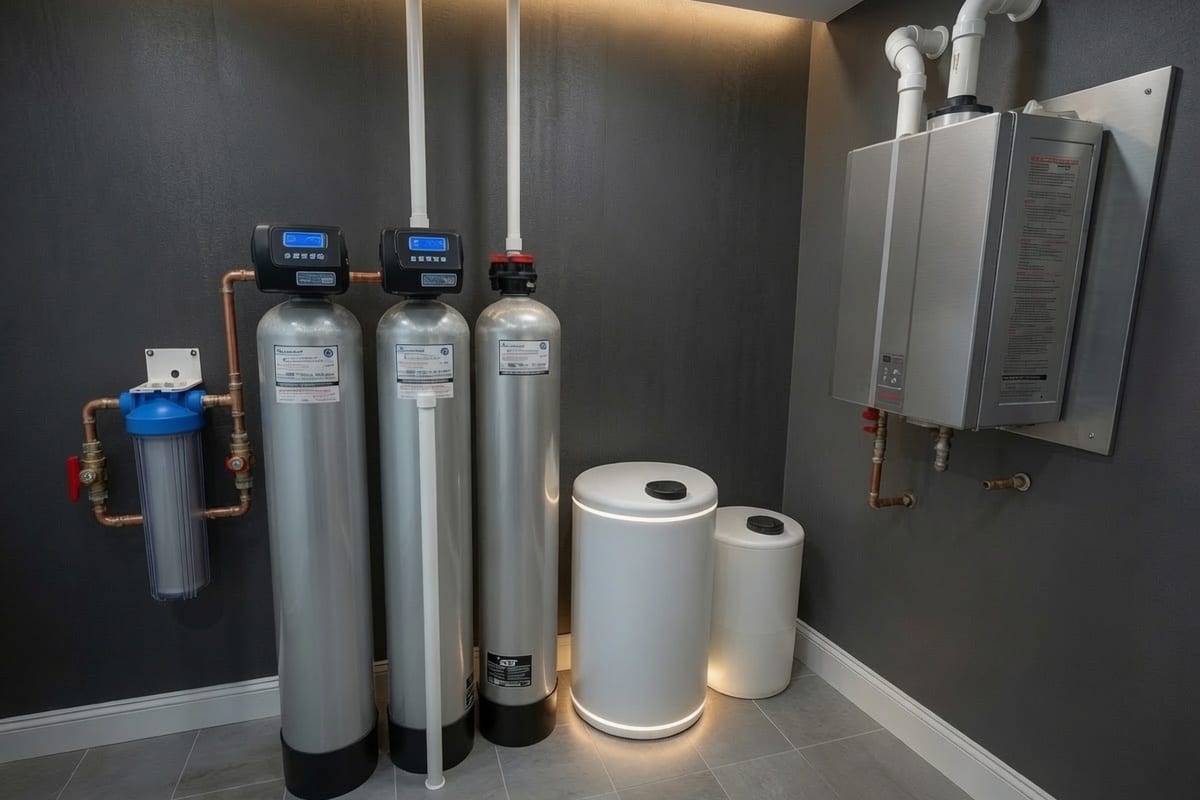
Carbon, and nothing exotic. Because this utility disinfects with free chlorine rather than chloramine, ordinary activated carbon does the job. The catalytic carbon that chloraminated cities need costs more and buys you nothing here.
A whole house carbon filtration system treats every fixture, the shower included, which matters because trihalomethanes are volatile and hot water releases them into the air you breathe. Installed cost for a properly sized tank falls between $1,500 and $3,500, and the full range sits on our water filtration cost guide. If chlorine taste is your only complaint, carbon filtration at the point of entry handles that too. Call that comfort, not safety.
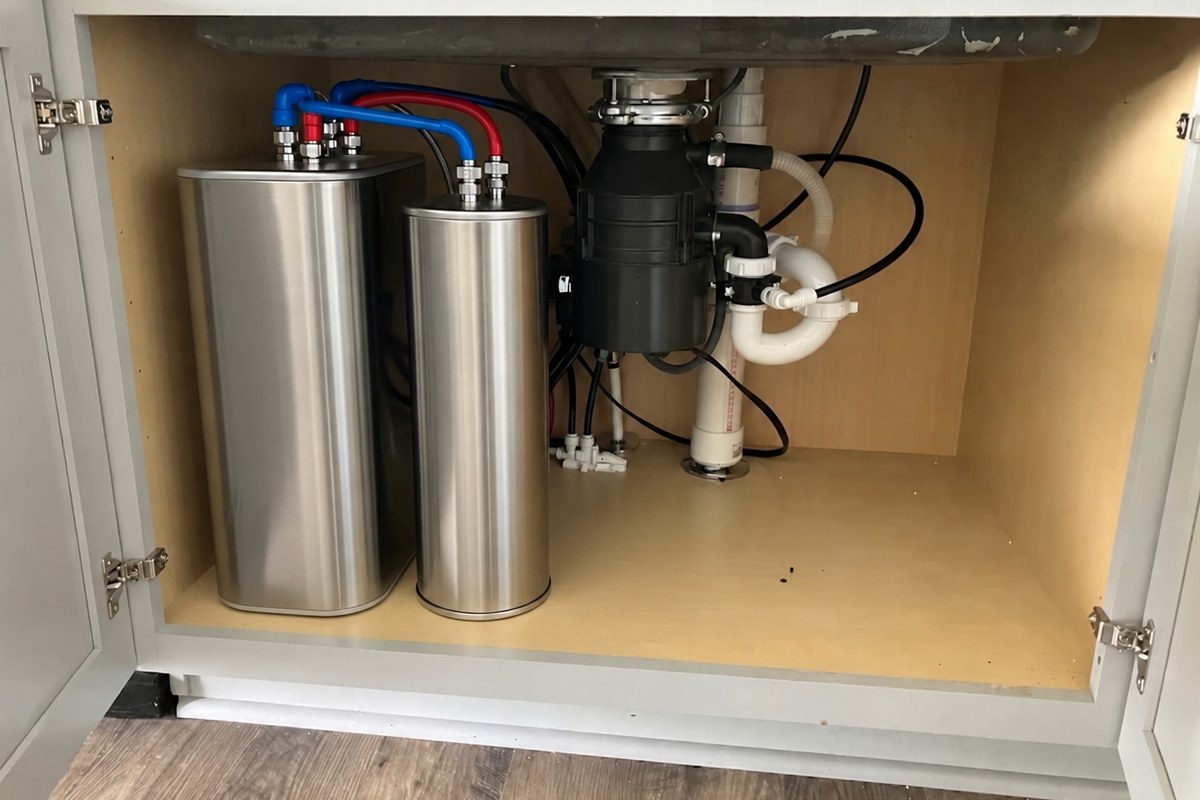
For drinking and cooking water in an older house, or any house whose service line comes back as lead or galvanized in the inventory, an under-sink reverse osmosis system is the tighter barrier. Budget $350 to $900 for a standard under-sink unit. Every figure here is a planning range, not a quote.
The purchase to skip
A water softener. At 1.9 grains per gallon there is almost nothing for it to remove, and units in this market run $1,500 to $3,500 before you count the salt. If a salesperson runs a countertop demonstration and tells you Huntersville water is hard, ask for the reading in grains per gallon and hold it against the 32 ppm the utility publishes every year.
Frequently Asked Questions
Does Huntersville have its own water department?
No. Charlotte Water provides water and wastewater service for the Town of Huntersville, and the town directs residents to report problems through 311 or 704-336-7600. There is no Huntersville treatment standard and no separate Huntersville report to read.
Are Cornelius and Davidson on the same supply?
Yes. Charlotte Water serves Cornelius and Davidson alongside Huntersville, and it names all three towns when describing what the Dukes plant is for. Anything true of Huntersville’s source water is true of theirs.
Does a “Higher” rating mean I should switch to bottled water?
No. NC DEQ states outright that a higher susceptibility score does not imply poor water quality, and the treated water from this system recorded zero violations last year. For the view from the other reservoir, our Charlotte tap water report covers the same utility from the Mountain Island Lake side.
Is Huntersville water hard enough to scale a water heater?
Not really, at 32 ppm total hardness or 1.9 grains per gallon. That sits far below the point where scale becomes a maintenance item on a heater or a fixture. If you are seeing white crust anyway, water testing at the fixture will tell you whether hardness is the cause or something else is.
Is the Dukes plant close to capacity?
It has headroom, though less than it once had. The plant is designed for 25 million gallons a day and averages 20.47 million, and Charlotte Water expects it to carry continued growth in Huntersville, Cornelius and Davidson.
Should I test my own tap if the utility already tests?
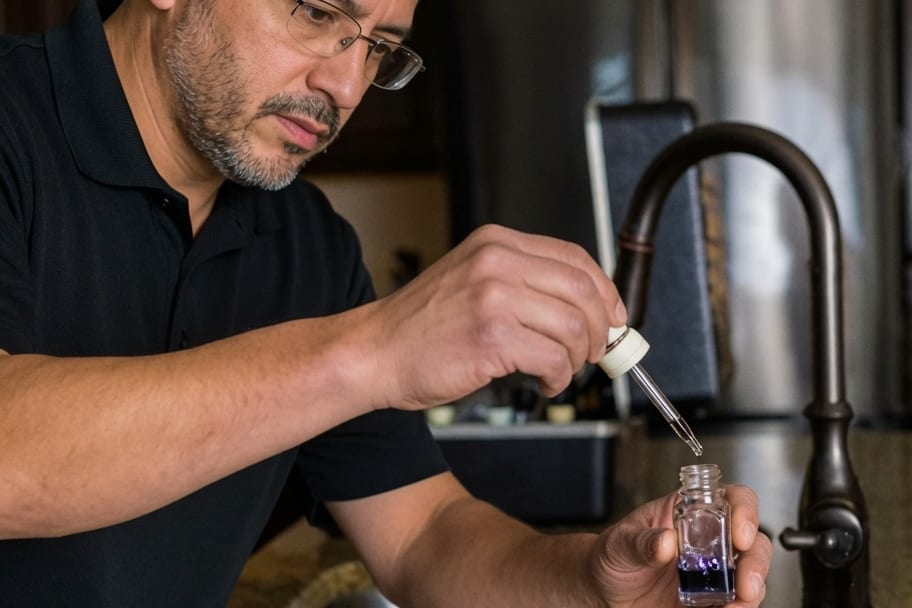
For two things, yes. Lead and copper vary house by house because they come from the service line and the plumbing inside the walls, so a system-wide 90th percentile figure cannot tell you about your kitchen. Everything else in the report is a system number that already covers your street.
Sources and reporting dates
Figures in this guide come from the sources below. Water quality changes between reports, and a reported average does not describe conditions at every address on every day, so check the current report before acting on any number here.
- Charlotte Water annual water quality report, covering calendar year 2025. Source of the hardness, disinfectant, byproduct, lead and copper figures above.
- EPA Safe Drinking Water Information System, for this system’s population served, violation history and compliance dates.
- EPA UCMR5 occurrence data, the national PFAS monitoring round, for any PFAS result described as federal monitoring.
- NC DEQ Source Water Assessment Program, for the susceptibility ratings.
- EPA PFAS drinking water rule, for the limits and compliance dates.
What to do about Huntersville tap water
Huntersville drinks treated Lake Norman water, and the reservoir’s “Higher” susceptibility score is a note about the watershed upstream rather than a warning about the tap. Two items are worth acting on: chlorine byproducts sitting near the federal line, and lead risk that depends entirely on your own service line. Neither one is an argument for a softener.
Compare this supply with other cities in our North Carolina water quality guide, or see how we approach city water treatment.
We work across Huntersville, Cornelius, Davidson and Charlotte. Every job here starts the same way: we measure the water at your fixtures, walk you through what each reading means, then hand over a written, up-front price before anything gets installed. If the readings say you need nothing, we will say so. Call (984) 384-6991 or request a free consultation.