Is Leland NC Tap Water Safe to Drink? (2026)
Raleigh Water Pros • September 13, 2026 • 8 min read
On 1 June 2023, Leland stopped drinking the Cape Fear River. Its utility switched every customer onto a reverse osmosis plant fed by ten wells reaching 320 to 600 feet down into the Lower Peedee and Black Creek aquifers, behind confining layers thick enough that the raw water had already tested non-detect for manmade contaminants.
That makes Leland the one town in the lower Cape Fear whose drinking water never touches the river at the centre of North Carolina’s biggest contamination story.
Is Leland NC tap water safe to drink?
Yes, and Leland is in an unusually strong position because of where its water comes from rather than how hard it is scrubbed afterwards. The aquifers sit beneath confining layers that keep surface contamination out, and the reverse osmosis plant is a second barrier on top of that.
First, a point that trips people up constantly: Leland is not on Brunswick County Public Utilities water. It is served by Brunswick Regional Water and Sewer H2GO, a separate self-governing public utility founded in 1976 and headquartered in Leland. H2GO serves Belville, Leland, Navassa and unincorporated northeastern Brunswick County, about 16,500 water customers, roughly 45,000 people. The Town of Leland handed operation of its distribution system to H2GO on 18 May 2021.
That distinction matters right now. Brunswick County’s Northwest plant is still conventional treatment on Cape Fear River water, with its own reverse osmosis train due at the end of 2026 and not operational as of August 2026. H2GO’s has been running since 2023. Same county, different water, different position entirely.
| H2GO, serving Leland | Brunswick County Public Utilities | |
|---|---|---|
| Source | Lower Peedee and Black Creek aquifers | Cape Fear River |
| Treatment | Reverse osmosis, since June 2023 | Conventional, RO train due end of 2026 |
| Exposure to upstream discharge | None, confined groundwater | River intake downstream of the plant |
Want to know what is actually at your tap rather than at the plant? Request a free consultation and we will test it and give you the results in writing.
Does Leland have hard water?
Yes, more than most North Carolina city water, and this is the part that surprises people: it was put there on purpose.
H2GO published a hardness of 72 milligrams per litre as calcium carbonate in October 2023, which is 4.2 grains per gallon. That is moderately hard, and considerably harder than Charlotte at 1.9 grains or Wilmington at 2.9 just across the river.
Reverse osmosis strips almost everything out of water, including the minerals that make it stable. Water that pure is aggressive toward metal pipe. So H2GO adds calcium carbonate back after treatment, deliberately adjusting pH, hardness and alkalinity to protect the distribution system and household plumbing. Published pH runs 7.4 to 7.8 with alkalinity around 75.
Pro tip: hardness on a reverse osmosis supply is a design choice, not a contamination problem. If someone quotes you a softener in Leland on the grounds that your water is hard, they are technically right about the number and wrong about what it means.
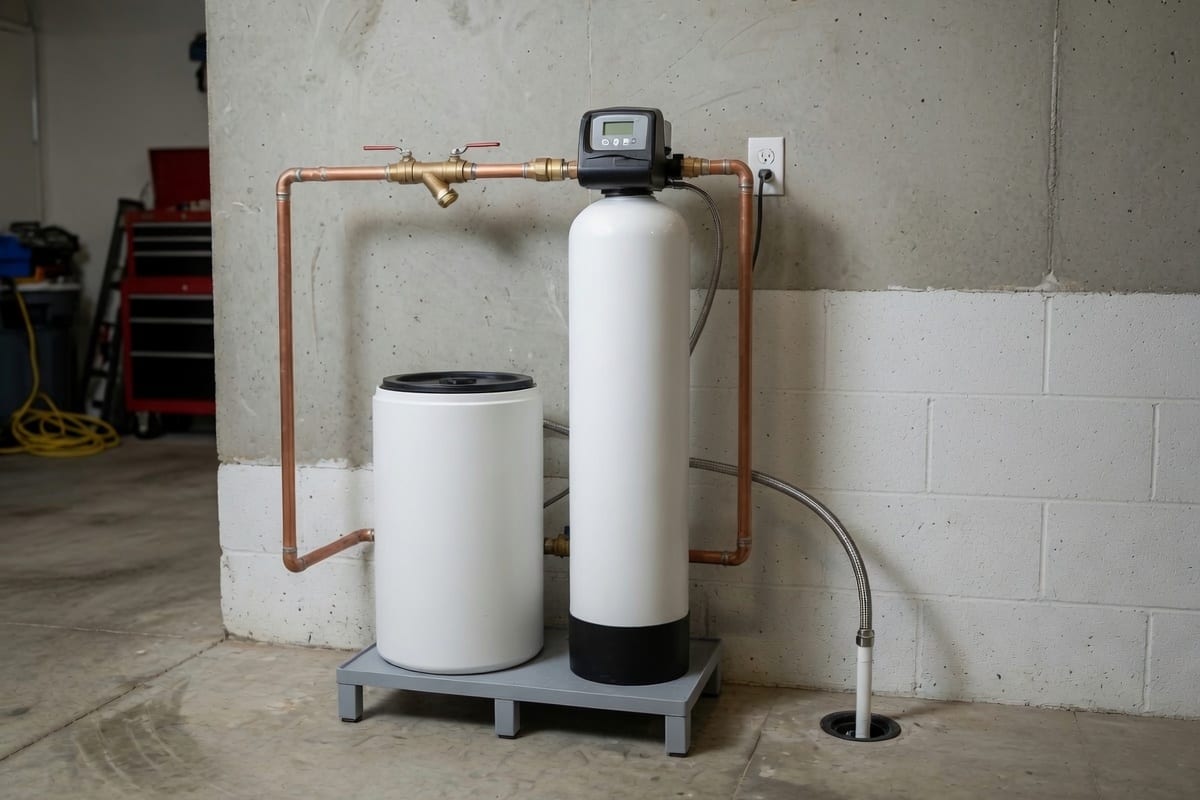
One honest caveat on that figure: the October 2023 number is the most recent one H2GO has published, and hardness does not appear in the 2025 annual report at all. At 4.2 grains a softener is a defensible purchase for a household that dislikes spotting on glassware or wants longer appliance life, and a water softener runs $1,500 to $3,500 installed, with the full range on our water filtration cost guide. It is a comfort decision here, not a protection one. Test first.
Your own utility warns about companies like ours
H2GO publishes a “Consumers Beware” notice stating that numerous water softener and filtration providers scare consumers into unnecessary purchases, and that a total dissolved solids test is not a reliable measure of water quality.
They are right, and we are not going to pretend otherwise just because we sell water treatment.
The TDS meter trick is the most common one in this industry. A salesperson dips a probe, shows you a number, and lets you conclude the number is bad. Total dissolved solids measures the mineral content of water, not its safety. On a remineralised reverse osmosis supply like Leland’s, a TDS reading largely measures the calcium carbonate the utility added on purpose. The electrolysis demonstration, where water turns brown in a jar, is the same category: it proves an iron electrode corrodes in water that conducts electricity, which is all water with minerals in it.
If a company will not show you a figure in grains per gallon or milligrams per litre that you can check against H2GO’s published report, you have learned something useful about the company.
So what is actually worth buying in Leland?
Honestly, less than in most places, and that is a consequence of the utility having already done the expensive part.
A softener, if hardness bothers you. At 4.2 grains it is a real choice, unlike the soft-water cities inland where it is simply the wrong product. This is the one market covered here where we would say a softener is a legitimate option on city water.
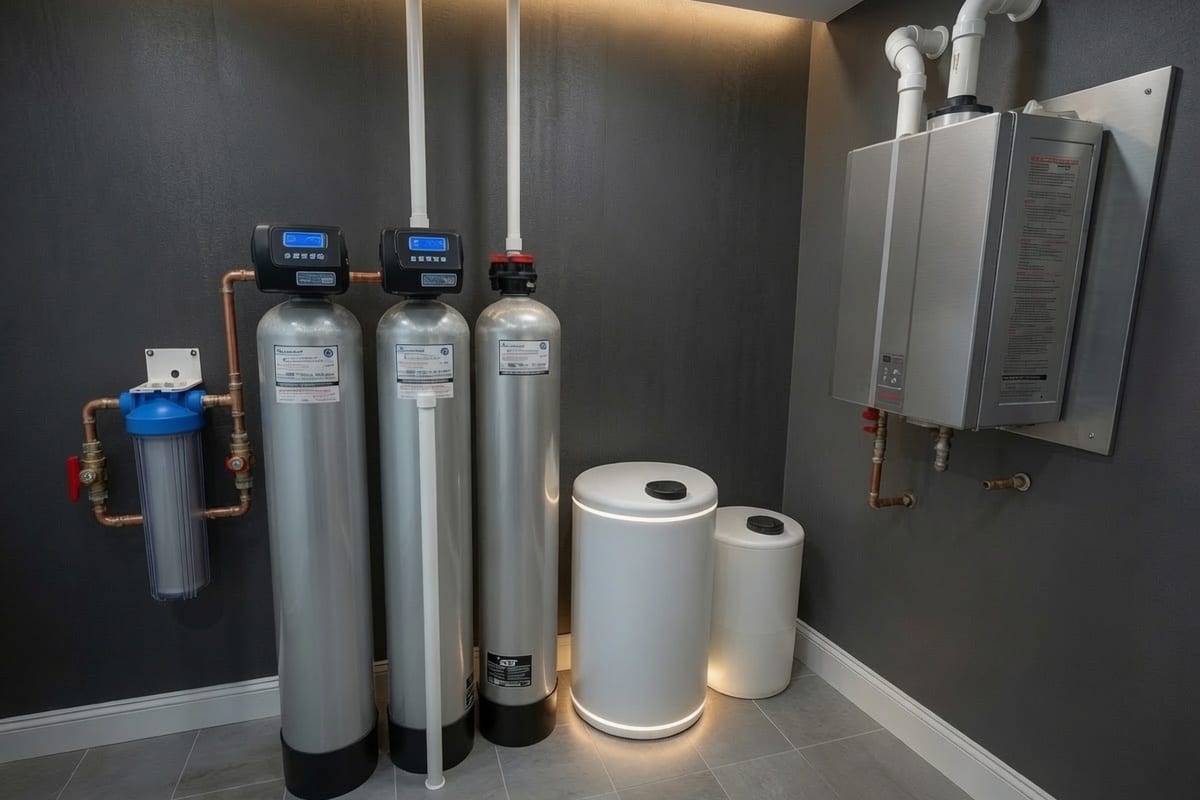
Little case for whole-house carbon. H2GO runs free chlorine at a 0.55 ppm annual average, dropping to roughly 0.2 to 0.3 in the furthest reaches of the system. That is a light residual, and taste complaints here are correspondingly rare. If the chlorine does bother you, whole house carbon filtration at $1,500 to $3,500 installed removes it, and standard activated carbon is the correct media since the system is not chloraminated.
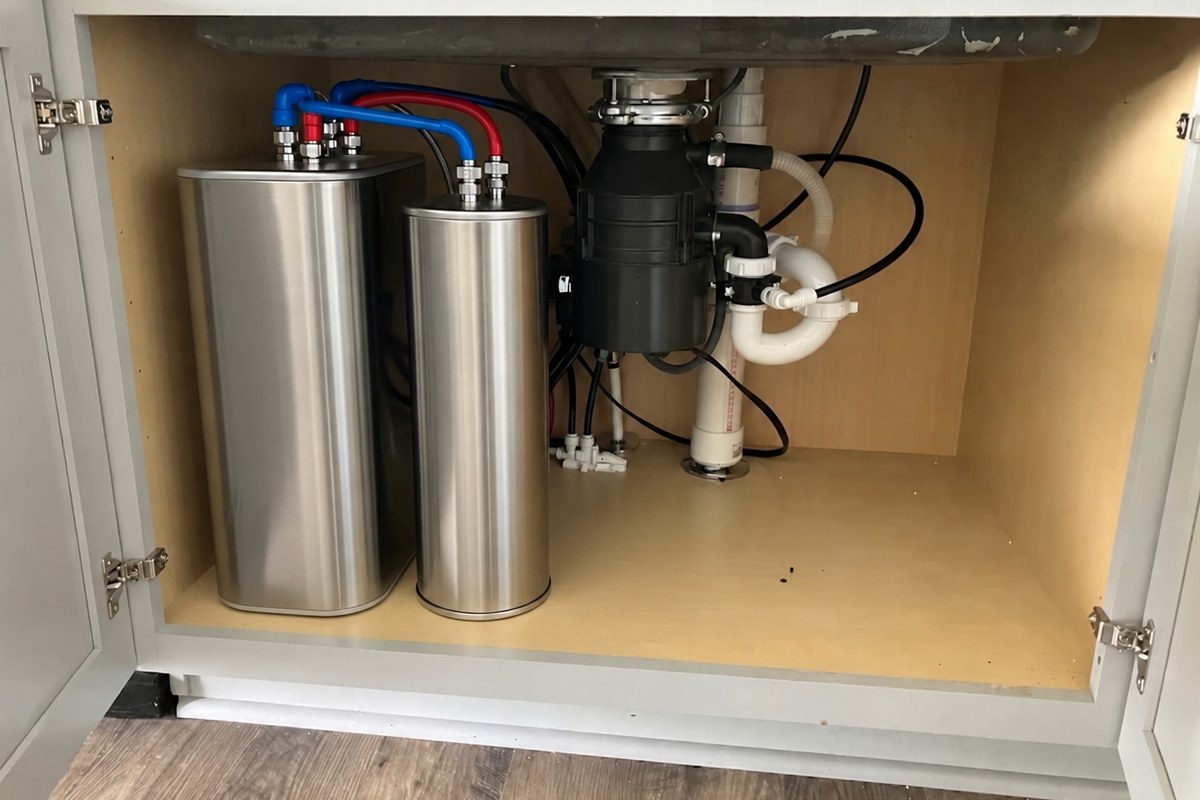
Almost no case for a second reverse osmosis unit. Your utility already runs reverse osmosis on the whole supply. Putting another one under the sink duplicates work that has been done. The exception is an old house where lead or copper may enter from your own plumbing after the water leaves the main, which no plant can reach. That is the one scenario where an under-sink reverse osmosis system at $350 to $900 installed earns its place here.
A test if you are on a private well. Leland has grown fast, from 23,377 people in 2020 to an estimated 34,451 by mid-2024, and not every property in northeastern Brunswick County is on H2GO. Wells in this area are an entirely different conversation, and the Chemours-funded testing programme described in our Wilmington guide may apply to you at no cost.
Frequently Asked Questions
Does Leland water contain GenX or PFAS?
H2GO’s supply comes from confined aquifers rather than the Cape Fear River, and the utility states the raw water was confirmed with non-detect levels of manmade contaminants before the plant was built. Distribution samples were tested for 40 different PFAS analytes on 5 June 2023. This is the strongest structural position of any water system in the lower Cape Fear, because the protection is geological rather than only mechanical.
Is H2GO the same as Brunswick County water?
No, and conflating them will give you the wrong answer. H2GO is a separate utility serving Leland, Belville and Navassa from deep wells through a reverse osmosis plant. Brunswick County Public Utilities draws from the Cape Fear River and its own reverse osmosis expansion was still not operational as of August 2026.
H2GO had a violation in 2025. Should I be worried?
The 2025 report records a tier 3 monitoring violation during the November 2025 compliance period. A monitoring violation means a sample was not collected or reported on the required schedule. It is a paperwork category, distinct from an exceedance of a contaminant limit, and the report does not describe a quality failure.
Do I still need a filter if the plant already uses reverse osmosis?
Usually not for contaminant removal, since the membranes have already done that for the whole supply. The two exceptions are lead or copper picked up from your own household plumbing after the water leaves the main, which a reverse osmosis unit at the kitchen sink covers, and hardness, which H2GO adds back deliberately and a softener removes.
Why does my water feel different from Wilmington’s?
Because it is a completely different water. Wilmington treats river water through granular activated carbon; Leland treats deep groundwater through reverse osmosis membranes and then adds minerals back. Different source, different process, different mineral profile at your tap.
Should I buy a softener here?
It is a reasonable option at 4.2 grains per gallon, which is not something we say for most North Carolina city supplies. Get a water test at your own tap first, because the published figure is from 2023 and the plant has been expanding since.
The plant is being expanded. Will my water change?
H2GO has six new raw water supply wells and an expansion from 6 to 8 million gallons a day under way. Adding wells in the same confined aquifers should not change the character of the water, but it is a fair question to put to the utility directly if you notice a difference.
Sources and reporting dates
Every figure above comes from the sources below. Water quality changes between reports, and a reported average does not describe conditions at every address on every day, so check the current report before acting on any number here.
- H2GO Brunswick Regional Water and Sewer annual water quality report, covering calendar year 2025. Source of the hardness, disinfectant, byproduct, lead and copper figures.
- EPA Safe Drinking Water Information System, for population served, violation history and compliance dates.
- EPA UCMR5 occurrence data, the national PFAS monitoring round, for any result described as federal monitoring.
- NC DEQ Source Water Assessment Program, for source water susceptibility ratings.
- EPA PFAS drinking water rule, for the limits and their compliance dates.
Getting Leland water right
Leland is the rare market where the utility has already solved the hard problem and says so, and where the main risk to a homeowner is being sold something they do not need. The genuine decisions here are a softener if hardness bothers you, and a test if you are on a well.
Compare this supply with other cities in our North Carolina water quality guide, or see how we approach city water treatment.
We serve Leland, Wilmington, the wider Brunswick and New Hanover area and the rest of North Carolina. Every visit starts with a free consultation: we test your water, compare it against what H2GO publishes, and give you an up-front written price for only what the numbers support. Call (984) 384-6991 or request a free consultation. If your answer is that the utility has already handled it, we will say that too.