UV Bulb and Sleeve Replacement Cost for NC Wells
Raleigh Water Pros • September 20, 2026 • 10 min read
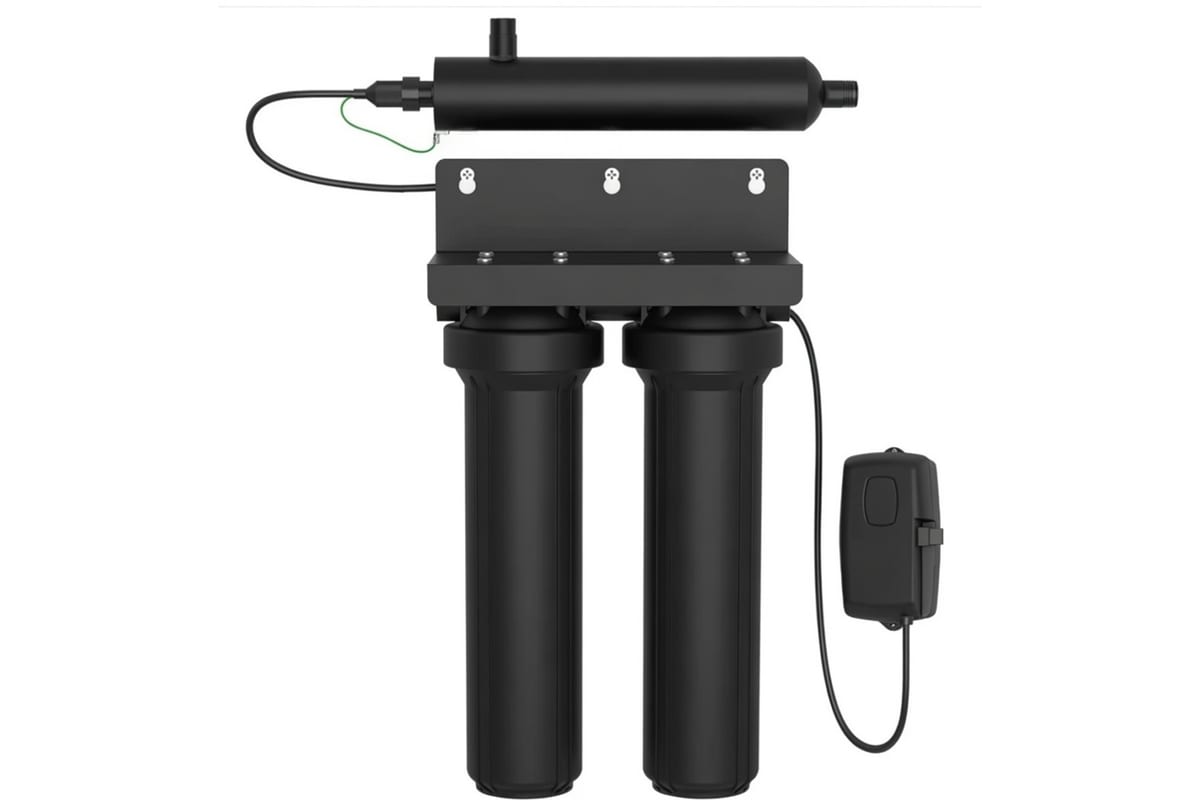
The lamp is lit. You can see the glow through the sight port, the system has never alarmed, and somebody told you to budget for UV bulb replacement every year anyway. On a well in Garner or Knightdale that reads like a service plan rather than a need.
It is a need, and the reason is the single most misunderstood thing about ultraviolet treatment: the light you can see is not the light that kills bacteria. A germicidal lamp keeps glowing long after its useful output has fallen below the dose that disinfects. Nothing changes at the tap, nothing changes at the sight port, and the system quietly stops doing its job.
Below: how long a lamp actually lasts, why a glowing lamp can still be failing, what scales a quartz sleeve in well water, what the running cost looks like, and what happens when the power goes out.
How often does a UV bulb need replacing?
About every 9,000 hours of continuous operation, which works out to roughly one year, whether or not the lamp still lights. University of Georgia Extension states it directly: “all UV lamps need to be replaced every 9,000 hours (approximately 1 year) of continuous lit-up usage.”
That interval is about running hours, not calendar months. A UV unit on a household well is energised continuously, because water can be drawn at any moment, so hours and months track each other closely.
| Item | Typical interval | What happens if you skip it |
|---|---|---|
| UV lamp | About 9,000 hours, roughly a year | Output falls below the germicidal dose while the lamp still lights |
| Quartz sleeve, cleaning | As the water demands; scale and iron drive it | Light is blocked before it reaches the water |
| Quartz sleeve, replacement | When cleaning no longer restores it | Permanently clouded quartz cuts the delivered dose |
| Sediment prefilter | By pressure drop and visible loading | Solids shield bacteria from the lamp |
| Bacteria sample | Yearly, per NCDHHS | You have no evidence the system is working |
Want the intervals and part numbers for your own unit in writing? Request a free consultation and we test your water first, then quote in writing.
Why does a glowing lamp still need changing?
Because visible glow and germicidal output are two different things, and only one of them is doing the work. A low-pressure mercury lamp produces its disinfecting energy at 254 nanometres, which your eye cannot see. The blue you can see is a by-product.
EPA’s guidance for UV installations puts the decay plainly: “All lamps degrade as they age but the effects vary greatly from lamp to lamp.” The agency accounts for it with a combined fouling and aging factor that “typically ranges from 0.4 to 0.9,” meaning a fouled and aged reactor may deliver as little as 40 percent of the output it started with, while looking identical from outside.
Dose is intensity multiplied by exposure time. Units certified to NSF/ANSI 55 are tested against a minimum dose of 40 mJ/cm2, the Class A benchmark Extension cites for water that is microbiologically unsafe. Hold the flow rate steady and let intensity slide, and the delivered dose slides with it. There is no taste, no smell and no pressure change to warn you, which is why an annual change is a schedule rather than a judgement call, and why UV water purification belongs with a monitor wherever the budget allows.
What scales a quartz sleeve in Triangle well water?
Hardness and iron, in that order. The lamp sits inside a quartz sleeve, and every deposit on that sleeve is light the water never receives.
Extension’s wording on the mechanism: hard water salts of calcium and magnesium “may coat the quartz sleeve with scale” and reduce the actual output of UV light, while iron and manganese “can impart color to the water and reduce the UV light output.” EPA watches the same short list before any UV facility is designed: calcium, alkalinity, hardness, iron, manganese and pH. Its field testing found that standard cleaning kept up at sites with total hardness under 140 mg/L and iron under 0.1 mg/L. Past that, cleaning stops being occasional.
Here is the part worth being careful about. Raleigh Water’s own 2025 report puts city hardness at 25.2 mg/L as calcium carbonate, about 1.5 grains per gallon, and the utility labels it “Soft”. That is published, sourced and nowhere near the threshold above. A private well is a different question entirely, and an unanswered one: we have no representative dataset that would predict yours, and the state’s required new-well panel under NCGS 87-97(h) does not test for hardness at all. It does cover iron and manganese, so a new well file usually tells you about the iron and nothing about the scale.
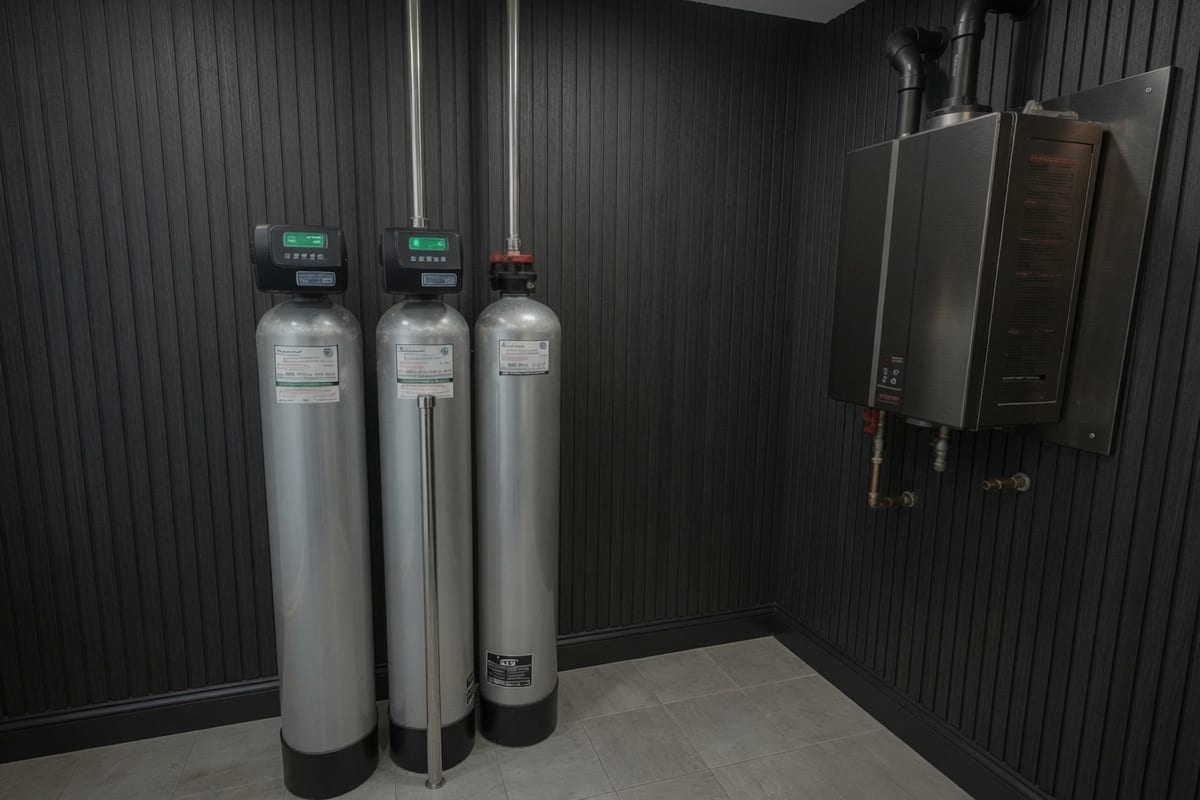
Private wells around the Triangle commonly run far harder than city water, though there is no published figure to point at and yours could land anywhere. So measure it. A hardness and iron number on paper is what decides whether your sleeve needs wiping twice a year or every other month, and whether iron and sulfur removal belongs in front of the chamber. Our hard water guide for North Carolina explains why we will not hand you a regional well number instead.
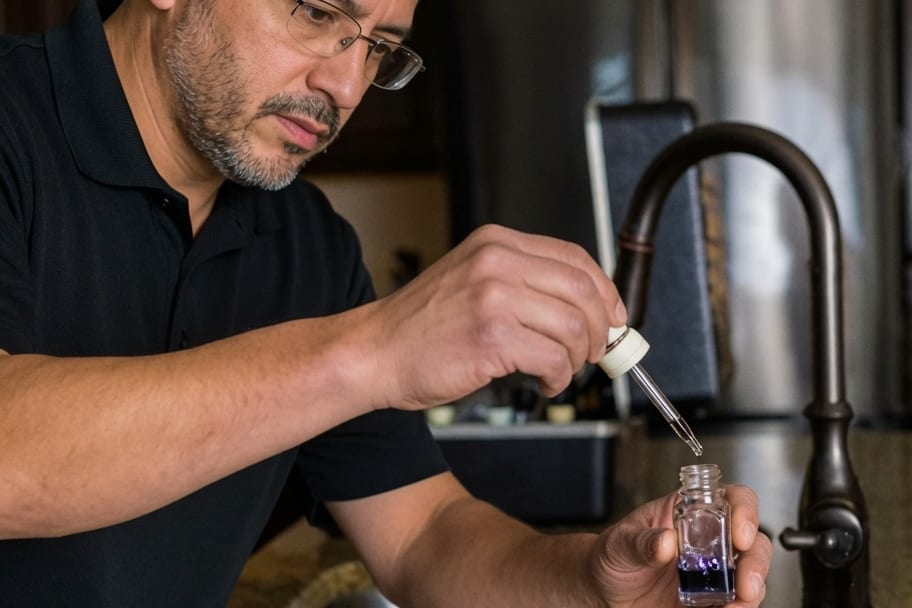
Pro tip: Book the lamp change and your yearly bacteria sample in the same month. NCDHHS recommends testing private wells for total and fecal coliform every year, and checking the wellhead annually “to make sure it is working properly and ensure that there are no cracks or openings where contaminants can get into your groundwater.” Doing all three together gives you one dated record a year showing the equipment worked, which matters when you sell.
What does UV maintenance cost in North Carolina?
Installation runs $700 to $1,500 for UV disinfection on a private well, and the ongoing cost after that is a lamp a year, a sleeve every few years, prefilter cartridges and one bacteria test. Treat the installed figure as a planning range, never a quote; the Raleigh water filtration cost guide covers what moves it.
We are not printing a dollar figure for lamps and sleeves, and that is deliberate. The price bands we publish come from our own cost page, and there is no honest published band for replacement parts: they vary by manufacturer, chamber length and lamp type, and a number pulled off a national blog would be a guess dressed up as research. Get the figure in writing from whoever installs the unit, before you buy it.
Four things to put on the quote before you sign:
- The lamp part number and its price, so you can price a replacement without being captive to one supplier.
- The sleeve part number and its price, which is the part people forget exists until it clouds.
- Whether the unit carries a monitor or alarm, and what it does when the lamp fails.
- The prefilter size, micron rating and flow rating, because a UV chamber sized to a brochure number underdelivers at real peak flow.
A well water treatment quote that names a UV chamber and nothing in front of it is unfinished. The well water treatment cost guide shows how the stages stack.
What happens to a UV system in a power cut?
It stops disinfecting immediately, and there is no residual protecting the water already in your pipes. Extension states the limit plainly: with UV, “disinfection only occurs within the unit.”
That has two practical consequences after an outage. Water drawn while the power was out was untreated, and it may have carried through into the plumbing downstream of the chamber. Water drawn in the moments after power returns may also be treated at reduced output while the lamp warms up.
Do not treat running the tap for a few minutes as a restart procedure. Flushing moves water; it does not disinfect the pipework that untreated water has already reached. Manufacturers publish a specific restart sequence for exactly this situation, and it commonly includes a warm-up interval before the unit is back at full output and, after certain interruptions, disinfection of the downstream plumbing. Follow the procedure in the manual for the unit you actually own rather than a general rule from a page like this one.
Until you have completed it, use a known-safe supply for drinking, cooking, ice, brushing teeth and anything given to an infant. If you are unsure what your model requires, that is a question for the manufacturer or your installer, and if anyone in the house has been unwell, for your county health department.
It also makes the case for a monitor. EPA’s alarm list for UV installations includes lamp age, run time, low UV intensity, low transmittance and lamp or ballast failure, with critical conditions triggering shutdown. Household units carry a simpler version, and some carry none at all. A system with no indicator is one you trust on faith between bacteria tests, which is the argument for pairing UV with regular water testing. Our comparison of UV and shock chlorination covers what each one does and does not cover.
Frequently Asked Questions
How long does a UV bulb last in well water?
About 9,000 hours of continuous operation, roughly one year, per UGA Extension. The lamp usually keeps lighting well past that point, which is exactly the problem: germicidal output falls off before the visible glow does, so replacement runs on a schedule rather than on symptoms.
Can I clean the quartz sleeve instead of replacing the bulb?
No, they are separate parts with separate jobs. Cleaning the sleeve removes scale and iron film blocking the light; it does nothing for a lamp whose output has decayed. A well in Holly Springs with hard water may need the sleeve wiped several times between annual lamp changes.
Does hard water damage a UV system?
It coats the quartz sleeve with scale and cuts the light reaching the water, which is a performance problem rather than a breakage problem. EPA found routine cleaning adequate below 140 mg/L total hardness; above that it becomes frequent work. we have no representative dataset that would predict yours, so the only way to know yours is to measure it.
What does a UV system cost to install in NC?
$700 to $1,500 installed is the typical range for UV disinfection on a private well, driven by flow rate, the pre-filtration in front of it and the plumbing at the install point. Replacement lamps and sleeves have no published band worth quoting, so ask for those prices in writing up front.
Do I still need to test my well if I have UV?
Yes. NCDHHS recommends a total and fecal coliform test every year for every private well, and UV treats the water passing through the chamber rather than the well itself. The yearly sample is also the only evidence you have that the lamp is still delivering its dose, which matters for wells around Apex and Wake County alike.
Will a power outage stop my UV system?
Yes, instantly, because UV leaves no residual behind the chamber. Water that moved through the house during the outage was untreated, so follow your manufacturer’s restart procedure rather than simply running the tap, and use a known-safe supply for drinking and cooking until you have. If outages are common where you are, ask about a unit with a monitor and a fail-safe shutoff, so the system tells you when the lamp is not delivering instead of you finding out at the next bacteria test.
Sources
Read in September 2026. Manufacturer intervals take precedence over general guidance for your specific unit.
- UGA Extension Bulletin 1487, Water Disinfection Methods and Devices (Saha, Hawkins and Mickler, May 2026): the 9,000 hour lamp life, sleeve scaling, sediment pre-filtration, the 40 mJ/cm2 dose and the no-residual limit.
- EPA Ultraviolet Treatment Toolkit: lamp degradation, the 0.4 to 0.9 fouling and aging factor, the fouling parameter list, the 140 mg/L and 0.1 mg/L cleaning thresholds and the alarm list.
- NCDHHS Private Well Water Testing FAQs: the yearly coliform test and the yearly wellhead check.
- Raleigh Water 2025 annual water quality report, for city hardness of 25.2 mg/L and the utility’s own “Soft” classification, and NCGS 87-97(h) for the required new-well panel.
UV service and well water treatment across the Triangle
A UV system is not an appliance you install and forget. It is a lamp on a clock, a sleeve that fouls at a rate your own water sets, and a prefilter that decides whether the light ever reaches the bacteria. Get the intervals and the part numbers written down on day one and the running cost stops being a surprise.
We install, size and service UV disinfection and full well treatment in Raleigh, Garner, Knightdale, Holly Springs and Apex. Call (984) 384-6991 or book a free consultation for an up-front written price with the lamp, the sleeve, the prefilter and the flow rating spelled out.