Does Reverse Osmosis Remove Sulfur and Hydrogen Sulfide?
Raleigh Water Pros • September 20, 2026 • 9 min read

You have a well, the water smells like rotten eggs, and somebody has suggested an under-sink reverse osmosis unit. It is a reasonable idea and it is the wrong one, for a reason that is worth understanding before you spend the money.
“Sulfur” in a water report is really two different findings that behave nothing alike. One of them a reverse osmosis membrane handles well. The other walks straight through it. Most pages answer “does reverse osmosis remove sulfur” with a confident yes, because yes is the answer that sells an RO unit, and because the question is genuinely ambiguous.
This post separates the two, explains what an RO membrane does with each, and says where the smell actually gets treated in a well house around the Triangle. If you are chasing the odor itself rather than the equipment question, our post on why well water smells like rotten eggs walks through finding the source.
Does reverse osmosis remove sulfur?
It removes sulfate. It does not remove hydrogen sulfide, which is the thing that smells. Those are the two forms people mean by “sulfur” and they are chemically different, so lumping them together is where the confusion starts.
Sulfate is a dissolved mineral salt. A reverse osmosis membrane is built to reject dissolved minerals, and sulfate is among the contaminants extension guidance lists RO as removing. University of Georgia Extension puts it plainly for sulfate: “a point-of-use distillation or reverse osmosis system is usually adequate.”
Hydrogen sulfide is a dissolved gas. Nebraska Extension states the outcome directly: “Contaminants not removed from water by RO filters include dissolved gases such as hydrogen sulfide, a common nuisance contaminant with characteristic rotten egg odor, which passes through the RO membrane.”
So an RO unit installed under the kitchen sink of a house with a sulfur smell will produce water that tests better and still smells bad. That is not a defective unit. That is the unit doing exactly what it is built to do.
Sulfate and hydrogen sulfide are not the same problem
| Sulfate | Hydrogen sulfide | |
|---|---|---|
| What it is | A dissolved mineral salt | A dissolved gas |
| How you notice it | Taste, and a laxative effect at high levels | Rotten egg odor, at every tap |
| Published limit | 250 mg/L secondary standard | No federal drinking water limit |
| Reverse osmosis | Rejected well | Passes through the membrane |
| Right place to treat | Point of use is fine | Point of entry, before the house |
The EPA sets sulfate’s secondary maximum contaminant level at 250 mg/L and notes the effect as “salty taste.” Secondary standards are not enforceable limits: EPA says it “does not enforce these ‘secondary maximum contaminant levels’,” which “are established as guidelines to assist public water systems in managing their drinking water for aesthetic considerations, such as taste, color, and odor.”
Above that level, Georgia Extension lists what high sulfate does: “impart bitter taste, have a laxative effect, cause dehydration,” and notes it “can be especially detrimental to the health of infants and young animals.” That laxative effect is the reason sulfate is worth treating at the tap you drink from, and the reason an RO unit is a perfectly good answer to a sulfate result.
Hydrogen sulfide has no federal drinking water limit at all. Georgia Extension puts the practical threshold for odor and corrosion problems above 0.5 ppm, which is far below anything you would notice by any means other than your nose.
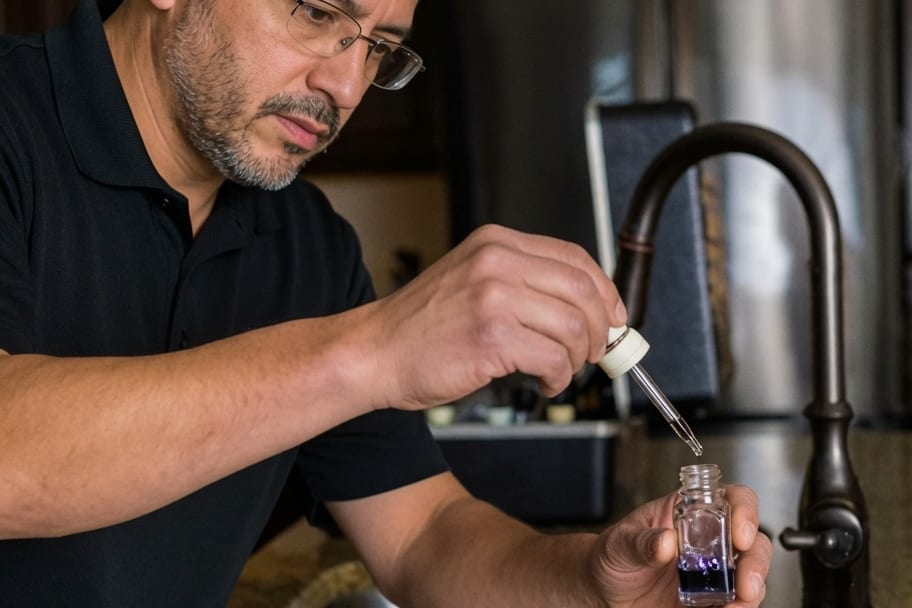
Want to know which of the two you actually have? Request a free consultation and we test the water first, then quote in writing.
Why does hydrogen sulfide pass through an RO membrane?
Because a membrane separates dissolved solids from water, and hydrogen sulfide is not a dissolved solid. Rejection depends on size, charge and how strongly a substance associates with water. Sulfate is a large, doubly charged ion, which is close to the easiest thing a membrane is asked to stop. A small, uncharged dissolved gas is close to the hardest.
There is a second problem with putting a membrane in front of this. Oxidation is the standard treatment for hydrogen sulfide: you convert the dissolved gas into solid elemental sulfur and then filter the solid out. That works beautifully in a backwashing tank that flushes the solids to drain on a cycle, and badly in a sealed cartridge that has no way to shed them. The place where oxidation belongs is upstream of the house, not inside a fitting under the sink.
Why the kitchen sink is the wrong place for a smell
Here is the part that has nothing to do with chemistry. Hydrogen sulfide is a smell, and you meet a smell everywhere water moves, not only where you drink it.
The shower is usually the worst of it, because hot water and spray drive the gas out of solution into a small closed room. Then the laundry, the dishwasher, the ice maker, the bathroom taps, the outside hose bib. A point-of-use unit treats one cold tap. Even if a membrane did stop hydrogen sulfide, and it does not, you would have fixed the one place the problem bothered you least.
There is also a housekeeping reason. Minnesota’s health department notes that while sulfur bacteria themselves “are not harmful,” hydrogen sulfide gas in air “can be harmful at high levels,” which is an argument for venting it out at the point of entry rather than releasing it in every room of the house.
Pro tip: Before you buy anything, walk the house with a notebook: cold tap in the kitchen, cold tap in the far bathroom, the outside hose bib, then the hot side. Where the smell shows up, and where it does not, narrows the cause faster than any single lab number. A smell at the hose bib means it is in the well water. A smell only in the shower means it is in the hot side.
What actually removes hydrogen sulfide from well water
Point-of-entry oxidation and filtration, sized on a test. Minnesota’s health department lists the working methods as activated carbon filters for lower concentrations, oxidizing media filtration such as a manganese greensand filter, aeration and filtration, continuous chlorination and filtration, and ozonation and filtration. Every one of those treats the whole house before the water reaches a tap.
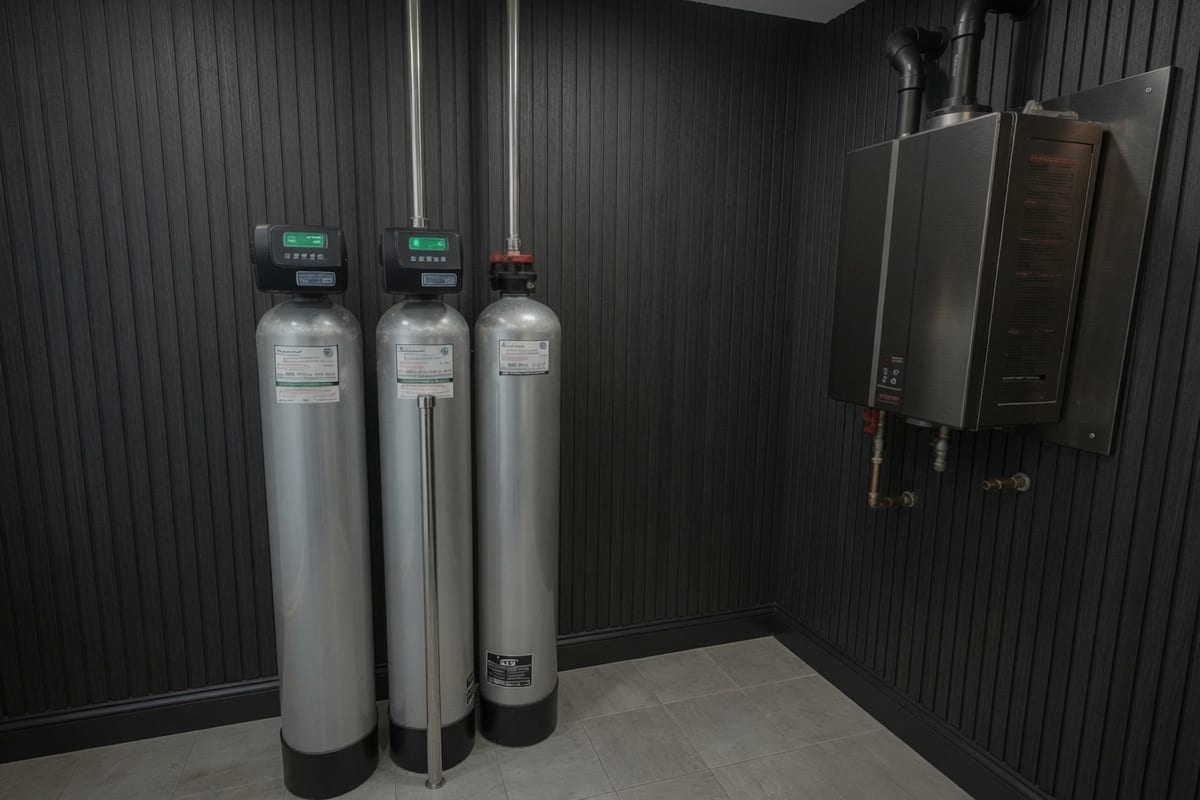
In practice on Triangle wells that usually means an air-injection or catalytic media tank, which handles the sulfide and the iron that so often comes with it in the same vessel. A point-of-entry iron and sulfur removal unit runs $1,800 to $3,500 installed as a planning range, and our rotten egg smell guide compares the methods in more detail.
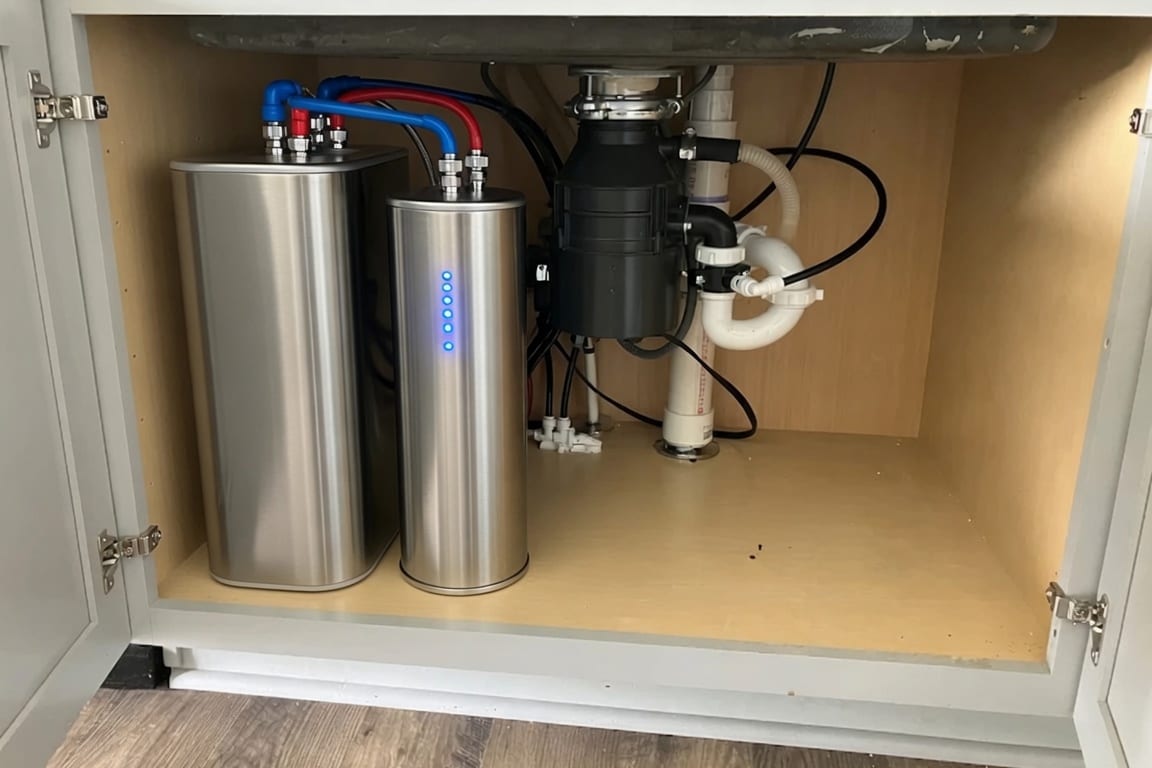
None of that makes reverse osmosis a bad purchase. It makes it a second purchase, for a different job. An under-sink reverse osmosis system runs $350 to $900 installed, handles sulfate, nitrate and dissolved metals at the drinking tap, and works properly once the sulfide has been taken out upstream. Both figures come from our water filtration cost guide, and neither is a quote.
Is the smell only in your hot water?
Then the likely cause is the water heater, not the well. This is the cheapest outcome on the page and it is worth ruling in or out before you price any treatment at all.
Georgia Extension describes the mechanism: “If you detect the smell of hydrogen sulfide only from the hot water faucet, your water heater may be causing the problem. The magnesium corrosion control rod (anode rod) inside the water heater can chemically react with sulfate to form hydrogen sulfide.” Minnesota’s health department puts it the same way, that the magnesium rod supplies “electrons that aid in the conversion of sulfate to hydrogen sulfide gas.” Both point at replacing that rod with an aluminum or zinc type.
Note what that tells you about sulfate, too: a water supply can carry enough sulfate to feed this reaction and still taste fine, which is one more reason the two findings get confused. If the cold taps are clean and only the hot side smells, no filtration system in the world is going to be the right answer.
Frequently Asked Questions
Does reverse osmosis remove sulfur from water?
It removes sulfate but not hydrogen sulfide. Nebraska Extension lists hydrogen sulfide among the contaminants that pass through an RO membrane because it is a dissolved gas. If your complaint is a rotten egg smell, the answer you need is point-of-entry treatment, not an under-sink unit.
How do I remove sulfate from water?
A point-of-use reverse osmosis unit at the drinking tap is the usual answer, and it is what Georgia Extension recommends for sulfate. The secondary standard is 250 mg/L, above which sulfate imparts a taste and has a laxative effect. See our reverse osmosis cost guide for what the equipment runs.
How do I remove hydrogen sulfide from drinking water?
Treat it before the water enters the house, with oxidation followed by filtration. Because the gas leaves solution in every shower and every sink, treating one tap leaves the problem in place. Well owners in Clayton and Fuquay-Varina most often end up with an air-injection or catalytic tank that takes the sulfide and iron together.
Will my new-well test results show sulfate or hydrogen sulfide?
Probably not. The panel North Carolina requires after a newly constructed private well covers iron, manganese, lead, copper, nitrate, sodium, pH and bacterial indicators among others (G.S. 87-97), and sulfate and hydrogen sulfide are not on it. Both are extra tests you have to ask for, which our water testing service covers.
Does an RO membrane get damaged by hydrogen sulfide?
The documented behaviour is that the gas passes through rather than being held, so the odor turns up in the treated water. The more practical worry is the sulfur solids that form if sulfide meets air or an oxidant in a cartridge that cannot backwash them away, which is exactly why oxidation belongs in a tank at the point of entry.
Do I still need reverse osmosis if I fit a whole-house sulfur filter?
Often yes, because the two do different jobs. A point-of-entry filter deals with odor, iron and sulfide for the whole house; an RO unit at the sink deals with dissolved minerals in drinking water, sulfate included. Owners on wells in Pittsboro and Wake Forest commonly end up with both.
Sources
- Hydrogen sulfide passing the RO membrane: Nebraska Extension, Drinking Water Treatment: Reverse Osmosis.
- Sulfate treatment, effects above 250 ppm and the water heater anode rod: University of Georgia Extension, Removal of Hydrogen Sulfide and Sulfate.
- Sulfate secondary standard and the non-enforceable wording: US EPA Secondary Drinking Water Standards.
- Hot-versus-cold diagnosis and the treatment list: Minnesota Department of Health, Hydrogen Sulfide and Sulfur Bacteria in Well Water.
- Required new-well testing panel: N.C.G.S. 87-97.
Get the sulfur question settled on your own well
Sulfate and hydrogen sulfide need different equipment in different places, and a lab result settles which you are dealing with in a single pass. We test for both, size point-of-entry treatment where the smell calls for it, and fit drinking water systems where the minerals call for it, across Raleigh, Clayton, Pittsboro and Wake Forest.
Start with a free consultation at the house. We take the readings, show you what they mean, and give an up-front written price for only the equipment the numbers support. Call (984) 384-6991 or book your free consultation.