Is Cary Tap Water Safe to Drink? (2026)
Raleigh Water Pros • September 26, 2026 • 9 min read
Search “is Cary water safe” and the first page is mostly score sites and filter sellers quoting unsourced numbers. The Town of Cary publishes two documents a year that answer the question directly.
We read them. Is Cary tap water safe to drink? Yes, by every published measure. Cary drinks Cape Fear water, runs a heavier treatment train than most, and publishes tests most utilities never run.
Below: the 2025 report for Cary, Morrisville, RTP South and Apex, the one bacteria record on the federal file, PFAS, 1,4-dioxane and what is worth filtering.
Is Cary tap water safe to drink?
Yes. Cary’s 2025 annual water quality report prints “No” in the violation column for every substance it tested, and EPA’s compliance database shows zero current violations and zero serious violations.
The report covers disinfection byproducts, lead and copper, turbidity, fluoride, bacteria and a full PFAS panel, and everything regulated came in under its limit. Safe is not the same as empty, though: the water carries a chloramine residual eleven months a year and low but measurable PFOA. Neither is a violation, and both are worth knowing before anyone sells you a filter.
Where does Cary’s water come from?
B. Everett Jordan Lake, about 10 miles west of town in eastern Chatham County, which is part of the Cape Fear River basin. The U.S. Army Corps of Engineers built and manages the reservoir, and Cary draws from it on the Haw River sub-basin.
NC DEQ records Cary as a state-designated surface water transfer, in Cary’s own words: “Water is drawn from the Haw, but a portion of the system use occurs in the Neuse Basin.” About 67 percent of the people served live in the Neuse basin. So most Cary residents drink Cape Fear water while living on the Raleigh side of the watershed line.
The water is treated at the Cary/Apex Water Treatment Facility, permitted for 56 million gallons a day since a 2018 expansion. Cary and Apex co-own it and Cary operates it. The treatment train: powdered activated carbon at the lake pump station, ozone, coagulation, clarification, filtration through sand and carbon (part of the filter bank is now biologically active), then chlorine and ammonia added separately to form chloramine.
One plant, several towns:
| Area | Water system | Report to read |
|---|---|---|
| Cary | Town of Cary, NC0392020 | Cary’s annual report and testing summary |
| Morrisville | Inside Cary’s system; no system of its own | Cary’s report |
| Wake County’s RTP South and RDU Airport | Inside Cary’s system | Cary’s report |
| Apex | Town of Apex, NC0392045, co-owner of the plant | Apex’s own report, for pipe residuals |
So a Morrisville home reads Cary’s report exactly as a Cary home does. An Apex home drinks water from the same plant, but Apex measures its own pipes and publishes its own figures, covered further down.
Want to know what is in your own glass rather than the town average? Request a free consultation and we measure your tap first, then put the readings in writing.
What did the May 2023 E. coli record mean?
It was one positive sample at one of Cary’s 137 sampling stations, follow-up tests found nothing else, and the record was closed on 30 June 2023.
EPA’s file for Cary holds five violation records going back to 1999, and this is the only one marked health based. The sample came from a station on Airgate Drive in Wake County on 3 May 2023. Cary ran repeat tests upstream and downstream of that station, and in the Town’s words the results “repeatedly showed no other contamination within the system and that the bacteria was isolated to the Airgate Drive sampling station.”
Any E. coli detection requires customer notification, and Cary gave it, adding: “At this time, Cary’s water is deemed safe for continued consumption.”
What does Cary’s 2025 water report actually show?
Byproducts under half their limits, lead not detected at the 90th percentile, and one of the lowest PFAS profiles in the Triangle.
| Published figure | Cary result | Limit |
|---|---|---|
| Total trihalomethanes (highest locational average) | 37 ppb, sites 17 to 43 | 80 ppb |
| Haloacetic acids (highest locational average) | 17 ppb, sites 9 to 17 | 60 ppb |
| Chloramine, running annual average | 2.96 ppm, sites 1.33 to 3.91 | 4 ppm |
| Lead, 90th percentile (sampled 2024) | not detected, 0 of 61 homes over the action level | action level 15 ppb |
| Copper, 90th percentile (sampled 2024) | 0.096 ppm | action level 1.3 ppm |
| PFOA, average | 1.3 ppt | 4 ppt |
| PFOS and GenX | not detected on average | 4 ppt and 10 ppt |
| 1,4-dioxane | not detected in 12 samples | no federal limit |
| Microplastics, ten polymers | all not detected | no limit |
Haloacetic acids at 17 ppb is the lowest figure among the Cary, Johnston County, Fuquay-Varina and Holly Springs systems we have compared.
Lead is a flat non-detect at the 90th percentile. Cary states there are no known lead service lines in its system and that no lead has ever been recorded during its operation. Lead that reaches a glass comes from old solder or fixtures inside a house, which is why the Town adds a food-grade corrosion inhibitor (orthophosphate).
Microplastics are unusual to see in a report at all. Cary tested a ten-polymer panel once in 2025, from polyethylene to PTFE, and every one came back non-detect. None of the other Triangle utility reports we have read publishes one.
Is there PFAS or 1,4-dioxane in Cary water?
Some PFAS, at low levels; no 1,4-dioxane in any of the twelve 2025 finished-water samples.
PFOA averaged 1.3 parts per trillion and PFOS averaged non-detect, against an EPA maximum contaminant level of 4 parts per trillion for each, and GenX was not detected against its 10 parts per trillion limit (EPA proposed rescinding the GenX limit in May 2026). Cary’s own report footnotes those limits: “MCLs may become effective in 2029.” Three short-chain compounds with no individual limit (PFBA, PFPeA and PFHxA) came in at 5 to 6 parts per trillion. So Cary is low, not PFAS-free. It has fed powdered activated carbon to improve PFAS removal continuously since 2018, well before the federal rule existed.
1,4-dioxane is where precision matters. NC DEQ has measured it inside Jordan Lake, but on the Haw River arm near Pittsboro, and those are untreated reservoir samples, not tap water. The DEQ station nearest Cary’s intake was not a detection site, and Cary’s finished water was non-detect all twelve times it was tested in 2025. Our Triangle PFAS and GenX guide covers how the basin story differs from town to town.
What about Apex water?
Apex drinks from the same plant and reports the same clean picture, with its own pipe measurements. Its most recent published report covers 2024: chloramine running annual average 3.23 ppm (1.04 to 3.98), trihalomethanes 41 ppb and haloacetic acids 19 ppb, all under their limits. Apex also classifies its water as moderately soft.
Apex’s 2024 report discloses one item: a haloacetic acid monitoring violation, with a violation awareness date of 30 August 2024. EPA’s record marks it as not health based and back in compliance on 12 November 2024. That is a sampling paperwork issue, not a result over the limit.
What is worth filtering on Cary water?
For most homes, the one thing worth treating is chloramine taste and odour, and it takes catalytic carbon, not standard carbon.
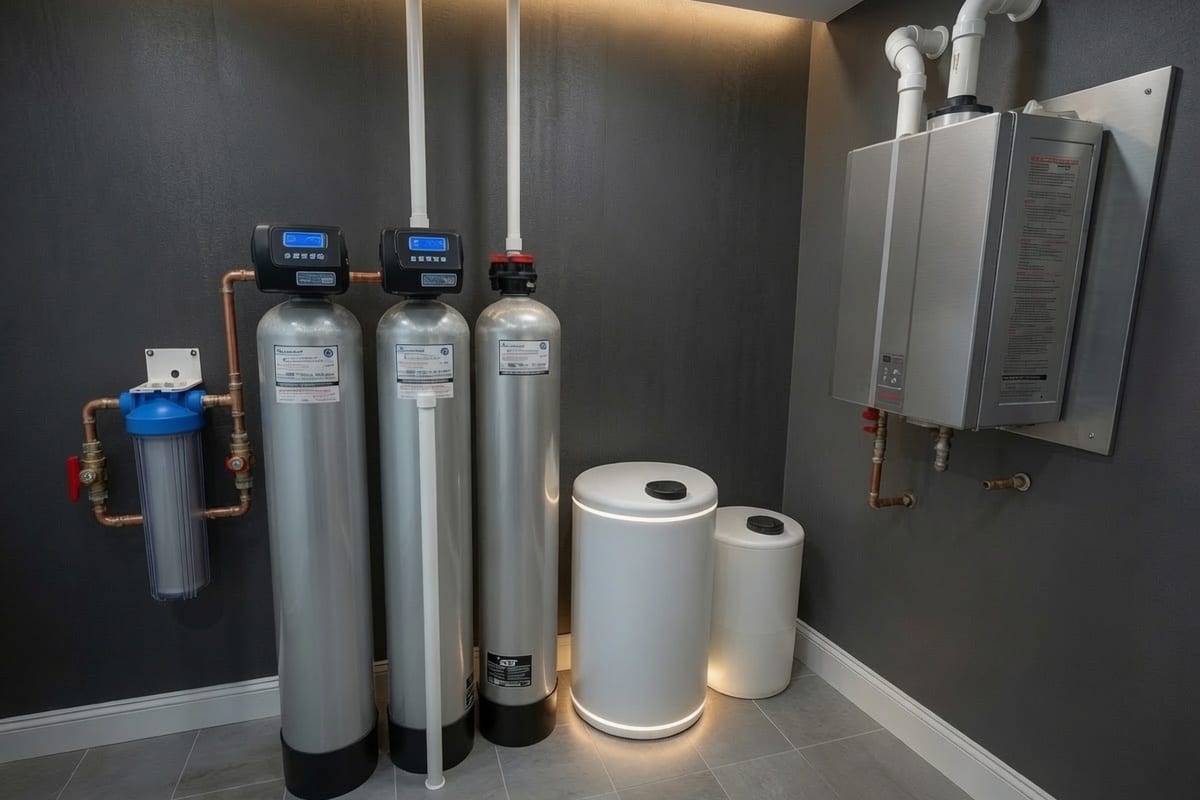
Cary uses chloramine “throughout the year except in the spring when we switch to chlorine,” and its 2025 sampling shows that window was March. Standard activated carbon handles the free-chlorine month and does little for the other eleven. Our guide to catalytic carbon for chloramine explains why, and the carbon filtration page covers sizing.
Pro tip: Cary’s short annual report is only half the picture. The companion Water Quality Testing Summary holds hardness, pH, the full PFAS panel and the microplastics table.
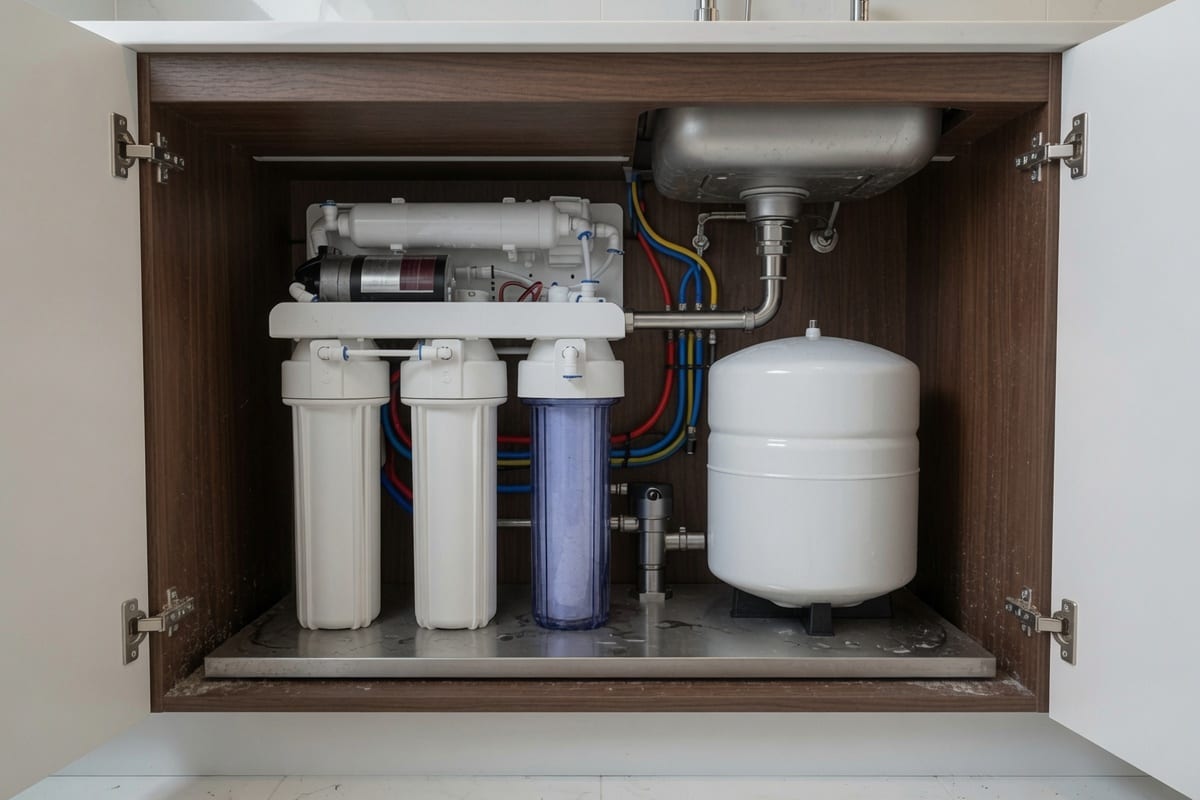
Beyond that, it is a matter of preference. An under-sink reverse osmosis unit is the household answer for anyone who wants PFOA taken from low to lower at the drinking tap. Softening is a separate question with its own answer in our Cary and Apex water treatment cost guide, and planning ranges for every system sit on the water filtration cost page.
Frequently Asked Questions
Is Cary NC tap water safe to drink?
Yes. Cary’s 2025 report shows no violation for any substance tested, and EPA’s compliance database lists no current or serious violations for the system. Byproducts sit under half their limits and lead was not detected at the 90th percentile.
Does Cary have a PFAS problem?
No, on the published numbers. PFOA averaged 1.3 parts per trillion and PFOS was a non-detect on average in 2025, against a 4 parts per trillion federal limit that Cary’s report says may become effective in 2029. That is low, though not zero.
Was there E. coli in Cary water?
One sample at one of 137 stations tested positive on 3 May 2023. Follow-up testing found nothing else in the system, customers were notified as the rules require, and the record closed on 30 June 2023.
Why does Cary water smell like a pool?
Chloramine, at a running annual average of 2.96 parts per million in 2025, with individual sites up to 3.91 against a limit of 4. In the spring the plant switches to free chlorine, which can smell sharper for a few weeks. A whole house catalytic carbon filter removes both.
Is Morrisville water the same as Cary water?
Yes. Morrisville has no water system of its own and sits inside Cary’s system, drinking the same treated Jordan Lake water. Every Cary figure here applies in Morrisville and RTP South.
How do I know what is in my own Cary tap?
Read the Town’s report for the system picture, then measure the things that vary by address, mainly lead, copper and the chloramine level at your tap. We check the chloramine and basic chemistry during a free consultation at your Cary home, and lead and copper go to a certified lab.
Sources and reporting dates
- The Town of Cary’s 2025 annual water quality report and its Water Quality Testing Summary, reporting year 2025 (lead and copper sampled 2024).
- The Town of Cary’s May 2023 news release on the single E. coli sample at the Airgate Drive station.
- The Town of Apex annual drinking water quality report, reporting year 2024.
- NC DEQ Local Water Supply Plan for Cary, for the Jordan Lake withdrawal, plant capacity and the interbasin transfer.
- EPA’s Safe Drinking Water Information System and ECHO records for NC0392020 and NC0392045, read September 2026, for violation history.
A system average does not describe every address on every day. Check the current report before acting on any single number.
Cary tap water, answered
Cary, Apex and Morrisville drink water that is tested more widely than most (Cary even publishes a microplastics panel), and the tests come back clean. The practical question for most homes is taste, which catalytic carbon settles, and the drinking tap, where an under-sink unit is the belt-and-braces option. See how we approach city water treatment across the Triangle.
Every visit starts with a free consultation in Cary, Apex, Morrisville or Holly Springs: we test at your tap, compare it with what the Town publishes, and give you an up-front written price for only what the readings support, including when that is nothing. Call (984) 384-6991 or book your free consultation.