Water Treatment Cost in Cary and Apex NC (2026)
Raleigh Water Pros • September 20, 2026 • 10 min read
Most searches that land on a page like this one mention a water softener. The utility answers that before we can. The Cary/Apex Water Treatment Facility’s own testing summary puts total hardness at 30 milligrams per litre, about 1.8 grains per gallon, and in the column where a legal limit would normally sit it prints two words: moderately soft.
So this is a water treatment cost page for Cary and Apex rather than a softener cost page: the published number does not support a softener. What the water does justify is different equipment at different prices.
Below: what each system costs installed, why carbon comes first, what the two towns publish about chloramine, PFAS and 1,4-dioxane, and where a softener genuinely does earn its place.
How much does water treatment cost in Cary and Apex, NC?
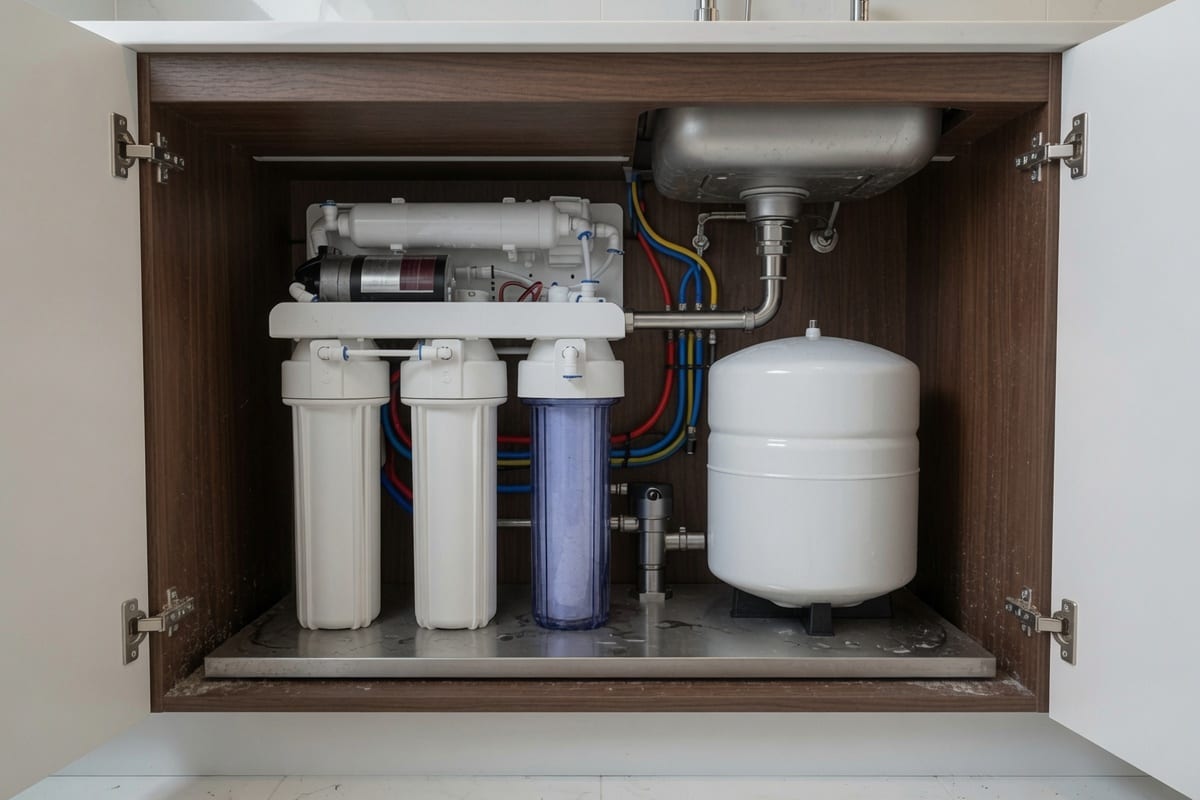
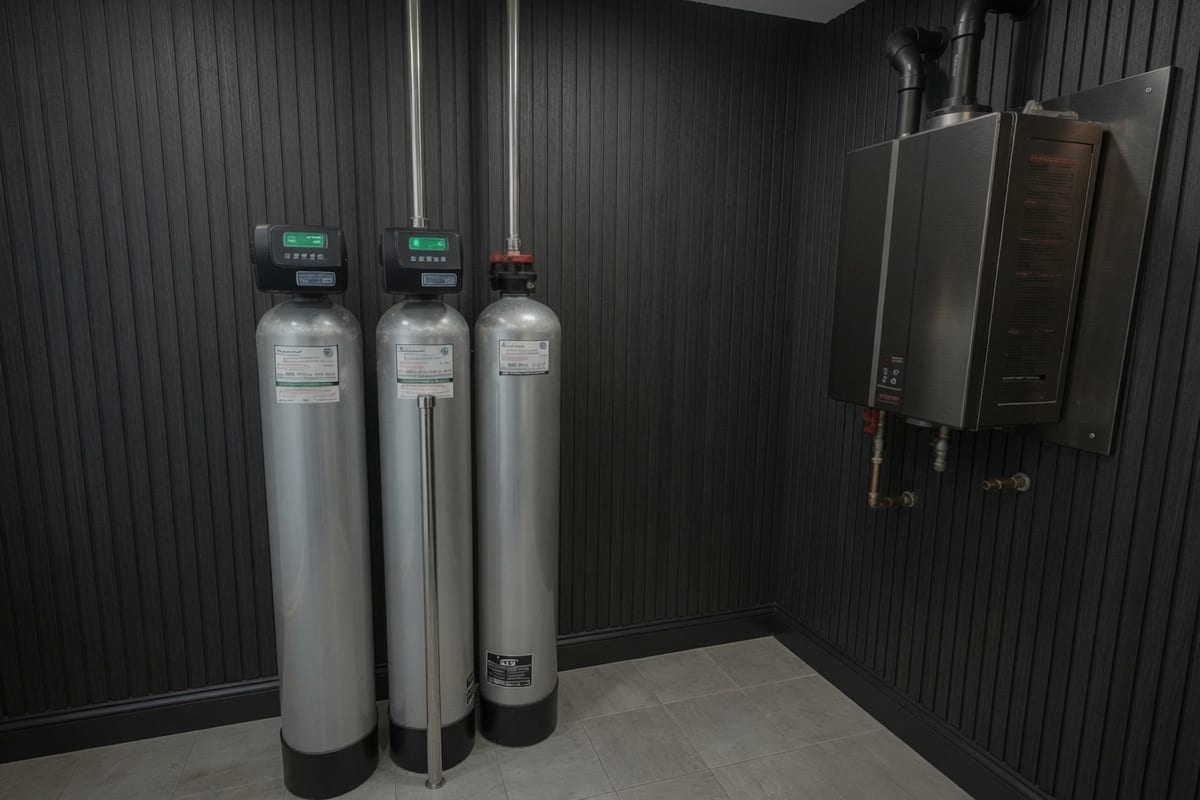
A whole house catalytic carbon filter runs $1,500 to $3,500 installed and an under-sink reverse osmosis unit runs $350 to $900.
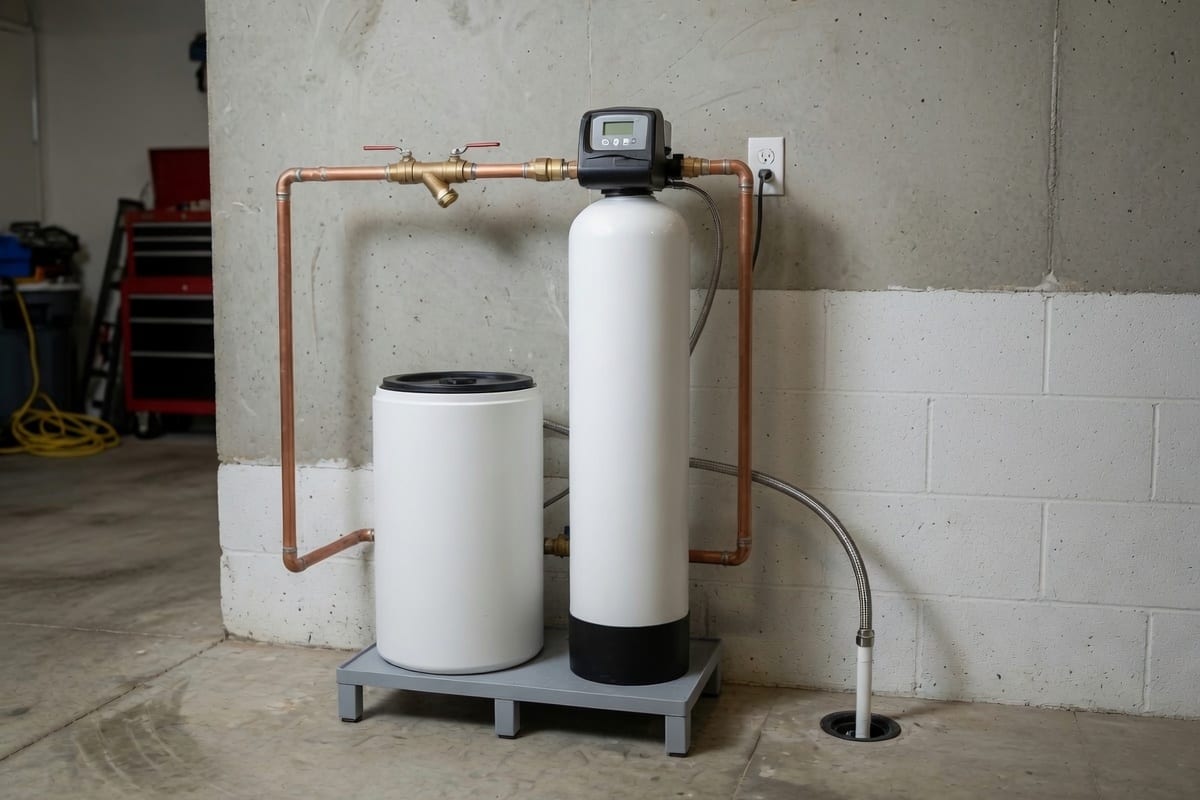
A water softener runs $1,500 to $3,500, and on a Cary or Apex town meter it is rarely the system the water calls for.
| System | What it does on Cary and Apex water | Installed, typical |
|---|---|---|
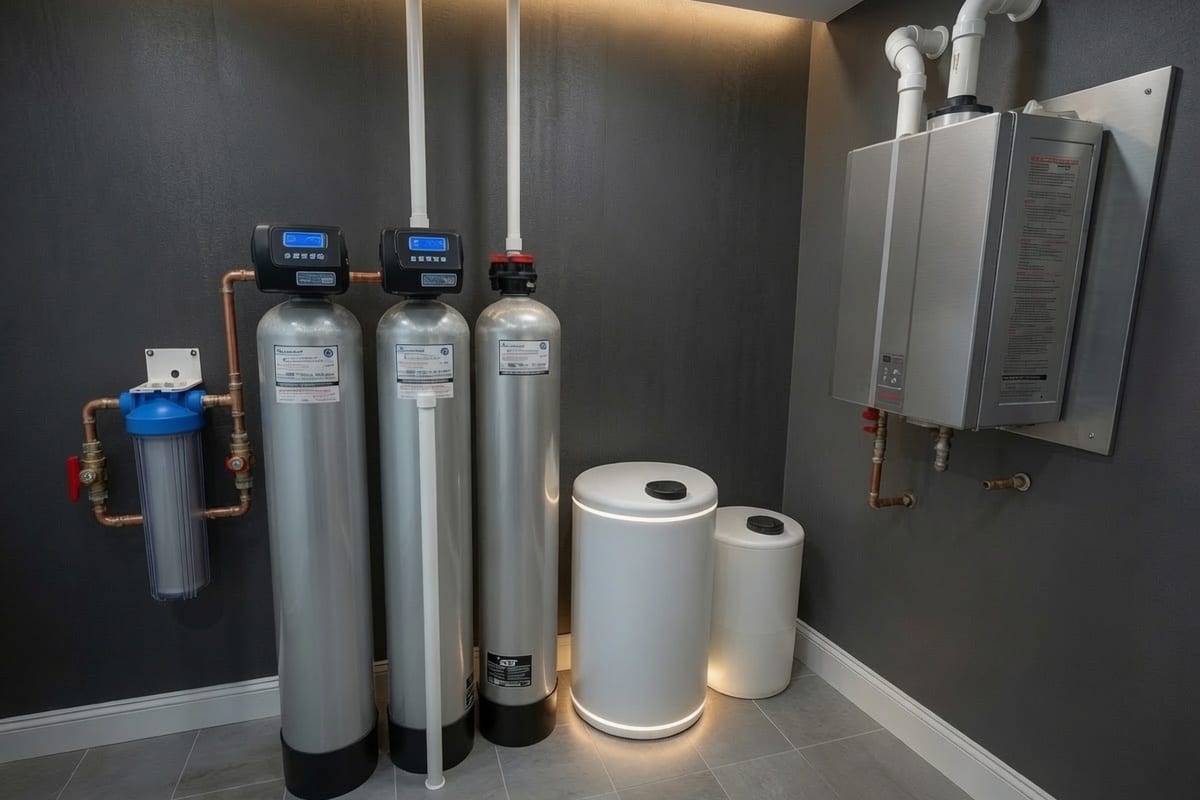
| Whole house catalytic carbon filter | chloramine taste and odour at every tap | $1,500 to $3,500 |
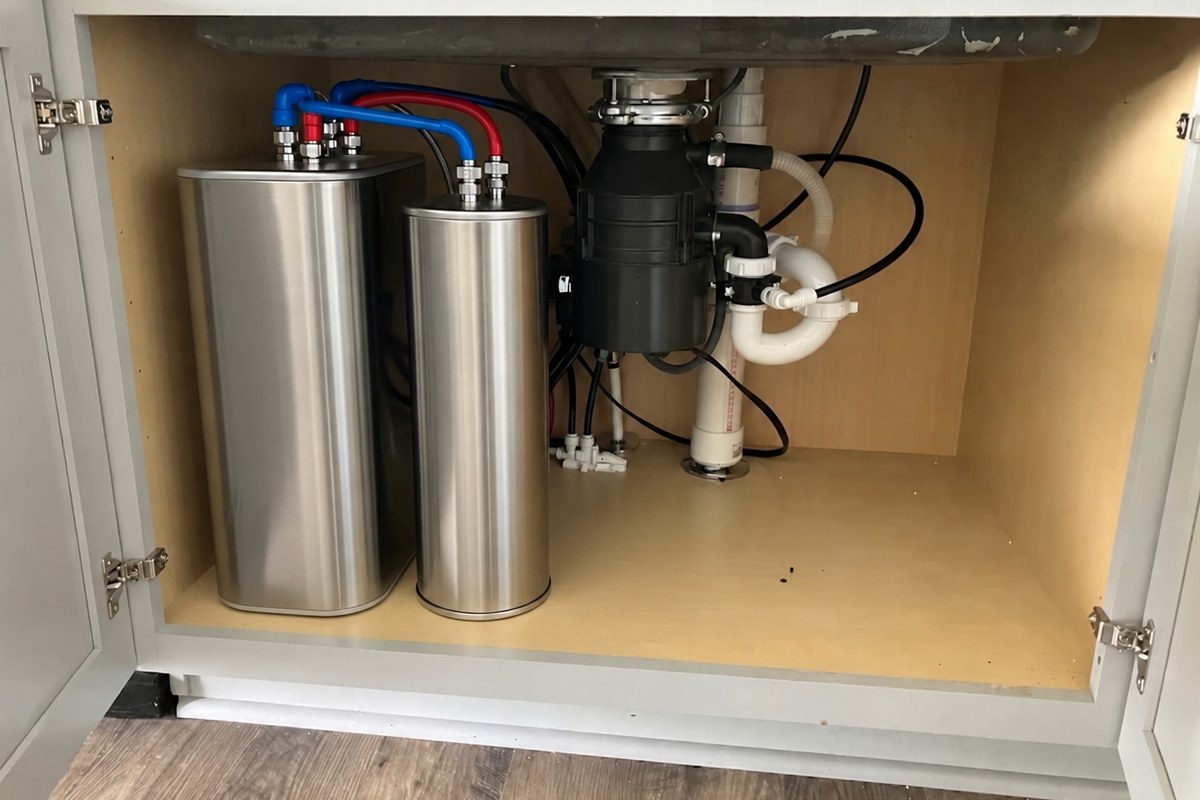
| Under-sink reverse osmosis | drinking and cooking water at the kitchen tap | $350 to $900 |
| Water softener | earns its place on a private well, not on town water | $1,500 to $3,500 |
| Salt-free conditioner | scale control without ion exchange, little to do at 1.8 grains | $1,200 to $2,500 |
Every figure here is a planning range from our Raleigh water filtration cost guide, never a quote.
Want the number for your own address? Request a free consultation and we measure your water first, then price it in writing.
Why is a softener rarely the right buy on Cary or Apex town water?
Because the utility that treats the water classifies it as moderately soft, in print, in its own testing summary.
The 2025 Water Quality Testing Summary gives total hardness as 30 milligrams per litre as calcium carbonate, range 23 to 37, and separately as 2 grains per gallon, range 1 to 2. At 17.1 milligrams per litre to the grain, that is about 1.8 grains. On both rows, in the column where the legal limit would normally appear, the summary prints the same phrase: classified as “moderately soft”.
Apex reaches the same conclusion independently. Its 2024 report answers the hard-or-soft question with an average total hardness of 1.9 grains per gallon and the same classification. (Apex’s table prints ppb where it means ppm; 33.3 divided by 17.1 gives the 1.9 grains it publishes.)
| Classification | mg/L as calcium carbonate | Grains per gallon |
|---|---|---|
| Soft | 0 to 60 | under 3.5 |
| Moderately hard | 61 to 120 | 3.6 to 7.0 |
| Hard | 121 to 180 | 7.1 to 10.5 |
| Very hard | over 180 | over 10.5 |
Cary sits in the lower half of the soft band. Hardness would have to roughly quadruple before scale on a heater element became the problem ion exchange fixes.
We install softeners and will fit one wherever a reading supports it. On a Cary, Apex or Morrisville meter it usually does not, the same conclusion our Raleigh city water softener guide reaches for the other side of the Triangle. Our read of North Carolina utility reports by city found no city system crossing 7 grains per gallon.
What does Cary and Apex water need treating for?
Chloramine, at a running annual average of 2.96 parts per million, with individual sampling sites reaching 3.91 against a limit of 4.
Cary says it plainly in the 2025 report: “Chloramine, a compound of chlorine and ammonia, is used to disinfect the water throughout the year except in the spring when we switch to chlorine.” The residual table shows how narrow that window is: 137 free chlorine samples in March, against roughly 140 chloramine samples a month from April to February. Cary does not publish exact dates for the changeover.
That sets the specification. Chloramine does not off-gas from a jug, and standard activated carbon does not strip it at normal contact times. Catalytic carbon does, so the media grade matters more than the badge on the tank. Our guide to catalytic versus standard carbon for chloramine explains the difference, and the carbon filtration page covers sizing.
| Cary/Apex plant, 2025 reporting year | Published figure | Limit |
|---|---|---|
| Total hardness | 30 mg/L, about 1.8 grains, “moderately soft” | secondary characteristic, no MCL |
| Chloramine, running annual average | 2.96 ppm (1.33 to 3.91) | MRDL 4 |
| Free chlorine, March only | 2.19 ppm (0.37 to 3.29) | MRDL 4 |
| Total trihalomethanes | 37 ppb (17 to 43) | MCL 80 |
| Haloacetic acids | 17 ppb (9 to 17) | MCL 60 |
| PFOA | 1.3 ppt average | MCL 4 ppt |
| PFOS | non-detect | MCL 4 ppt |
| 1,4-dioxane | non-detect, 12 samples | no MCL, 35 ppb health advisory |
| Lead, 90th percentile, 2024 | non-detect, 0 of 61 sites above the action level | action level 15 ppb |
On PFAS, Cary is low by North Carolina standards but not a PFAS-free system. PFOA averaged 1.3 parts per trillion in 2025 and PFOS was a non-detect, against a federal maximum contaminant level of 4 parts per trillion for each; Cary’s report footnotes that column “MCLs may become effective in 2029”. GenX was a clean non-detect. Three short-chain compounds, PFBA, PFPeA and PFHxA, came in at 5 to 6 parts per trillion, none of which carries an individual limit. Cary has fed powdered activated carbon for PFAS removal since 2018, by its own account.
On 1,4-dioxane the precision matters. NC DEQ has measured the compound inside Jordan Lake above North Carolina’s 0.35 microgram per litre water supply value, peaking at 18 micrograms per litre in July 2021. Every one of those detections sat on the Haw River arm, near Pittsboro. The station DEQ names as closest to Cary’s intake was not a detection site, and Cary’s finished water was a non-detect on all twelve samples taken in 2025. DEQ’s figures are untreated reservoir water rather than tap water, and DEQ prints that caveat itself. Our Pittsboro 1,4-dioxane guide covers the Haw arm in detail.
Pro tip: open Cary’s Water Quality Testing Summary, not only the shorter annual report, and find the Water Quality Characteristics table. Hardness is not in the short report at all. The grains-per-gallon row, with moderately soft printed beside it, settles the softener question for Cary, Morrisville and RTP South in one go.
Where a softener does earn its place near Cary and Apex
On the private wells along the western and southern fringe, out toward New Hill, Green Level and the Chatham County line.
Those houses are not on a town meter and none of the figures above describes them. The numbers are different: an iron and sulfur filter runs $1,800 to $3,500, an acid neutralizer $1,200 to $2,200, UV disinfection $700 to $1,500, and a full well water system covering several problems at once $4,000 to $8,000+.
Hardness on a well is the one figure nobody can give you in advance. Private wells around the Triangle commonly run far harder than city water, though we have no representative dataset that would predict yours and yours could land anywhere. There is a structural reason: General Statute 87-97 lists what a new private well has to be tested for and hardness is not on it, so your number exists only if somebody paid to measure it.
If a well reading comes back above 7 grains per gallon, water softener installation is straightforward and we size it off the test. The same split runs through Apex toward New Hill and along the Chatham edge around Pittsboro, where well water treatment is a different job, priced differently and sequenced from a test result.
What moves the price in Cary, Apex and Morrisville
How much water the house has to pass
A whole house carbon filter is sized on peak flow and bathroom count, and carbon volume decides whether it still works in year three. Undersize it and you have bought a pressure drop.
Media grade, and where the equipment goes
Catalytic carbon costs more per cubic foot than standard carbon, and on a chloraminated supply it is the grade that does the work. On a Cary meter that is eleven months of the year. Placement matters too: an under-sink unit costs more at an island sink than against an exterior wall, because the drain connection and the faucet hole both get harder.
What a written quote has to show
- The reading the recommendation rests on, in the unit it was measured in
- Model and media volume, not “whole house system” as a line item
- Whether fittings, bypass valve and removal of any old unit are included
- The service interval, and what the media costs to change later
Frequently Asked Questions
Does Cary have hard water?
No. The Cary/Apex Water Treatment Facility’s 2025 testing summary gives total hardness as 30 milligrams per litre as calcium carbonate, about 1.8 grains per gallon, and prints the classification moderately soft on both hardness rows. Apex publishes 1.9 grains and the same classification.
Do I need a water softener in Cary or Apex?
Not on town water, on the published evidence. At roughly 1.8 grains per gallon there is very little calcium and magnesium for ion exchange to remove, and the complaints here are chloramine taste and drinking water quality rather than scale. On a private well toward New Hill or the Chatham line the answer changes, and it depends on a measured reading.
How much does a whole house water filter cost in Cary?
$1,500 to $3,500 installed for a whole house catalytic carbon filter, which is the correct specification because Cary carries a chloramine residual for eleven months of the year. An under-sink reverse osmosis drinking water system is $350 to $900 if you want the kitchen tap treated rather than the whole house. Both bands sit on the Raleigh cost guide.
Why does my Cary water taste like a swimming pool?
Chloramine, most likely, at a running annual average of 2.96 parts per million with individual sites up to 3.91. Cary switches to free chlorine in the spring, and its 2025 sampling shows that month was March. Neither is a violation; both sit under the limit of 4.
Is there 1,4-dioxane in Cary tap water?
Not in the samples Cary publishes. Cary tested its finished water twelve times in 2025 and found none. NC DEQ has measured it in Jordan Lake, but on the Haw River arm near Pittsboro, and the station DEQ identifies as closest to Cary’s intake was not a detection site. Those lake figures are untreated reservoir water, not tap water.
Is Morrisville water the same as Cary’s?
Yes. Cary’s report names its service area as Cary, Morrisville, Wake County’s portion of Research Triangle Park and RDU Airport, all inside public water system NC0392020, and Morrisville has no active community water system of its own. Every figure here applies unchanged in Morrisville and RTP South, and our guide to whether Cary tap water is safe to drink covers the same report from the safety side.
Sources and reporting dates
- The Town of Cary’s 2025 annual water quality report and testing summary. Every Cary hardness, chloramine, byproduct, PFAS, 1,4-dioxane and lead figure above comes from those two documents, reporting year 2025 except lead and copper, sampled 2024.
- The Town of Apex’s annual report, reporting year 2024, for the Apex hardness figure and classification. Apex co-owns the Cary/Apex Water Treatment Facility, which Cary operates.
- NC DEQ’s emerging compounds reports for Jordan Lake, 2019 and 2021 sampling seasons, for the reservoir measurements. Every DEQ figure is untreated surface water.
- US Geological Survey, hardness of water, for the classification bands. Grains are converted at 17.1 milligrams per litre, except where Cary and Apex publish grains themselves.
- NC General Statute 87-97, for what a new private well must be tested for.
- Prices are planning ranges as of 20 September 2026, never quotes.
Water treatment pricing in Cary, Apex and Morrisville
On a Cary, Apex or Morrisville meter the shortlist is short: catalytic carbon for the chloramine, reverse osmosis at the kitchen tap if you want drinking water treated, and no softener, because the utility’s own classification leaves very little for one to do. Out toward New Hill, Green Level and the Chatham line it is a well job that starts with a test.
Every visit begins with a free consultation. We measure the water at your own tap, compare it against what Cary and Apex publish, and give an up-front written price for what the readings support, including when that is nothing. Call (984) 384-6991 or book a free consultation.