NC Well Permit Rules Changed in 2026: What It Means
Raleigh Water Pros • September 20, 2026 • 10 min read
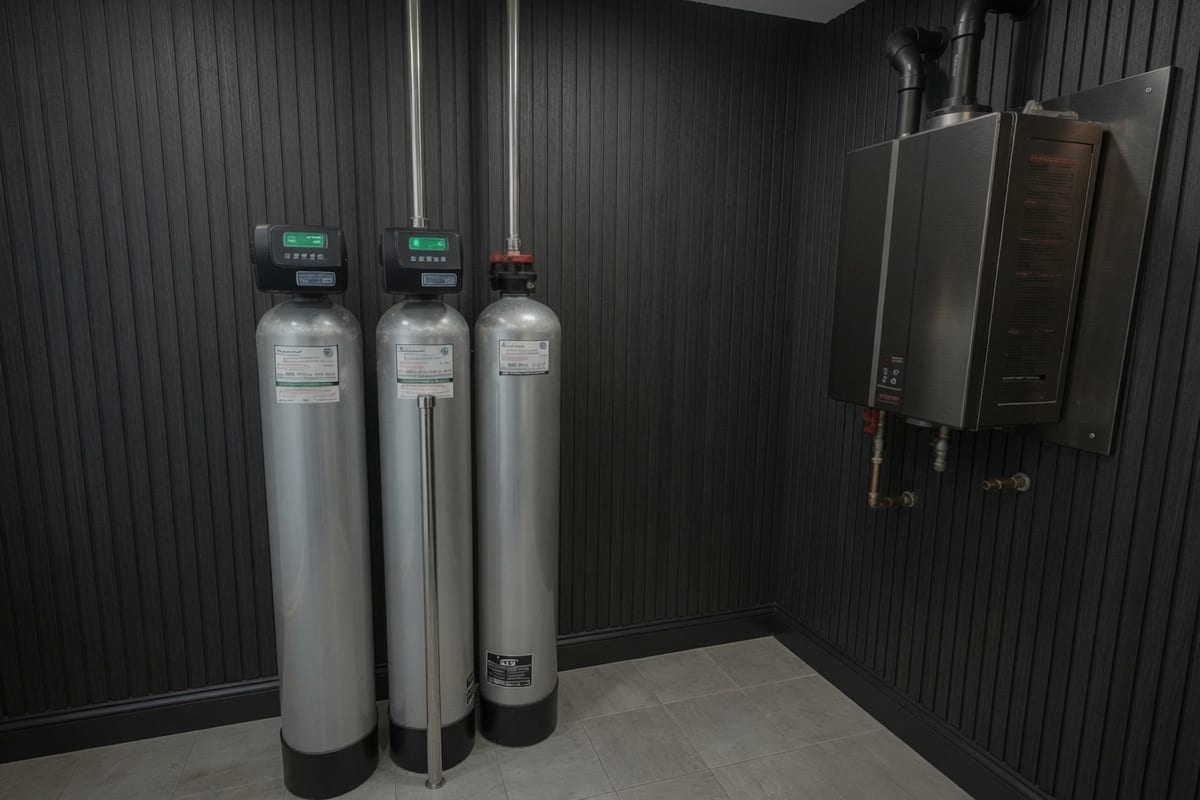
If you are about to drill a well in Wake, Orange or Chatham County, the rulebook your application gets reviewed against is not the one your neighbor used two years ago. NC well permit rules changed on 2 July 2026, when Session Law 2026-32 (House Bill 376) became law. Section 8 of that act did something North Carolina counties had not seen before: it repealed local well permitting rules outright.
The short version is that permitting moved up a level. Your county health department still issues the permit, still inspects the well, and still handles the required water sample. What a county board of health can no longer do is write its own permitting rulebook.
This guide covers what the statute says, what it changes for a homeowner drilling or repairing a well, what counties still control, and what is not settled yet. Requirements vary by parcel, by scope and by jurisdiction, and the county or state office makes the determination on your property.
What changed on 2 July 2026?
Section 8 of Session Law 2026-32 moved private drinking water well permitting onto a single state program and repealed the local permitting rules that were on the books that day. The act was ratified on 25 June 2026 and approved by the Governor at 3:23 p.m. on 2 July 2026. Section 12(b) makes it effective when it became law, and Section 8 carries no separate effective date.
Four pieces of Section 8 do the work:
- Section 8(b) rewrites G.S. 87-97(a). Each county, through the local health department that serves it, must implement “the private drinking water well permitting and inspection program established and adopted by the Environmental Management Commission.” The wording it replaced asked each county to implement “a” program.
- Section 8(c) rewrites G.S. 130A-39(b). A local board of health “may not adopt a rule concerning the permitting of private drinking water wells, as defined in G.S. 87-85, except for testing standards as set out in G.S. 87-96.”
- Section 8(d) repeals all local board of health rules concerning the permitting of private drinking water wells that were in effect when the section became law. Two things are carved out of that repeal: testing standards, and fees adopted under G.S. 130A-39.
- Section 8(a) rewrites G.S. 87-96. A local board keeps the power to adopt “more stringent rules for testing of water resources when necessary to protect the public health,” and loses the broader power it had to be stricter generally.
One detail matters when reading county pages: this applies to private drinking water wells as defined in G.S. 87-85. Guilford County, announcing a public forum on its own rule revision on 15 September 2026, put it plainly: “Local rules governing all other well types remain unchanged by this legislation.” Irrigation, geothermal and monitoring wells are a separate question.
What the law moved and what it left alone
| The piece | Before 2 July 2026 | On and after 2 July 2026 |
|---|---|---|
| Who writes the permitting rules | State rules plus a local board of health rulebook that could go further | The Environmental Management Commission program, statewide |
| Local permitting rules already adopted | In force | Repealed by Section 8(d) |
| Who issues your permit | The local health department | The local health department, unchanged |
| Testing standards | County could be stricter | County can still be stricter |
| Permit and testing fees | Set by the county | Set by the county, unchanged |
| Irrigation, geothermal, monitoring wells | Local rules apply | Local rules unchanged |
Want to know what your water will actually need once the permit is signed off? Request a free consultation and we test first, then quote in writing.
What does this change if you are drilling or repairing a well?
Less than the headline suggests, because the permit itself did not go away. The parts of G.S. 87-97 that a homeowner actually runs into are untouched by Section 8:
- A construction permit from the local health department is still required before a private drinking water well is built, and a repair permit before it is repaired. Repairing or replacing a pump or tank is the exception written into the statute, as is maintenance that does not break the well seal.
- The health department still has 30 days from receiving your application to issue or deny it.
- A construction or repair permit is still valid for five years.
- A certificate of completion is still required before the well is placed into service.
- Within 30 days of that certificate, the health department still has the well sampled and tested: eighteen chemical parameters plus bacterial indicators, listed by name in G.S. 87-97(h).
What changed is the standard your parcel gets measured against. If your county had a local setback, a local casing requirement or a local site-plan condition that went beyond the state rules, that was a local permitting rule, and Section 8(d) repealed it. If your county had a stricter testing requirement, that survived.
Two practical consequences. A county page that has not been updated may still describe the old regime, so check the date on whatever you are reading. And none of this makes a well permit optional: never take “no permit is required” from a contractor, an agent or a website. The county makes that call for your parcel, in writing.
Pro tip: Orange County now lists two rule sets on its wells page, one headed “Prior to July 2, 2026” and one headed “July 2, 2026 Onward.” That is the format to look for. If your county has not split its page yet, call Environmental Health and ask which rulebook your application will be reviewed under. Then keep the permit itself, because it is the record of what you were actually required to do.
What do counties still control?
Testing standards and fees, and both reach your wallet directly. Section 8(d) names them as the exceptions to the repeal, and Section 8(a) leaves a local board free to require more testing than the state baseline when it decides public health calls for it.
That is why the same permit can cost different amounts on two sides of a county line. Wake County charges $800 for a new private drinking water well permit, covering pre-construction contamination source review, inspections, sample collection and laboratory analysis (wake.gov, checked 20 September 2026). A neighboring county sets its own number. Our guide to what Wake County requires for a well permit walks through that one.
Two different state bodies are involved. The Environmental Management Commission owns the permitting and inspection program; the Commission for Public Health owns the sampling and testing rules under G.S. 87-97(i), including retesting when a sample comes back wrong. Your county administers both and bills you for the work.
What is not settled yet
Three things are genuinely open as of 20 September 2026, and anyone telling you otherwise is guessing.
Counties are at different stages. Orange County has already split its published rules at 2 July 2026. Guilford County has a drop-in community forum scheduled for 22 September 2026 and is taking written comment through 30 September 2026 on revising its local well rules. Others have posted nothing. Until a county publishes revised rules, the accurate answer to “what applies to my lot” is that Environmental Health will tell you when it reviews the site.
Which local conditions survived is a case-by-case call. A county requirement that looks like a setback might be defended as a testing standard, or might simply have fallen. That determination belongs to the county and the state, not to a homeowner or an installer reading a statute.
The codified statute pages lag the session law. As of 20 September 2026 the published text of G.S. 87-97 on ncleg.gov still showed the old subsection (a) wording, because the General Statutes are recodified on their own schedule. For the current language, read Session Law 2026-32.
Section 11 of the same act also moved supervision of local enforcement to the Department of Environmental Quality and the Department of Health and Human Services jointly, with local staff authorized by DHHS. That is administrative plumbing, but it explains why county well pages now point at DHHS.
Frequently Asked Questions
Do I still need a permit to drill a well in North Carolina?
Yes. Section 8 changed who writes the rules, not whether a permit is required. G.S. 87-97(b) still requires a construction permit from your local health department before a private drinking water well is constructed, and a repair permit before it is repaired. The county makes the determination for your parcel and for your scope of work.
Did my county lose control of well permits entirely?
No. Your county health department is still the permitting authority and still does the site evaluation, the inspections and the sampling. What it lost is the power to write permitting rules of its own. It kept two meaningful powers: setting fees, and setting testing standards that go beyond the state baseline.
Does this change what my new well gets tested for?
Not by itself. The required panel still comes from G.S. 87-97(h) and the Commission for Public Health rules, and counties may still require more. We cover what the required NC well panel covers and misses, including the fact that hardness is not on it, which is a large part of why no honest Triangle well hardness dataset exists.
Does the repeal apply to irrigation or geothermal wells?
No. Section 8 is limited to private drinking water wells as defined in G.S. 87-85. Guilford County’s 15 September 2026 notice states that local rules governing all other well types are unchanged. If you are permitting an irrigation or closed-loop geothermal well in Wake or Chatham County, ask the county which rulebook applies to it.
Who actually drills and repairs the well?
A certified well contractor does, and North Carolina requires that certification. We are not that contractor: we do not drill, we do not touch pumps and we do not handle pressure tanks. What we do is water testing and treatment after the well passes, from Wake Forest to Pittsboro.
My well passed the county test. Do I need treatment?
Passing means the water met the regulatory standard on the day it was sampled. It does not mean the water is pleasant to live with, and the two are measured differently. Iron and pH are on the required panel under G.S. 87-97(h), but they are judged against a health and regulatory standard rather than against what causes staining, scale or corrosion, so water can pass and still wreck your fixtures. Hardness and sulfur smell are not on the panel at all. Between them, those four are what drive well water treatment costs in NC. A full well water system runs $4,000 to $8,000 or more installed, a planning range rather than a quote.
Sources
- Session Law 2026-32 (House Bill 376), North Carolina General Assembly, Sections 8, 11 and 12(b). Read 20 September 2026.
- G.S. 87-97, for the permit requirement, the 30-day decision, five-year validity, certificate of completion and the analyte list. Codified text as published on 20 September 2026.
- Orange County, NC, Wells, which splits its rules at 2 July 2026. Checked 20 September 2026.
- Guilford County public health forum notice, 15 September 2026, for the other-well-types point and the comment window.
- Wake County well permits and fees, for the $800 fee. Checked 20 September 2026.
This is a plain-language summary, not legal advice, and fees change. Confirm anything that affects your project with the county office issuing the permit.
Treating a Triangle Well After the Permit Clears
The permit tells you the well is legal and that the water met the state standard on sampling day. It does not tell you whether that water will stain your sinks, eat your copper or smell like a struck match on a hot morning. That part is ours.
We provide well water treatment and iron and sulfur removal across Raleigh, Chapel Hill, Fuquay-Varina and Holly Springs, and the Raleigh water filtration cost guide carries the installed ranges. Every job starts the same way: we test at your tap, explain what the numbers mean, and give you an up-front written price for only what the results support.
Call (984) 384-6991 or book a free consultation.