Wake County Well Permits: Fees, Testing and Timing
Raleigh Water Pros • September 20, 2026 • 10 min read
Most people meet the Wake County well permit process at the worst possible moment: a closing date is set, the house is finished, and somebody mentions that the certificate of occupancy is waiting on a water sample. The permitting itself is not complicated. The timing is what catches people out, because the lab work at the end takes weeks, not days.
This guide covers what Wake County requires for a private drinking water well, what each step costs, how long it takes, what happens if the sample fails, and where treatment fits afterwards. Requirements vary by parcel, by scope of work and by jurisdiction, and Wake County Environmental Services makes the determination on your property, not this page.
We are a water treatment company, not a well contractor. We do not drill, we do not touch pumps and we do not handle pressure tanks. A certified well contractor does all of that, and North Carolina requires the certification.
What does Wake County require for a new well?
A permit before anything is drilled, inspections during construction, and a water sample that passes before the certificate of occupancy is issued. Wake County runs this through the Onsite Water Protection Division of Environmental Services.
The permit specifies an approved location for the well, any special construction requirements, and the water quality testing that will be required. The county does a pre-construction contamination source review before it issues that permit, which is why the location on the permit is not always the location you drew on the site plan.
Three things are worth knowing up front:
- The permit is valid for five years. That is state law, not a Wake rule, so you can permit a well when you buy the land and build later.
- Repair permits and abandonment permits are free, and Wake usually issues them within a day or two of the application.
- An existing well serving new construction has to meet the same water quality standards as a new well. Buying a lot with a well already on it does not skip the testing.
What does a Wake County well permit cost?
A new private drinking water well permit is $800, and that fee already includes the lab work. All figures below are from wake.gov, checked 20 September 2026. Fees change, so confirm the current schedule with the county before you budget.
| Wake County permit or approval | Fee | What the fee covers |
|---|---|---|
| New private drinking water well permit | $800 | Pre-construction contamination source review, inspections, sample collection and laboratory analysis by Wake County |
| Approval of an existing well for new construction | $125 | State regulated well water testing for bacteria and inorganics |
| Well repair permit | No fee | Permit issued, usually within a day or two |
| Well abandonment permit | No fee | Permit issued, usually within a day or two |
If you have seen a figure of about $350 attached to a Wake County well permit, it is not Wake’s. That number comes from a different North Carolina county, so check the county’s own fee page rather than a search snippet.
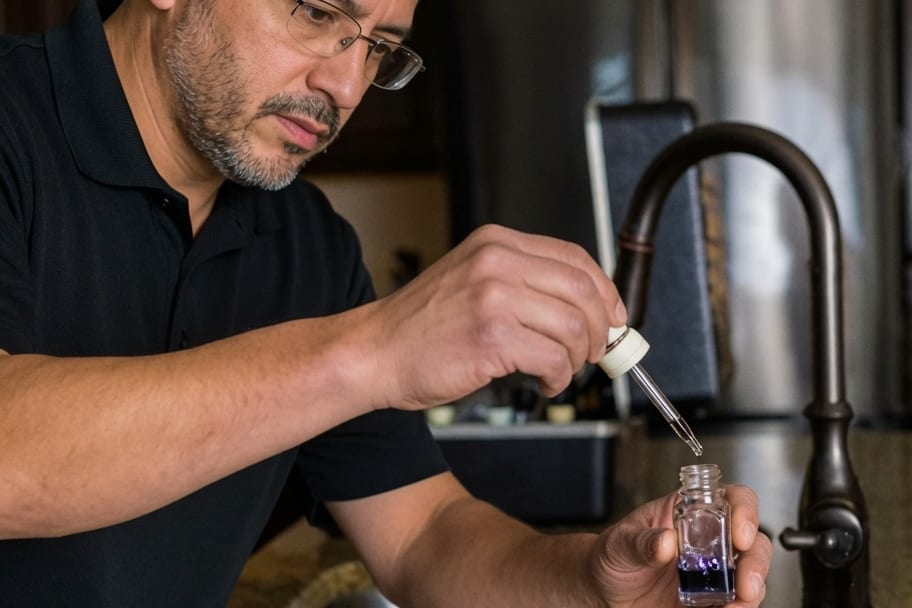
Once the permit is behind you, the treatment question is separate and it starts with a real test rather than a pass letter. Request a free consultation and we test first, then quote in writing.
What Wake County charges to test an existing well
Wake County also sells testing to people who already own a well and want to know what is in the water. These are county packages, not treatment quotes, and the prices are from wake.gov, checked 20 September 2026.
| Wake County testing package | Price | What is included |
|---|---|---|
| First Timer’s | $175 | Coliform bacteria, inorganics, volatile organic compounds and pesticides |
| Rads | $140 | Uranium, radon in water, gross alpha activity and a radon in air test kit |
| Sample collection trip fee | $50 | Charged any time Wake County staff collect the samples |
So a first test with county collection lands at $225, and the radiological package at $190. Both are worth having if you have never tested. Neither measures hardness, and nothing on the required state panel covers it either, which matters because hardness is the number that decides whether a softener is worth buying for well owners in Wake Forest and Garner.
Pro tip: book the sample collection appointment when you schedule the pump inspection, not after it. Bacteria results come back in roughly 48 hours, but the inorganic panel runs about two weeks and gross alpha runs three to four. If the certificate of occupancy is tied to a closing date, those weeks are the part of the schedule nobody budgets for.
The sequence for new construction
Wake County publishes this as a numbered process, and the order matters because each step gates the next.
- Application, site plan and payment. The builder, owner or authorized agent submits the application for a well permit, and for a wastewater system permit if the lot needs one.
- Site evaluation and construction authorization. An Onsite Water Protection representative evaluates the site for suitability. This is where setbacks decide where the well can physically go.
- Permit issued through the county Permit Portal.
- Grout inspection. A certified well contractor constructs the well and contacts Onsite Water Protection for the inspection.
- Pump inspection. A certified or licensed pump installer of your choosing does the work, and Wake asks for contact inside 72 hours of finishing. A failed inspection triggers a reinspection fee.
- Water quality testing. Samples must meet the water quality standards before the certificate of occupancy is issued.
- Abandonment of any existing well on the site, properly done and inspected, before the new permit is complete.
Step 7 surprises buyers. An old well left in the ground is an open conduit from the surface into the aquifer, and capping it is not abandonment. A certified contractor grouts the borehole to specification and documents it.
What happens if the water test fails?
Wake County contacts the applicant, and the usual next step is corrective action and a retest rather than a new well. The state rules that govern sampling, adopted by the Commission for Public Health under G.S. 87-97(i), specifically provide for corrective action and retesting where appropriate.
A single coliform positive on a brand new well is common, and is often about the chlorine used to sterilize the well after construction or about how the sample was taken. State law requires a new well to be sterilized on completion, and a sample pulled before that chlorine is fully purged is the most avoidable reason for a failed first test.
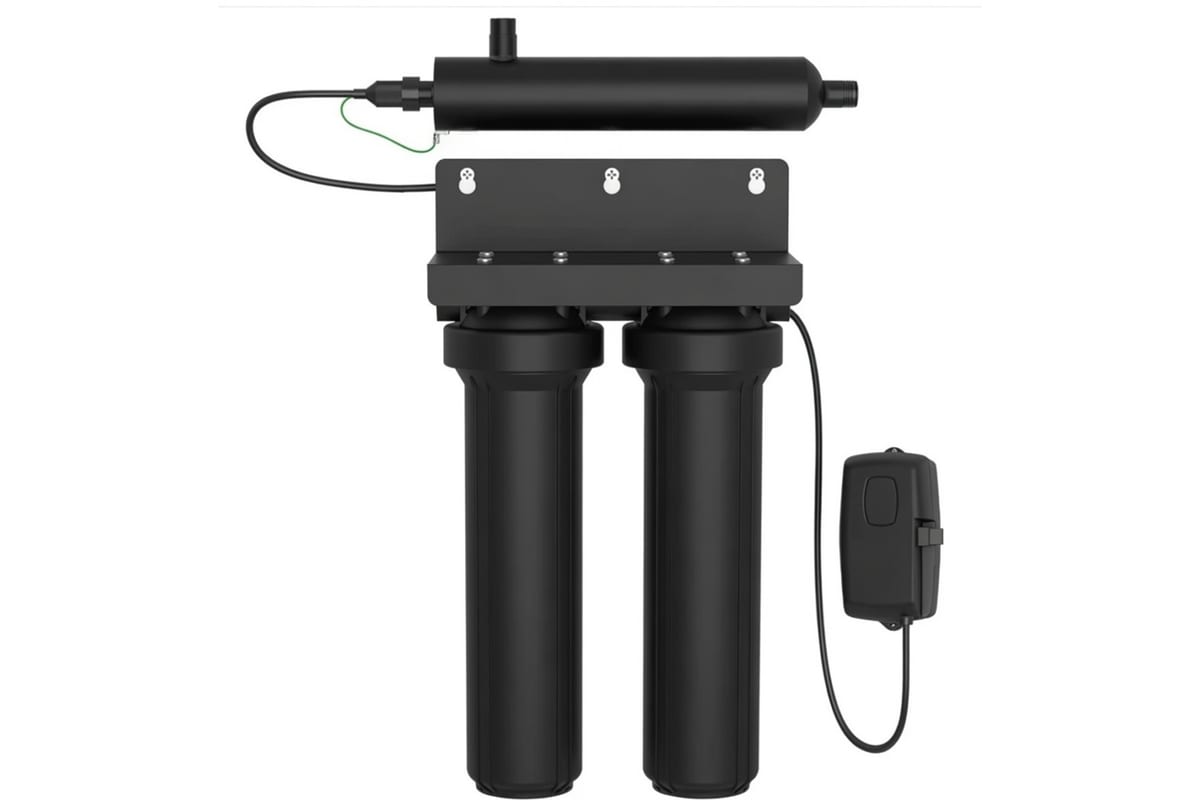
If bacteria keep coming back after the well itself has been corrected, that is a different problem, and it is where treatment enters: UV water purification handles persistent bacteria on a well that is otherwise sound. Chemical results are a separate conversation, and the fix depends entirely on which number is high.
How the 2026 state rules change affects this
Wake County is still your permitting authority, but since 2 July 2026 the rulebook it applies is the state’s, not its own. Session Law 2026-32 repealed local board of health well permitting rules and requires each county to implement the private drinking water well permitting and inspection program adopted by the Environmental Management Commission.
Two things survived that repeal, and both are in the tables above: fees and testing standards stay with the county. That is why Wake’s $800 is Wake’s number and not a statewide figure. The full picture is in our guide to how NC well permit rules changed in 2026.
What the required testing does not tell you
The county panel is a safety panel. It establishes that the water will not make you ill. It does not tell you what the water will do to your plumbing, your water heater or your laundry.
Hardness is not on it. Hydrogen sulfide, the rotten egg smell, is not on it. Iron and manganese may be reported at detection levels rather than at the levels that decide whether you need a filter, and pH is usually on the report but easy to skip past. Private wells around the Triangle commonly run far harder than city water, though we have no representative dataset that would predict yours and yours could land anywhere, which is exactly why the answer is to measure it. Our guide to what the required NC well panel misses goes through the gaps analyte by analyte.
Frequently Asked Questions
How much is a well permit in Wake County?
$800 for a new private drinking water well, which includes the pre-construction contamination source review, the inspections, sample collection and Wake County laboratory analysis (wake.gov, checked 20 September 2026). Approving an existing well for new construction is $125. Repair and abandonment permits carry no fee.
How long does a Wake County well permit take?
The permit itself moves quickly, and repair and abandonment permits are usually issued within a day or two. The part that takes time is the water quality analysis at the end, which Wake County says may take three to four weeks. Plan the schedule backwards from the certificate of occupancy.
Do I need a permit to repair my well in Wake County?
Usually yes, and the repair permit itself is free. North Carolina exempts repairing or replacing a pump or tank, and maintenance that does not break the well seal, but the county makes that determination for your specific scope of work. Ask Onsite Water Protection before the work starts rather than after.
Can I use the existing well on a lot I am building on?
Often, but it has to be approved. Wake County charges $125 to approve an existing well for new construction, and that well must meet the same water quality standards as a newly constructed one. Budget the time for it the same way you would a new well.
Does a passing test mean I do not need treatment?
No. A pass means the water met the regulatory standard on the day it was sampled, not that it is pleasant to live with. That is a different question, and it is what well water treatment and water testing actually address for homeowners in Knightdale and across Wake County.
What does treatment cost after the well passes?
A full well water system runs $4,000 to $8,000 or more installed, and single pieces cost far less: UV disinfection runs $700 to $1,500 and an acid neutralizer $1,200 to $2,200. Every figure is a planning range rather than a quote, and the Raleigh water filtration cost guide has the full table.
Sources
- Wake County well permits and fees, for the $800 and $125 fees, the free repair and abandonment permits, five-year validity and the analysis window. Checked 20 September 2026.
- Wake County well water testing, for the First Timer’s and Rads packages and the $50 trip fee. Checked 20 September 2026.
- Wake County new well permitting and inspection steps, for the sequence and the certificate of occupancy condition. Checked 20 September 2026.
- Session Law 2026-32 (House Bill 376), Section 8, for the 2 July 2026 change. Read 20 September 2026.
- G.S. 87-97, for the permit requirement, the pump and tank exception, five-year validity, sterilization on completion and the retesting rule.
Fees and processing times change. Confirm both with Wake County Environmental Services before building a schedule around them.
Treating a Wake County Well
Once the permit file is closed, the question changes from “is this water legal” to “is this water good,” and those have different answers more often than people expect.
We install and size treatment for well owners across Raleigh, Wake Forest and Garner, and every job starts with a test at your own tap rather than a guess from a map. Homeowners in Holly Springs and Fuquay-Varina get the same process: we test, we explain the numbers, and we give you an up-front written price for only what the results support.
Call (984) 384-6991 or book a free consultation.