Nitrates in NC Well Water: Babies and Pregnancy
Raleigh Water Pros • September 20, 2026 • 11 min read
Two things bring people to this page: a pregnancy and a well, or a newborn and a well. Nitrates in well water are the one contaminant where the age of the person drinking it changes the answer, and where the usual household fixes do not work. Carbon does not touch it. A softener does not touch it. Boiling makes it worse.
Here is the part we want to say before anything else.
If you are pregnant, there is an infant in the house, or anyone has a specific health concern, take that to your doctor or your county health department rather than to a filtration company. That includes us. We can tell you what is in your water and what removes it. We cannot tell you what it means for a person, and we are not going to try.
What follows is the water side: what nitrate is, where it comes from in North Carolina, what the standard is, and what actually removes it.
Is nitrate in well water a real risk in North Carolina?
For most wells, no, and for a small share of them, yes, which is why the state puts nitrate on a testing schedule instead of a warning label. The two agencies that publish a statewide figure do not fully agree, so here are both.
| Source | Published figure |
|---|---|
| NC State Extension, Nitrate in Drinking Water (AG-473-4, revised November 2023) | “It is estimated that about three percent of residential wells in North Carolina contain nitrate at levels exceeding the safe drinking water standard” |
| NC DHHS, Nitrate, Nitrite and Private Wells (September 2019) | “Less than 1% of wells sampled for nitrate in NC from 2011 to 2013 exceeded state and federal standards” |
Both numbers are small, and both come with the same qualifier from NC DHHS: “there are several areas in NC with at least 10% of the wells exceeding state and federal standards.” A statewide average does not describe a county, and a county map does not describe one address.
Want to know which your well is? Request a free consultation and we will go through your last lab report before anyone discusses equipment.
What is nitrate and where does it come from in NC well water?
Nitrate is nitrogen bound to oxygen, and NC DHHS notes it “is used in most inorganic fertilizers.” It has no taste, no smell and no color, so nothing at the tap tells you it is there.
The state describes two routes into groundwater. The natural one is erosion of rock and leaching from soil. The one that produces high readings is surface loading: “Rain may wash out nitrate and nitrite from animal waste and nitrogen containing fertilizers at the surface to groundwater.” NC State Extension puts the same mechanism more simply, that water moving down through soil after rain or irrigation carries dissolved nitrate with it. Septic drainfields add nitrogen at the surface by the same logic.
That is a land-use story, not a geology story, which is what makes it local. Wells on the southern and eastern edge of the Triangle, out past Clayton and Fuquay-Varina toward the Johnston and Harnett county lines, sit where subdivisions run out into working farmland. We are not going to print a percentage for either county, because the sourced figures are statewide numbers and county maps, not address-level risk. NC DHHS publishes those maps on its private well program site. Look yours up, then test your own well.
Pro tip: if you are on a well and expecting, book the nitrate test months ahead of the due date rather than after. Nitrate and nitrite sit on NC DHHS’s two-year cycle for every well owner, and the agency names pregnancy and an infant at home as a specific reason to test. A test booked early costs the same as one booked in a panic.
What is the nitrate limit, and why six months?
The standard is 10 milligrams per litre measured as nitrogen, written as 10 mg/L nitrate-N, and infants under six months are the group it is built around. The matching nitrite limit is 1 mg/L, also as nitrogen.
Those three words, “as nitrogen”, decide whether your result means anything, and this is the single most common way a nitrate number gets misread. Laboratories do not all report on the same basis. Some report nitrate as nitrogen, which is what the standard uses. Others report the nitrate ion, and on that basis the same water reads roughly 4.4 times higher: 10 mg/L as nitrogen is about 44 mg/L as nitrate. A result of 20 is a genuine exceedance on one basis and comfortably under the limit on the other.
So do not compare your number to the limit until you know which basis the lab used. It is printed on the report, usually as “NO3-N” or “as N” against the result. If it is not obvious, ring the laboratory and ask them to tell you, and ask them to interpret your specific result rather than relying on a table from a page like this one.
NC DHHS records both halves of the limit: the NC Department of Environmental Quality set a groundwater standard of 10 mg/L for nitrate and 1.0 mg/L for nitrite, both as nitrogen, in 2013, and the EPA “used the same values for public drinking water standards,” set in 1992 and validated in 2017. A private well is not regulated by either, which means nobody enforces that number at your tap. You do.
The reason the limit exists is an infant one. NC State Extension describes the mechanism: in a young baby, bacteria in the digestive tract convert nitrate to nitrite, which binds hemoglobin into methemoglobin, and methemoglobin cannot carry oxygen. The condition is called methemoglobinemia. Extension adds the half that matters for planning: “By the age of six months, the digestive system is fully developed, and the risk of nitrate-induced methemoglobinemia is greatly reduced.”
NC DHHS names the same two groups: “Pregnant women and infants less than six months of age are very sensitive to nitrate and nitrite toxicity.”
We are describing a documented mechanism, not diagnosing anything and not telling you what to do about a person. That is a doctor’s job, or your county health department’s. Ours stops at the water.
What actually removes nitrate from well water?
Three methods, and most of what sits under a Triangle sink is not one of them. NC State Extension is blunt about the failures: “Simple household treatment procedures such as boiling, filtration, disinfection, and water softening do not remove nitrate from water. Boiling actually increases the nitrate concentration of the remaining water.”
| Method | Removes nitrate? | What it is doing |
|---|---|---|
| Reverse osmosis | Yes | Pushes water through a membrane that rejects dissolved nitrate |
| Anion exchange, nitrate-selective | Yes | Trades chloride for nitrate on a resin built for it |
| Distillation | Yes | Boils water and condenses the steam, leaving nitrate behind |
| Activated carbon | No | Taste, odor and chlorine, not dissolved nitrate |
| Water softener | No | Cation exchange for calcium and magnesium. Different resin, different job |
| UV disinfection | No | Treats bacteria, not minerals |
| Sediment filter | No | Particles only |
| Boiling | No, and worse | Water leaves as steam, nitrate stays and concentrates |
The boiling line is the dangerous one, because boiling is the right advice for bacteria and the wrong advice here. NC DHHS states it directly for well owners: “Boiling water does not remove nitrates.”
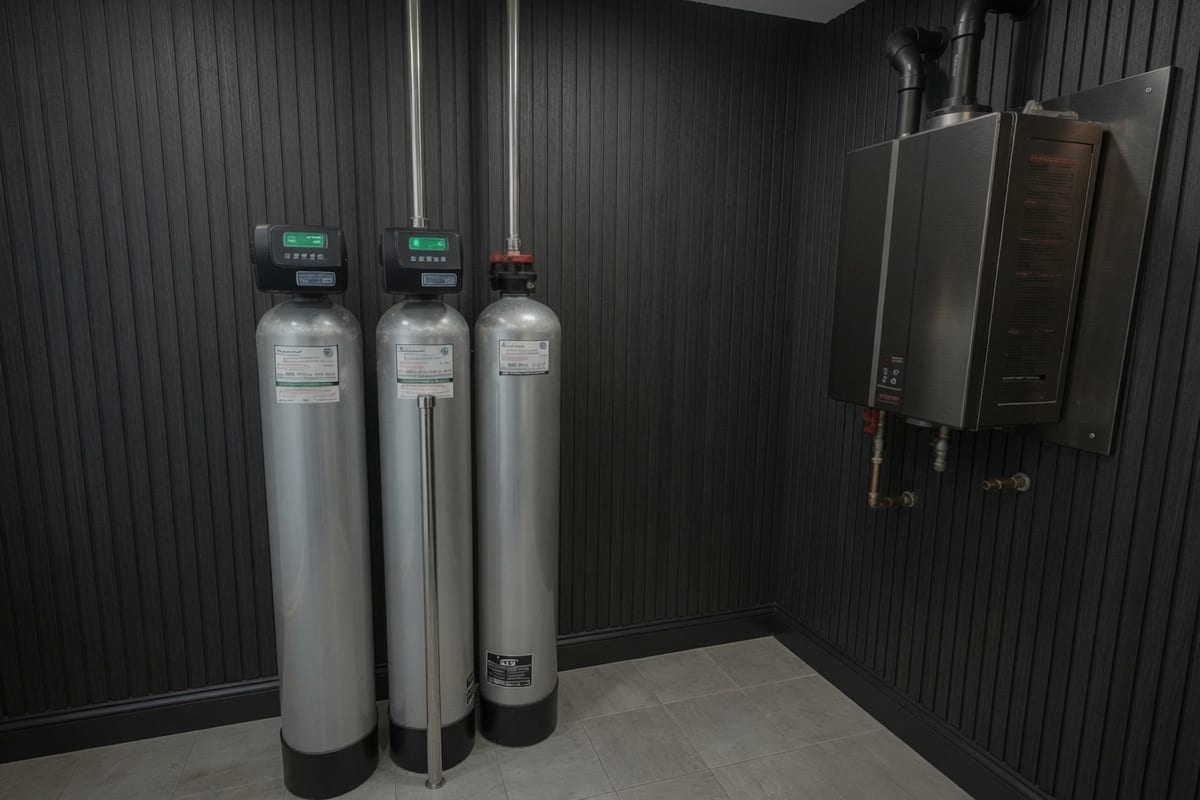
Note the softener row. Anion exchange and softening are both ion exchange, which is why the two get confused, but a softener carries the wrong resin and is aimed at hardness. Whole-house nitrate removal means a nitrate-selective anion exchange tank sized against a laboratory number, not a softener with a different setting.
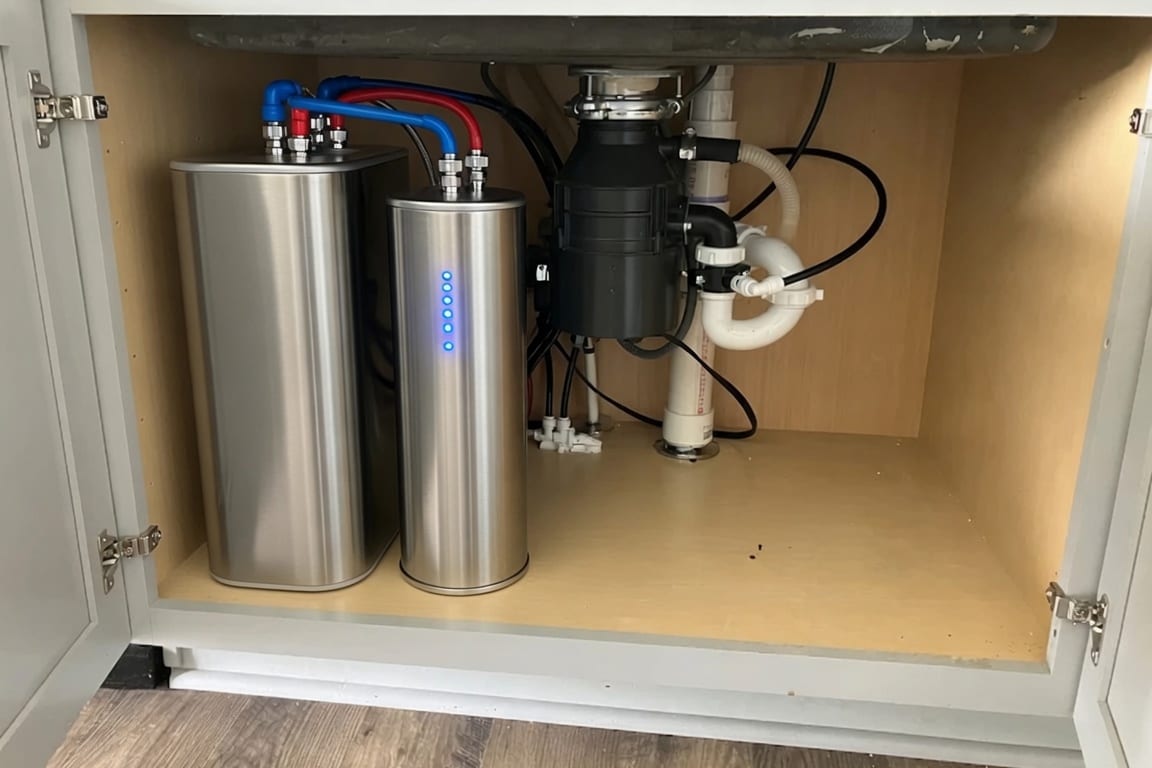
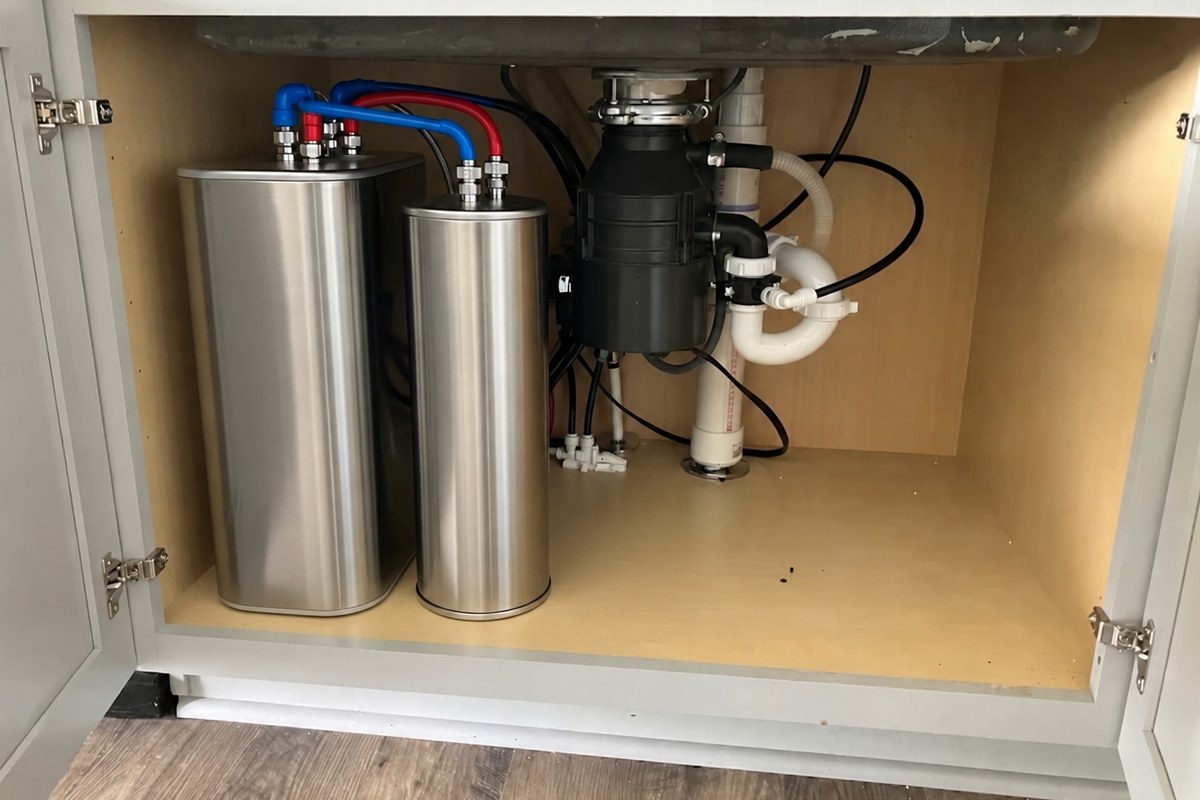
Most households treat nitrate at the tap they drink from. An under-sink reverse osmosis system runs $350 to $900 installed here, a planning range and never a quote, and it handles the water used for drinking, cooking and formula rather than the water going to the shower.
Two conditions before you rely on one for formula, and they are not optional. Ask for the unit’s specific nitrate reduction claim and the standard it was certified against, because reverse osmosis as a category is not the same thing as a given model’s tested performance on nitrate. Then test the treated water coming out of it, not just the raw well, and keep using an alternative source until that treated result is in your hand. A system that is installed is not the same as a system that is verified working. Our water filtration cost guide and the reverse osmosis cost post carry the detail.
NC DHHS’s own advice while you are sorting it out is simple: “do not drink the water or use it to prepare baby formula. Use an alternative source of water instead.”
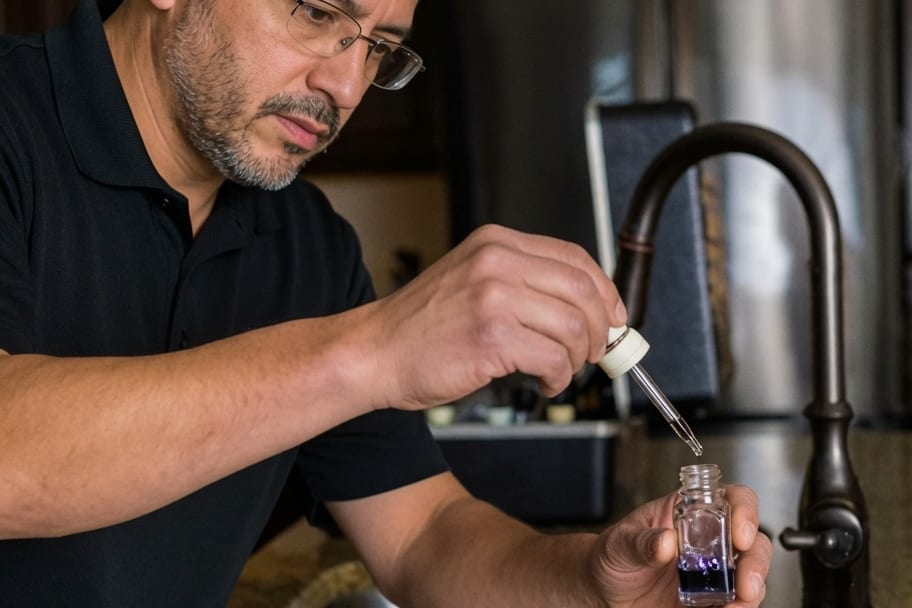
How do you test a well for nitrate in North Carolina?
Through a state-certified laboratory, usually booked through your county health department. Nitrate and nitrite are already on the panel North Carolina requires for a newly constructed well under General Statute 87-97, alongside the metals and pH, so if your well is recent the number may already exist in a file. For an existing well, NC DHHS asks for heavy metals, nitrates, nitrites, lead and copper every two years.
Wake County lists a nitrate and nitrite test at $25, plus a $50 trip fee when the county collects the sample, observed on its fee page 20 September 2026. Fees vary by county and change, so confirm with yours rather than with a blog post, this one included. Our NC well water testing guide covers what the required panel does and does not include, and our water testing service covers the readings that decide equipment.
One detail worth knowing: nitrate moves with rainfall and season rather than sitting still, so a single clean result from three years ago is weaker evidence than it looks.
Frequently Asked Questions
Can I use well water to make baby formula in North Carolina?
Not until you know the nitrate number, and the decision itself belongs with your pediatrician rather than with us. NC DHHS’s guidance for well owners is plain: if you have nitrates in your well water, “do not drink the water or use it to prepare baby formula. Use an alternative source of water instead.” Test first, then ask a doctor.
Does reverse osmosis remove nitrate?
Yes. Both NC State Extension and NC DHHS list reverse osmosis among the methods that reduce nitrate, alongside distillation and anion exchange. An under-sink unit runs $350 to $900 installed in the Triangle, which treats drinking and cooking water rather than the whole house.
Does boiling well water remove nitrate?
No, it concentrates it. Water leaves as steam and the nitrate stays behind, so NC State Extension notes boiling “actually increases the nitrate concentration of the remaining water.” Boiling is the correct response to bacteria and the wrong response to nitrate, which is why the lab result has to come before the reaction.
Does a water softener remove nitrate?
No. NC State Extension lists water softening among the household methods that do not remove nitrate. Softeners use cation exchange aimed at calcium and magnesium; nitrate needs anion exchange on a nitrate-selective resin, which is separate equipment inside a well water treatment build.
Is nitrate on the required North Carolina well test?
Yes. Nitrates and nitrites are named in the panel required for newly constructed private wells under NCGS 87-97, which is unusual, because hardness and PFAS are not. For older wells, NC DHHS asks for nitrate every two years.
What does a nitrate test cost around Raleigh?
Wake County lists nitrate and nitrite at $25 plus a $50 trip fee, observed 20 September 2026, and neighboring counties set their own. Well owners in Clayton, Fuquay-Varina and Holly Springs book through their own county health department, so check the fee schedule for the county your parcel sits in rather than the one you shop in.
Sources
Agency guidance and fees change. Check the current version before acting on any of it.
- NC State Extension, Nitrate in Drinking Water, AG-473-4, Jennings and Sneed, revised 29 November 2023: the three percent figure, the 10 mg/L standard, the six-month mechanism, and the treatment list.
- NC DHHS, Nitrate, Nitrite and Private Wells, September 2019: the NC DEQ and EPA standards, the pathways, and the sampling figures.
- NC DHHS, private well water testing FAQs, last modified 29 July 2025: the two-year interval, the formula guidance, and boiling.
- NCGS 87-97: the analytes required for a new private well, nitrates and nitrites included.
- Wake County, well water tests and fees, observed 20 September 2026: the $25 nitrate and nitrite test and $50 trip fee.
Sorting out nitrates in your well water
The order that works is test, check which basis the lab reported on, read the number against 10 mg/L as nitrogen, and only then decide on equipment. If the number is high and there is a pregnancy or an infant in the house, use an alternative source of water and talk to your doctor or your county health department while the water side gets sorted. We will say that every time, because it is not our call.
We size and install reverse osmosis and well water treatment across Apex, Clayton, Fuquay-Varina and Holly Springs. We do not drill wells, repair pumps or work on septic systems. We read the lab sheet, tell you which equipment the result supports and which it does not, and put a price on it in writing before anything is installed.
Call (984) 384-6991 or request a free consultation.