Rent vs Buy a Water Softener in NC: The Arithmetic
Raleigh Water Pros • September 20, 2026 • 10 min read
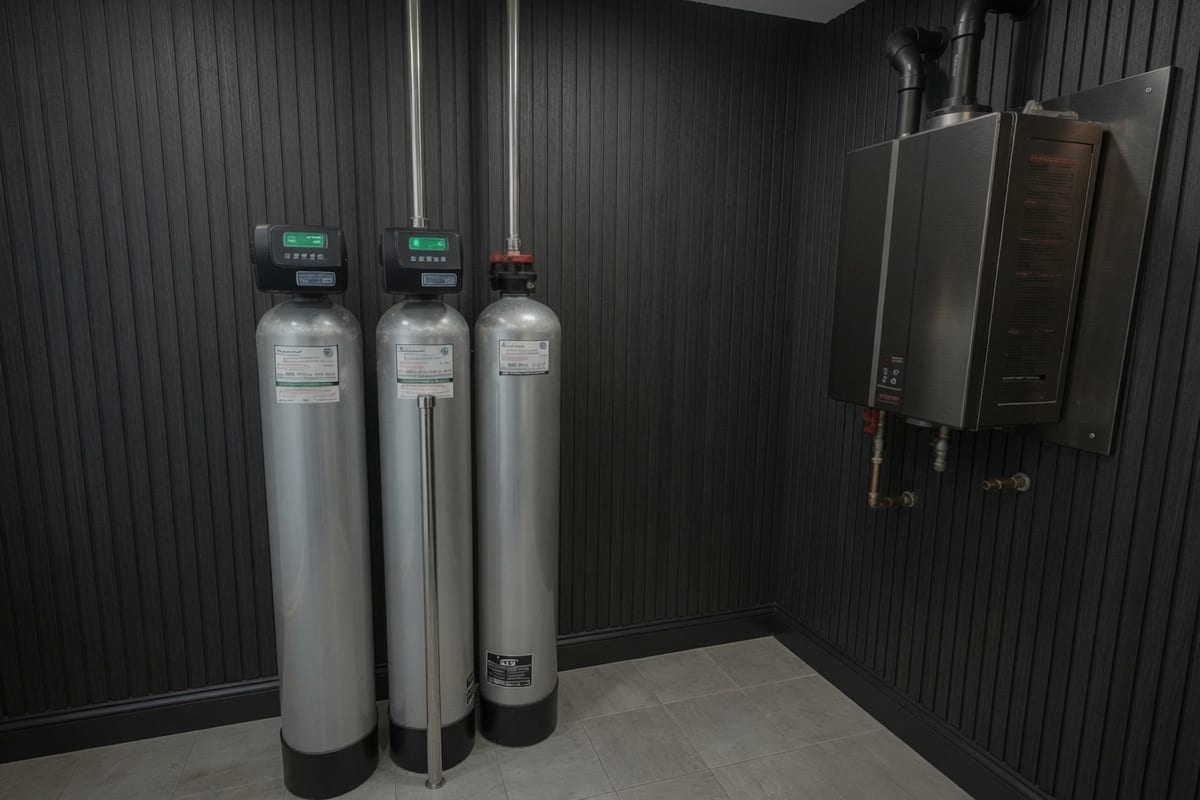
Type “rent vs buy water softener” into Google and look at what drops down: reddit, is it cheaper to rent or buy, how much does it cost to rent. People add “reddit” to a search when they have stopped believing the pages that sell the thing. Here that instinct is sound, because almost every page answering it belongs to a company whose business is renting, and none of them are in the Triangle.
So, our position before the numbers start. We install water softeners for Wake and Chatham County homes, which means we have a stake in what you decide. Read what follows as an interested party’s arithmetic, then run it again with the quote you actually have in front of you. Every assumption is written down instead of buried, which is the only thing that makes a page like this worth your time.
What follows: where the crossover really sits, what ten years looks like on both sides, the clauses rental pages do not open with, and the three cases where renting is the better call.
Is it cheaper to rent or buy a water softener?
On the assumptions below, the crossover falls at about 79 months, a little over six and a half years. Past that, buying wins most versions of this calculation; under about four years renting usually wins; in between it turns on assumptions you set yourself. The whole thing is one division problem you can do at the kitchen table.
The crossover, in months, is the installed purchase price divided by the monthly fee minus whatever the owner spends each month keeping the machine running. That last term matters, because a rental fee normally covers service and an owned machine does not. Leave it out and you flatter buying; leave out the escalation clause and you flatter renting. Below, both are in.
This page will not print a rental rate as though it were a market figure. We have no sourced number for what Triangle companies charge, and inventing one would make the arithmetic look more authoritative than it is. The example below uses a labelled placeholder that you should overwrite with the figure on your own quote.
The arithmetic, with the assumptions written down
Five assumptions, all of them arguable, all of them yours to change:
- Purchase price: $2,500 for a softener installed, the midpoint of the $1,500 to $3,500 band on our Raleigh price guide. Like every figure here it is a planning range, not a quote.
- Rental fee: $50 a month. A placeholder chosen because it divides cleanly. It is not a market rate and we are not claiming it is one. Replace it with your quote.
- Salt on the owner’s side only, at $100 a year, the middle of the $50 to $150 band. Charging salt to the buyer and not the renter is the most rental-friendly assumption we can honestly make.
- A service allowance of $10 a month for the owner, set aside against repairs a rental fee would have covered.
- No fee increases on the rental, which is generous to renting.
Those assumptions put the owner’s running cost at $220 a year, which is $18.33 a month, against the renter’s $50. The gap is $31.67 a month, and $2,500 divided by $31.67 gives a crossover at 78.95 months, call it 79. Totals below are calculated from those unrounded inputs and only the display is rounded.
| Months in the house | Renting, running total | Owning, running total |
|---|---|---|
| 12 | $600 | $2,720 |
| 24 | $1,200 | $2,940 |
| 36 | $1,800 | $3,160 |
| 60 | $3,000 | $3,600 |
| 79 | $3,950 | $3,948 |
| 120 | $6,000 | $4,700 |
Read the 79-month row as what it is: the point where these particular assumptions cross, not a rule about when buying wins. Change any input and the answer moves. At ten years the columns sit about $1,300 apart, and the gap is only that narrow because we loaded every running cost we could think of onto the ownership side and then froze the rental fee, which no contract does. Allow an annual increase and the crossover arrives sooner. If your quote excludes salt, that line cancels, the gap widens to $40 a month, and the crossover lands at about 63 months. The arithmetic is worth more to you than the number: run it on the quote in front of you.
Want the purchase half priced properly rather than assumed? Request a free consultation, and we measure your water first, then put a written number on the install.
One column the table cannot show: at month 120 the owner has an appliance and the renter has a stack of receipts. Do not over-weight that. Aging treatment equipment adds very little to a house’s sale price, and by year ten it is closer to a maintenance item than an asset.
What the rental pages leave out
None of this is a scandal. It is the half of the deal that does not fit in a monthly-price headline, and it is where the surprises live.
Who owns the equipment at the end of the term?
In a straight rental, nobody transfers anything to you, ever. You can pay for eight years and own precisely nothing, which is the entire point of a rental and is not hidden, merely quiet. A rent-to-own or lease-purchase agreement is a different product with a stated buyout, and the two get discussed in the same breath far too often. Ask which one you are signing, and get the buyout figure in writing.
What happens if you move or sell the house?
The machine belongs to the rental company, so it leaves when they come for it, and the plumbing it was spliced into has to be made whole again. Ask who pays for removal and reconnection, and whether the agreement follows you to a new address in the same service area. Leased equipment cannot be conveyed with a house, so it becomes a closing-table detail: your agent will be asked whether the treatment equipment stays, and the answer has to be no.
What does the contract oblige you to?
Read for six things: the initial term, whether it renews automatically and how much notice cancels it, whether the fee can rise and by how much, what early termination costs, who is liable if the unit damages a floor, and whether salt and service calls are inside the fee. A monthly figure with none of those answered is a headline, not a price.
When is renting a water softener the better call?
Three times: a short expected stay, a home you do not own, and a real cash-flow constraint. An installer who pretends otherwise is doing the same thing to you that a rental page does.
A short stay. If you are out of the house inside the crossover you calculated, renting costs less. A three-year posting to Cary or a house you expect to flip does not pay back $2,500 of equipment.
A rented home. You cannot cut into a landlord’s plumbing on your own say-so, and a fitted unit does not leave with you. Where a landlord agrees to a rental arrangement, that is often the only route open.
Cash flow. Not everybody has $2,500 spare, and a monthly fee that includes service is a legitimate way to get soft water now. Do the division first so you know what the convenience costs by year six.
What is not on that list is uncertainty about whether you need one at all. That is a reason to measure, not a reason to rent, and a rental you did not need is worse than a purchase you did not need because it keeps charging you. Raleigh Water’s own annual report puts total hardness at about 1.5 grains per gallon and classifies the water “Soft”; the Cary and Apex plant publishes about 1.8 grains, printed “moderately soft”. Neither supports softening anything. The full split is in is a water softener worth it in NC.
Wells are a different conversation. Private wells around the Triangle commonly run far harder than city water, though we have no representative dataset that would predict yours and yours could land anywhere. No dataset exists because the state’s required new-well panel under NCGS 87-97(h) lists eighteen analytes and hardness is not among them. So on a well the answer is always the same: measure the hardness at your tap before choosing between a monthly fee and a purchase.
Before you sign either one
Pro tip: Ask any rental company for the total of all payments across the initial term as a single number, and ask any installer for the installed price and the expected annual running cost, also as one number. Almost nobody volunteers the first, and once you have both the decision makes itself.
Then price the purchase properly rather than from a band: what an installed price is made of explains why the same unit lands at different numbers in a new build in Apex and a 1970s house with copper and no drain nearby.
Frequently Asked Questions
Is it cheaper to rent or buy a water softener in North Carolina?
On this post’s assumptions, a $2,500 installed price and a $50 monthly placeholder, the crossover is 79 months, a little over six and a half years. That is an illustration rather than a rule; change an input and it moves. Under about four years renting wins on cash, and in between it turns on whether salt and service sit inside the fee. Run the division with your own quote, not anyone’s example.
How much does it cost to rent a water softener?
We will not print a monthly rate we have not sourced. Get the figure from the company quoting you, then ask three follow-ups: does it rise during the term, does it include salt, does it cover service calls. A fee with those answered is comparable to a purchase price. One without them is not.
Do I own the softener after renting it for years?
Not in a straight rental, no matter how long you pay. Ownership only transfers under a rent-to-own or lease-purchase agreement with a stated buyout, which is a different contract. Ask which you are being offered and get the answer in writing before you sign.
What happens to a rented water softener when I sell my house in Wake County?
It comes out, because it is not yours to convey. Whether you are in Garner or north Raleigh, the equipment goes back and the plumbing is reconnected, so find out in advance who pays for both. Buyers and their agents ask whether treatment equipment stays with the house, and a leased unit cannot.
Is renting better for well water?
Usually not, because a well rarely needs a softener alone. Iron, sulfur, sediment and low pH tend to arrive together, and a rented box aimed at hardness can be fouled within months by iron the agreement never accounted for. Let a test answer the well water treatment questions first.
Does a softener cost more to run than the rental fee saves?
Not usually. Salt runs $50 to $150 a year for most homes, the biggest ongoing cost of owning one, and our Raleigh planning ranges put the rest in context. What catches people out is not salt, it is the repair a rental fee would have absorbed, which is why the table above carries a service allowance.
Sources
- Raleigh hardness and the “Soft” classification: Raleigh Water’s 2025 annual water quality report, which prints hardness in grains per gallon plant by plant.
- Cary and Apex at about 1.8 grains per gallon, printed “moderately soft”: the Cary/Apex Water Treatment Facility’s published report.
- The required analyte list for new private wells is NCGS 87-97(h). Hardness is not on it, which is why no state well hardness dataset exists.
- Purchase and salt figures are the planning bands on our own cost page. The $50 monthly figure is an illustrative placeholder, sourced to nobody.
Getting your own rent vs buy number
If you are weighing a monthly fee against a purchase in Raleigh, Cary, Apex or Wake Forest, the next step is a measurement, not a brochure. We test the water at your tap, size the equipment to the reading, and put an up-front written price on the water softener installation, so you have a real number to set against the rental quote instead of a band.
We do install these, so weigh our advice accordingly, and bring the rental paperwork with you. Call (984) 384-6991 or book a free consultation.