What a Water Softener Service Visit Includes
Raleigh Water Pros • September 20, 2026 • 10 min read
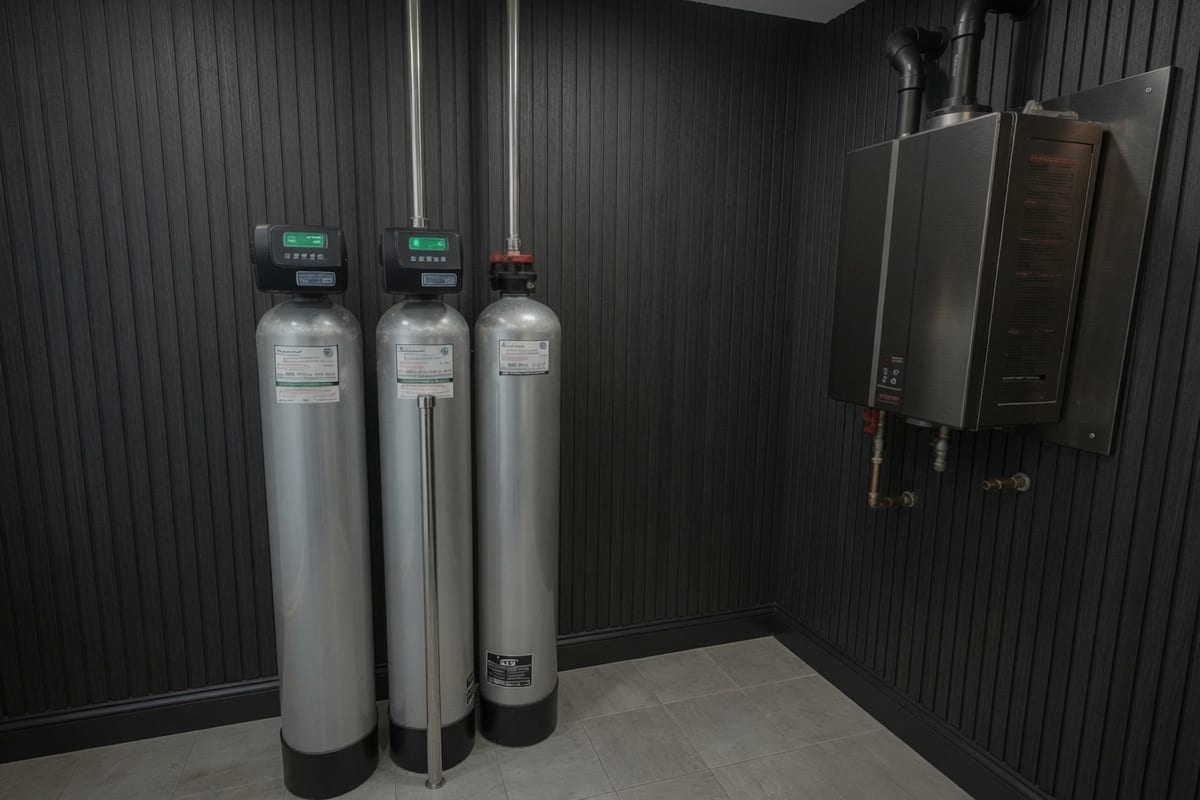
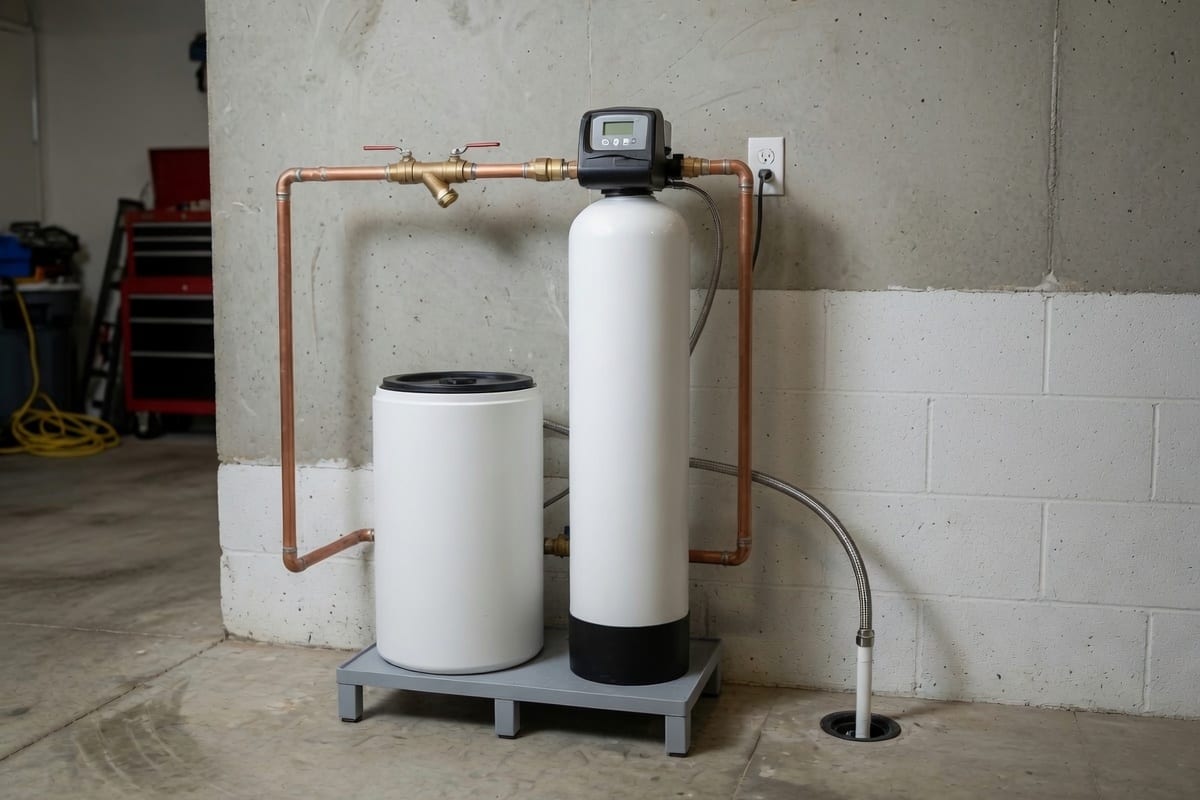
Someone quotes you a price for water softener service and you have no way to judge it, because nobody tells you what the visit is supposed to contain. One company spends ninety minutes with a hardness kit and a screwdriver. Another pours in a bag of salt, writes a ticket, and leaves.
Both call it service. Only one of them told you anything about your water.
This post is the checklist, not the price list. It covers the eight things a genuine water softener service visit should include, how often the visit is worth paying for, what belongs in writing beforehand, and the signs that the person in your garage is running a sales call with a toolbox. Two sibling posts carry the numbers: our water softener maintenance cost guide prices routine upkeep, and the water softener repair cost guide prices failures.
What Does a Water Softener Service Visit Include?
A real service visit is eight checks: hardness in and out, valve settings and regeneration cycle, salt dose against your measured hardness, brine tank condition, the injector and venturi, the brine and drain lines, resin condition, and the bypass and plumbing connections. Everything else is optional. Anything short of this is a salt delivery.
| # | The check | What the technician is looking for |
|---|---|---|
| 1 | Hardness in and out | A raw reading before the unit and a treated reading after it, proving it works |
| 2 | Valve settings and cycle | Whether cycle times, capacity and regeneration frequency match the house or are still factory defaults |
| 3 | Salt dose | Whether pounds per regeneration matches your measured hardness and water use |
| 4 | Brine tank | Bridging, a salt mushroom, sludge, a stuck float, correct water level |
| 5 | Injector and venturi | A clogged screen, the most common reason a softener stops drawing brine |
| 6 | Brine and drain lines | Leaks, kinks, a collapsed brine line, an air gap so nothing siphons back |
| 7 | Resin condition | Lost capacity, iron fouling, channeling, and how near the bed is to its end |
| 8 | Bypass and connections | That the bypass actually bypasses and the unions are dry and tight |
The items do not take equal time. On a two-year-old unit in Cary, checks one through six take most of the appointment and resin is a five-second look. On a twelve-year-old unit on a well in Clayton, resin is the whole conversation.
Want to know which of those eight your softener actually needs? Request a free consultation and we test the water first, then price the work in writing.
Testing hardness in and out is the check that proves everything else
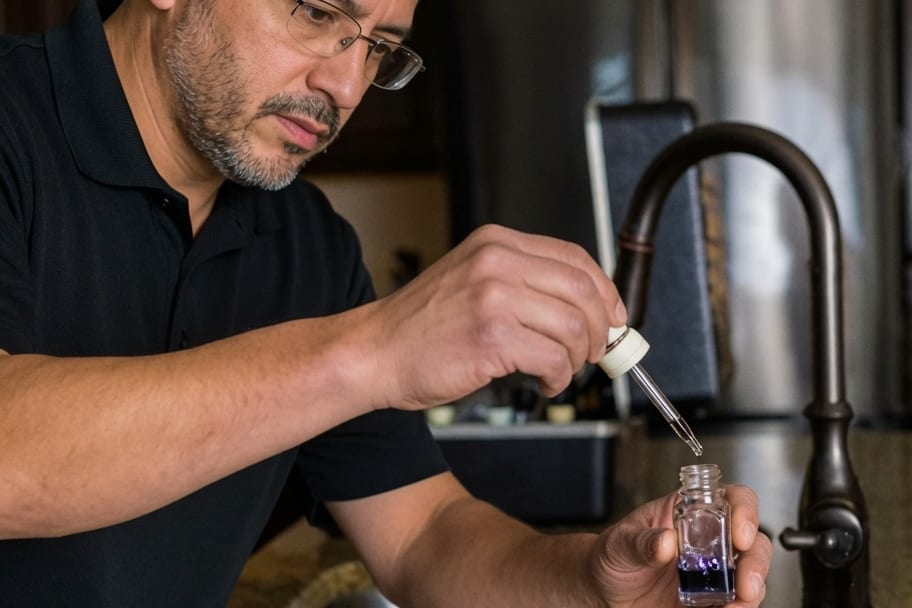
This is the item that separates a service visit from a service invoice. A technician takes a hardness reading at a tap ahead of the softener and a second reading after it. The difference is the machine’s report card, and it takes about two minutes.
If the treated reading matches the raw reading, nothing downstream is worth discussing until that is fixed. If it is near zero, the unit is doing its job. Be wary of any visit that reports only one number, or none. A hardness and water test is the cheapest diagnostic on the truck.
It matters more on a well than on city water. Raleigh Water’s 2025 report puts city hardness at 25.2 mg/L, about 1.47 grains per gallon, and classifies it “Soft” (City of Raleigh, 2025 Consumer Confidence Report), and the same water serves Garner, Wake Forest, Rolesville, Knightdale, Wendell and Zebulon. Private wells are the other story. Private well hardness around the Wake, Chatham and Johnston County fringe is commonly far higher, but we have no representative dataset that would predict yours, and nobody has measured it unless you paid for it: General Statute 87-97 lists what a new private well must be tested for, and hardness is not on it (NC General Statute 87-97).
Valve settings and the salt dose are where most of the waste lives
The valve is the brain, and most are still running whatever the installer left in them. Regeneration frequency, reserve capacity, cycle times and the salt dose get set once and then forgotten for a decade while the household changes around them.
The salt dose matters in real pounds. Industry practice puts residential regeneration at 5 to 10 pounds of salt per cubic foot of resin, and dialing toward the low end is what earns the 4,000 grains per pound high-efficiency rating (Water Conditioning and Purification, Softener Efficiency). A unit set high and regenerating often on soft city water burns several times the salt it needs. Penn State Extension notes each regeneration also sends about 50 gallons down the drain (Penn State Extension, Water Softening), so frequency is a water bill question too.
Pro tip: Ask the technician to read you the current valve settings before changing anything, and to write both old and new values on the ticket. That one line turns your next service visit into a comparison instead of a fresh guess.
The brine tank, injector and resin, in that order
Brine tank first, because it is where the cheap failures hide. A salt bridge is a fused crust arching across the tank with an air gap underneath, so the water below never touches salt and the unit regenerates on plain water. A salt mushroom is the solid column version sitting on the tank floor. Our softener salt guide covers clearing both between visits.
Injector and venturi second. This small assembly creates the suction that pulls brine from the tank during regeneration, and a screen the size of a thumbnail is all that protects it. Sediment, iron or salt fines plug it, the softener stops drawing brine, and the symptoms look exactly like a dead unit. Cleaning it is routine service, not a repair.
Resin last, because it is the expensive one. It loses capacity slowly over ten to fifteen years, faster where iron is present, which is the usual story on Triangle wells that also need iron and sulfur treatment. A resin change runs $300 to $600 in most Triangle homes; the maintenance cost guide breaks that down and the Raleigh cost page carries the band table. These are planning ranges, never a quote.
How Often Is Water Softener Service Actually Worth It?
Once a year is right for a well, every other year is usually enough on Raleigh city water, and any softener over ten years old earns an annual look regardless of source. That split follows the workload rather than a service contract.
A softener on a well at 15 grains per gallon does roughly ten times the ion exchange of the same unit on Raleigh city water, plus iron, sediment and whatever else the well delivers, so annual service pays for itself in salt alone. A softener on soft city water in Garner is barely working, and every second year plus your own monthly look in the brine tank covers it.
Bring the visit forward, whatever the schedule, if any of these show up:
- Soft water feeling disappears, or spots and scale return
- Salt level stops dropping for weeks, or suddenly drops much faster
- The unit regenerates at odd hours or more often than it used to
- Water in the brine tank sits above the salt, or the tank smells
- Any water on the floor around the unit or the drain line
What Should a Service Call Include in Writing?
Before anyone starts, you should have the visit fee, what the fee covers, whether it is credited against repairs, the hourly or flat rate for work beyond the visit, and a written price for any part before it is fitted. Verbal is not a price.
Ask for these five things and you will not be surprised:
| What to ask for | Why it matters |
|---|---|
| The visit fee and what it includes | Separates a diagnostic call from a full service |
| Whether the fee is credited toward repairs | Common practice, but only if it is written down |
| Parts priced individually, before fitting | Stops a $40 injector arriving inside a $400 line item |
| Before and after hardness readings | Proof the unit works, and your baseline for next time |
| Valve settings, old and new | Makes drift visible and the next technician faster |
You should leave with a ticket naming what was checked, what was changed, what the water measured, and what was recommended but not done. Every recommendation should say why, in a sentence you can read.
Red Flags: When a Service Visit Is Really a Sales Visit
The clearest sign is a visit that produces a replacement recommendation without ever producing a treated-water hardness number. If nobody measured what is coming out of the unit, nobody has grounds to tell you the unit is finished.
Watch for these:
- A soap-suds demonstration in a glass instead of a reading in grains per gallon
- A quote for a whole new system before the injector has been pulled and looked at
- Pressure to decide on the spot, or a price that expires when the van leaves
- A “free inspection” that arrives with a new unit already on the truck
- Scale blamed on Raleigh city water, which the utility’s own report classifies as Soft
- No written scope at all, just a total
A useful test: ask what specifically failed and what the measured evidence is. A technician who checked the eight items above answers in ten seconds. A salesperson changes the subject to how old the unit is.
Replacement is sometimes right. A twelve-year-old unit with fouled resin, a failing valve and a corroded tank is not worth $600 of parts when a new softener runs $1,500 to $3,500 installed. That conversation should arrive after the measurements, not instead of them.
Frequently Asked Questions
How long does a water softener service visit take?
Plan on an hour to ninety minutes for a full service on a typical residential unit. Hardness testing, valve settings and the injector take most of it; a brine tank that needs emptying and scrubbing adds time. A visit finished in fifteen minutes did not cover the eight checks above.
Is water softener service the same as water softener repair?
No. Service is the scheduled visit that measures, adjusts and cleans, and it is mostly labor. Repair replaces a failed part, such as a valve, control head or brine tank. Our water softener repair cost guide covers the repair side and the point where replacing the unit makes better sense.
Can I do any of this myself between visits?
Yes, and the three that matter most are easy. Look in the brine tank monthly, push a broom handle through the salt to check for a bridge, and watch whether the level drops at a steady rate. Leave the injector, the valve program and the resin bed to a technician, mostly because putting a softener back together wrong is expensive.
Do I need annual service on Raleigh city water?
Usually not annually. Raleigh Water publishes hardness of about 1.47 grains per gallon and classifies it Soft, so a softener on city water in Raleigh, Wake Forest or Knightdale is doing very little ion exchange and drifts more slowly. Every other year, plus your own monthly brine tank check, is a reasonable schedule for those homes.
What if the service finds my softener is not removing anything?
Then the next step is diagnosis, not a new unit. A zero-difference hardness reading usually traces to a bridged brine tank, a plugged injector, a valve stuck in bypass or a wrong program setting, and all four are cheap. Resin at the end of its life is the expensive answer, and it should be the last one on the list, not the first.
Do you service softeners you did not install?
Yes. We service, adjust and test existing softeners regardless of brand or who installed them, and we handle water softener installation when a unit has genuinely reached the end. Either way you get the measurements and a written price before the work.
Book a Water Softener Service in Raleigh, Garner or Cary
If your softener has not been measured in a year or more, a service visit is the cheapest way to find out whether it is working, whether the salt setting is throwing money away, and whether you are anywhere near needing a new one.
We test hardness before and after the unit, check the valve program, injector, brine tank and resin, and hand you the numbers in writing. We work across Raleigh, Garner, Cary and Clayton, on city water and on wells. Request a free consultation or call (984) 384-6991, and you get an up-front written price before anyone opens the valve.