Well Water Softener Cost in Raleigh, NC (2026)
Raleigh Water Pros • August 29, 2026 • 7 min read • Updated September 14, 2026
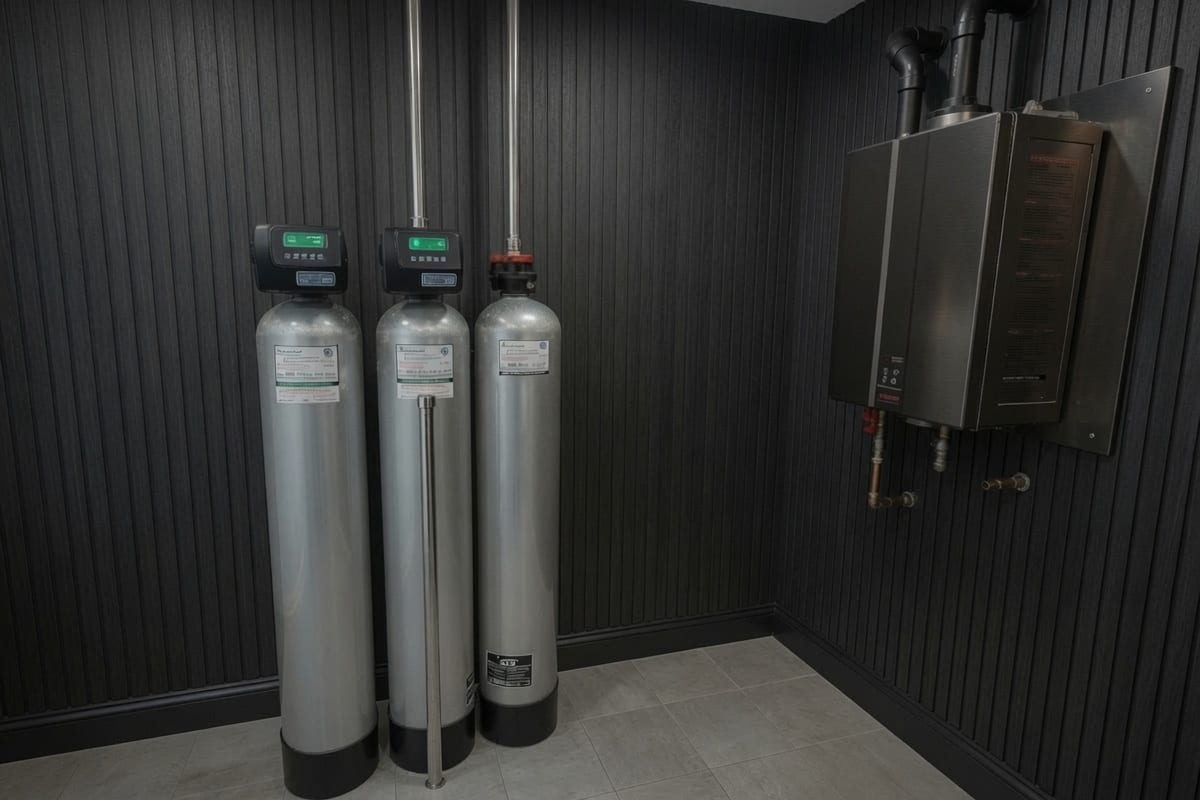
Your water heater stopped working at seven years old. Your dishes come out of the dishwasher spotted white. Your skin feels dry after a shower. Hard water is a common cause, and on a private well it is worth measuring rather than assuming: hardness varies well by well, and most homeowners never check until an appliance dies.
A water softener fixes it. The cost is not cheap ($1,500 to $3,500 installed), but the appliance damage hard water causes runs higher. This guide breaks down what softeners actually cost on Triangle well water, what affects the price, and how to know if one is worth it for your water. If you are on city water instead, start with our general water softener cost guide.
How Much Does a Water Softener Cost in Raleigh, NC?
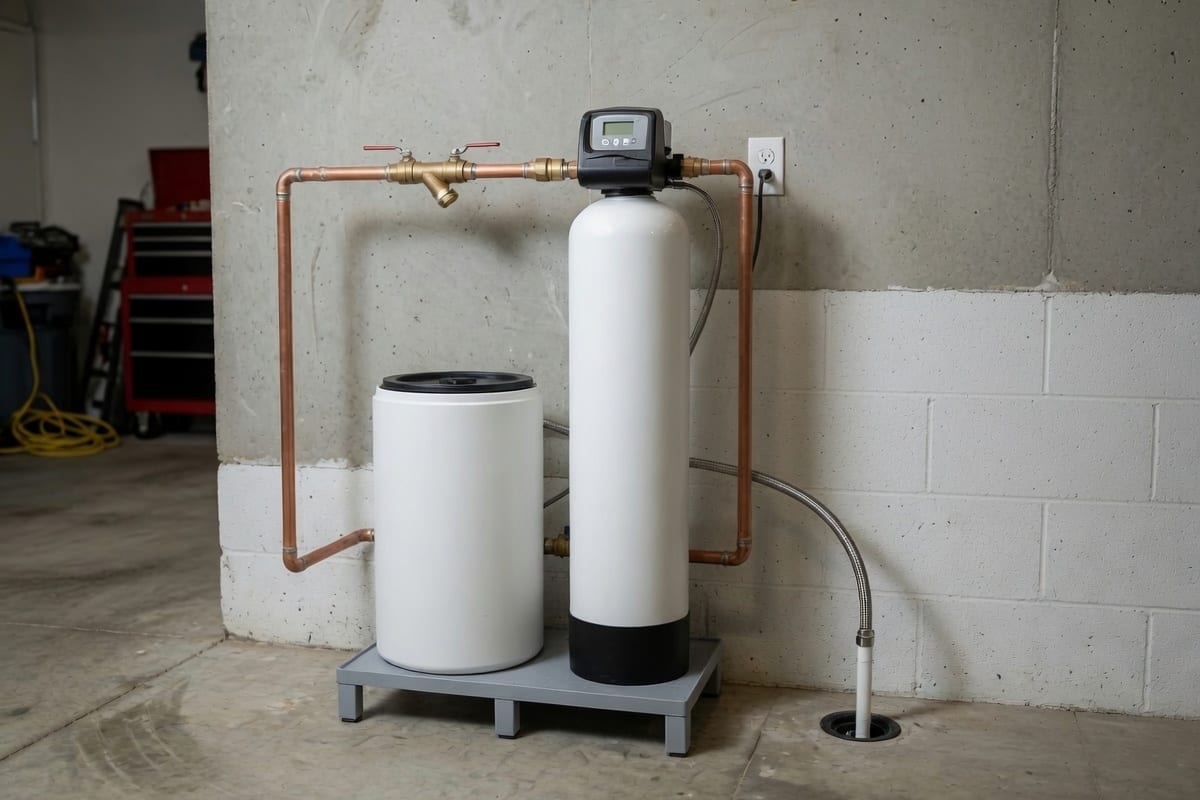
Most Piedmont homeowners pay $1,500 to $3,500 for a complete ion-exchange softener system installed, the same range published on our water filtration cost guide. That breaks into equipment ($1,000-$2,200), installation labor ($400-$900), and water line modifications ($100-$400). A few variables move the number: whether you already have soft water plumbing (existing service makes retrofit cheaper), your water hardness (higher hardness needs larger capacity), and the salt type you choose (potassium chloride costs more than sodium).
Typical breakdown:
- Standard 40,000-grain capacity softener (handles most 3-4 bedroom homes): $1,500-$2,200 installed
- Larger 64,000-grain capacity (larger homes or extreme hardness): $2,000-$2,800 installed
- Water-efficient demand-controlled softener (only regenerates when needed): $2,200-$3,500 installed
The water-efficient models are more expensive upfront but cut water and salt consumption by 40%, paying for themselves in 4-6 years if your water is very hard.
What Affects Softener Cost in Raleigh
Your Water Hardness (the biggest factor)
Raleigh Water publishes 25 ppm hardness, about 1.5 grains per gallon, and classifies its own water as soft. Most Triangle wells run 150 to 250 ppm, which is hard to very hard. The harder your water, the larger the tank you need, and the more frequent the regeneration cycles. A house on a 200-ppm well needs a considerably bigger system than a city-water house needs at all.
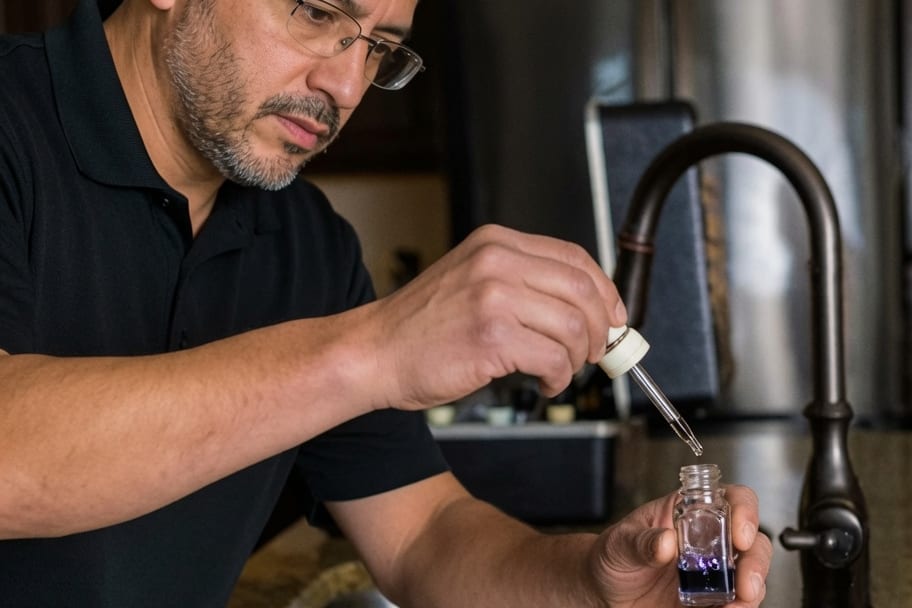
Free consultation reveals your exact hardness. We test on-site in 10 minutes and tell you the number before quoting. That number decides everything: at 200 ppm and above a softener earns its place quickly, and anywhere near the 25 ppm Raleigh publishes for city water, you do not need one and we will say so.
System Capacity (tanks come in standard sizes)
- 40,000 grains = typical for 3-4 bedroom home, average family, moderate hardness (150-180 ppm)
- 64,000 grains = larger homes, families of 5+, or high hardness (200+ ppm)
- 80,000+ grains = extreme hardness (250+ ppm) or households with heavy laundry/shower use
Higher capacity = higher price, but undersizing is a false economy. An undersized softener regenerates every 4-5 days instead of every 10-14, wasting salt and water and wearing out resin prematurely.
Salt Choice (sodium vs potassium chloride)
- Sodium chloride (table salt): Cheaper ($15-25/bag), but adds sodium to your drinking water (not ideal if you are on a sodium-restricted diet). Works reliably in most water.
- Potassium chloride: 30-50% more expensive ($25-40/bag), but leaves no sodium residue. Recommended if anyone in the home is sodium-sensitive or if you have low-sodium requirements.
Over one year, the salt-type difference is $200-400. Pick based on your health situation, not just initial cost.
Installation Complexity
Easy retrofit (existing softener location, clear plumbing access): $400-$600 labor Complex retrofit (tight spaces, frost-proof hydrants, water main deep in yard): $700-$1,200 labor New construction (future-proofed plumbing): $400-$600 labor
If your water line runs deep or under concrete, installation costs jump. We assess this during the free consultation and give you an exact labor quote before scheduling.
Monthly Operating Cost (Salt & Maintenance)
Once installed, a softener costs money to run:
- Salt/potassium: $30-60/month depending on hardness and household size
- Maintenance: $150-300/year for resin cleaning or occasional cartridge replacement (usually years 5-8)
Over 10 years, operating cost is roughly $4,000-$8,000 total ($400-$800/year). Factor that into your ROI math.
ROI Timeline: When Does a Softener Pay for Itself?
Hard water damages appliances and makes soaps/shampoos ineffective. ROI comes from:
Direct savings (appliance life extension):
- Water heater: replaces at 8-10 years with hardness vs 12-15 years with soft water = $1,500 savings
- Washing machine: soft water can extend life 2-3 years = $1,200-1,800 savings
- Dishwasher: reduced spotting/scaling = 2+ year life extension = $800-1,200 savings
- Plumbing: scale buildup requires repiping ($2,000-4,000) without softening; with softening, never needed
Indirect savings (efficiency gains):
- Detergent use drops 40-50% with soft water = $200-400/year savings
- Shampoo/soap effectiveness improves = less product needed
- Energy efficiency: soft water heats faster than hard water = 5-10% energy savings = $150-300/year
Conservative ROI: System pays for itself in 3-5 years through appliance life extension alone. If you factor in detergent/energy savings, break-even is 2-3 years.
Example: Raleigh family with 180 ppm hardness, $1,600 installed softener
- Year 1: Cost $1,600 + $600 salt = $2,200
- Years 2-5: $600 salt/year + $50 maintenance = $650/year
- Savings from longer water heater life: $1,500
- 5-year net cost: $2,200 + $2,600 - $1,500 = $3,300 ($660/year)
- Without softener: water heater replacement at year 8 = $1,500 cost alone
Softener wins.
Financing & Warranties
Most softener systems come with:
- 10-year tank warranty (rust-through protection on steel tanks)
- 5-year resin warranty (ion-exchange media replacement covered)
- Parts + labor warranty (first year usually included; years 2-5 optional)
Financing options:
- Cash/credit card: no hidden fees, best long-term cost
- Financing plans: 12-24 month interest-free through most water treatment companies (read the fine print; some have catch-up interest if you miss a payment)
- Home improvement loans: if you are refinancing anyway, roll the softener into your mortgage (7-30 year terms available)
We quote total installed cost upfront. No surprises, no add-ons at final walkthrough.
How to Know If You Need a Softener
Get a free consultation if:
- Your water heater failed before year 10
- Dishes come out of the dishwasher spotted or cloudy
- Your skin feels tight or your hair feels sticky after showers
- You see white crusty buildup on faucet aerators or shower heads
- You are on a private well (most Triangle wells run hard)
- You have noticed reduced water pressure (scale buildup in pipes)
A softener might not be needed if:
- Your water hardness is under 80 ppm (most Raleigh city water)
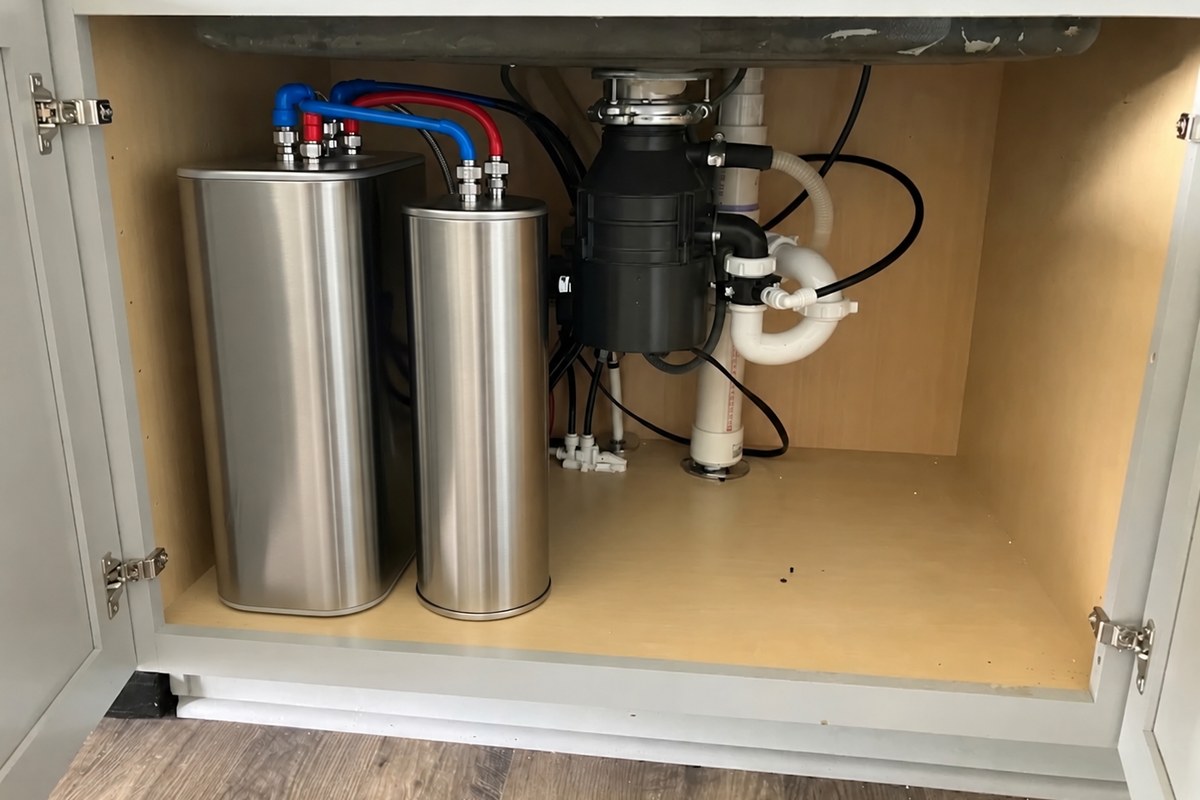
- You only need drinking water treatment (under-sink reverse osmosis handles that alone)
- You are renting or planning to move within 2-3 years (payoff window is too short)
Frequently Asked Questions
Q: Can I install a softener myself? A: Not recommended. Softeners need proper plumbing bypass valves, drainage routing, and electrical hookup (if using demand-controlled models). DIY mistakes can cause water damage or pressure problems. Professional installation ($400-$800) saves headache and protects your home.
Q: How long do softeners last? A: Tank lasts 15-20 years if maintained. Resin lasts 10-15 years depending on water quality and regeneration frequency. Most systems need a resin replacement at year 8-10 (cost $300-$600) and salt every 6-8 weeks ($20-40).
Q: What if I only want soft water for showers, not drinking water? A: Whole-house softeners treat all water. If you only want soft water for showers and laundry, a simpler option is a water softener for the hot-water line only (cheaper, smaller tank). However, most water damage comes from hard water in appliances, so whole-house is the better long-term choice.
Q: Can I use a softener if I am on city water, or only wells? A: They work on any source, but on Raleigh city water there is very little to remove. The utility publishes 25 ppm, about 1.5 grains, and calls its own water soft. Softeners earn their place on Triangle wells, which commonly run six to ten times that. If you are on city water and seeing spotting, the cause is usually something other than hardness, and a test at the fixture will tell you which.
Q: Does soft water hurt my pipes? A: Soft water actually protects pipes. Scale buildup in hard water restricts flow and requires repiping ($2,000-4,000). Soft water prevents scale completely. The concern people raise is that soft water is “corrosive,” but modern pipes in homes built after 1990 are copper or plastic, which soft water does not corrode. Older lead or galvanized pipe is a different concern and needs separate treatment (lead filters, not softening).
Get Your Water Tested and Quote Today
Well water softener cost in the Triangle runs $1,500 to $3,500 installed, with monthly operating costs of $30-60 for salt. On problem wells, softening often pairs with iron and sulfur stages as part of a larger well water treatment setup. Most families recover the investment in 3-5 years through longer appliance life and lower detergent/energy use.
Your first step is a free consultation. We measure your exact hardness level, explain whether a softener makes sense for your situation, and quote an exact installed price. Request your free consultation or call to schedule. No obligation, just straight answers about whether your water needs treatment.