Water Softener Replacement in Raleigh, NC (2026)
Raleigh Water Pros • September 20, 2026 • 10 min read
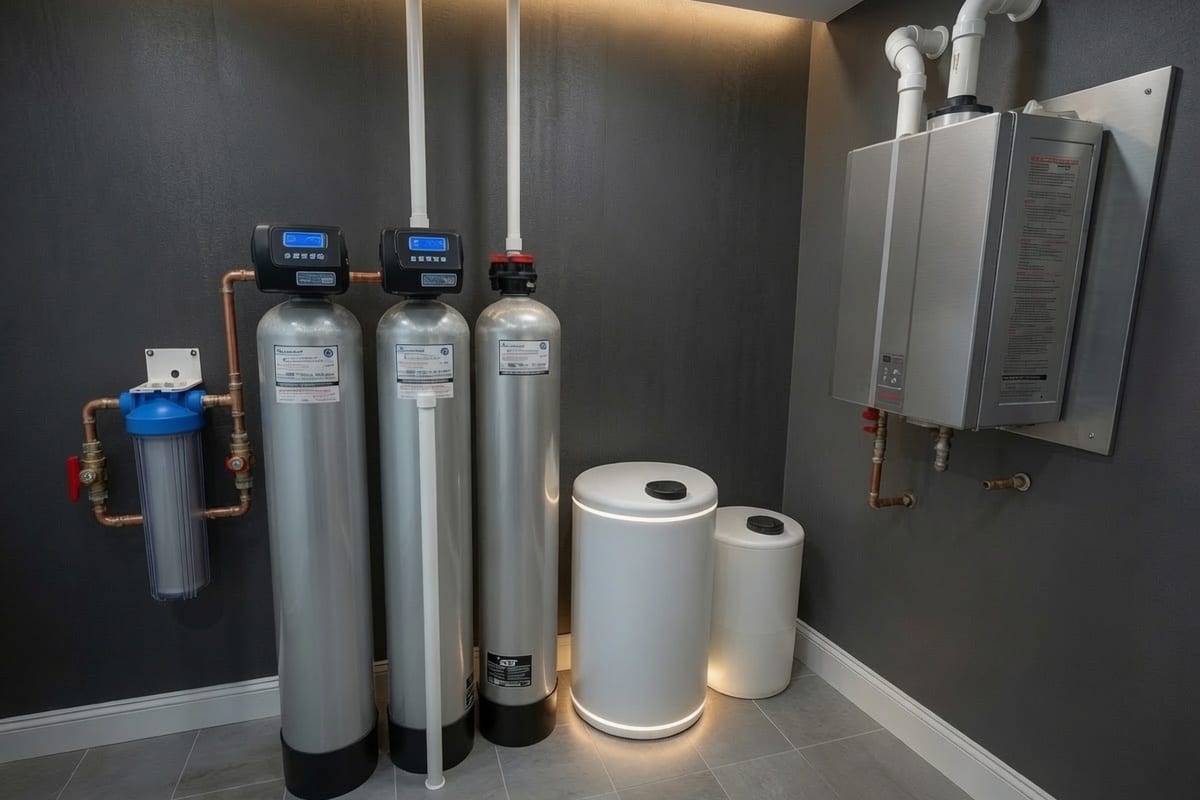
The unit in the garage is old, somebody has quoted you a repair, and you have already worked out that spending it on a softener near the end of its life is throwing good money after bad. The decision is made. What nobody explains is what a water softener replacement in Raleigh actually involves: how long the house is without water, what the new unit should be sized for, and who is allowed to do the work in North Carolina.
If you are still deciding, our water softener repair cost guide carries the repair-or-replace arithmetic part by part, and this page will not repeat it. This one picks up after that call: the swap itself, sizing for Raleigh’s very soft city water against a Wake, Chatham or Johnston county well, the state licensing rule most retailer pages get wrong, and what to do with the old tank.
Every figure below is a planning range, not a quote.
What does a water softener replacement involve in Raleigh?
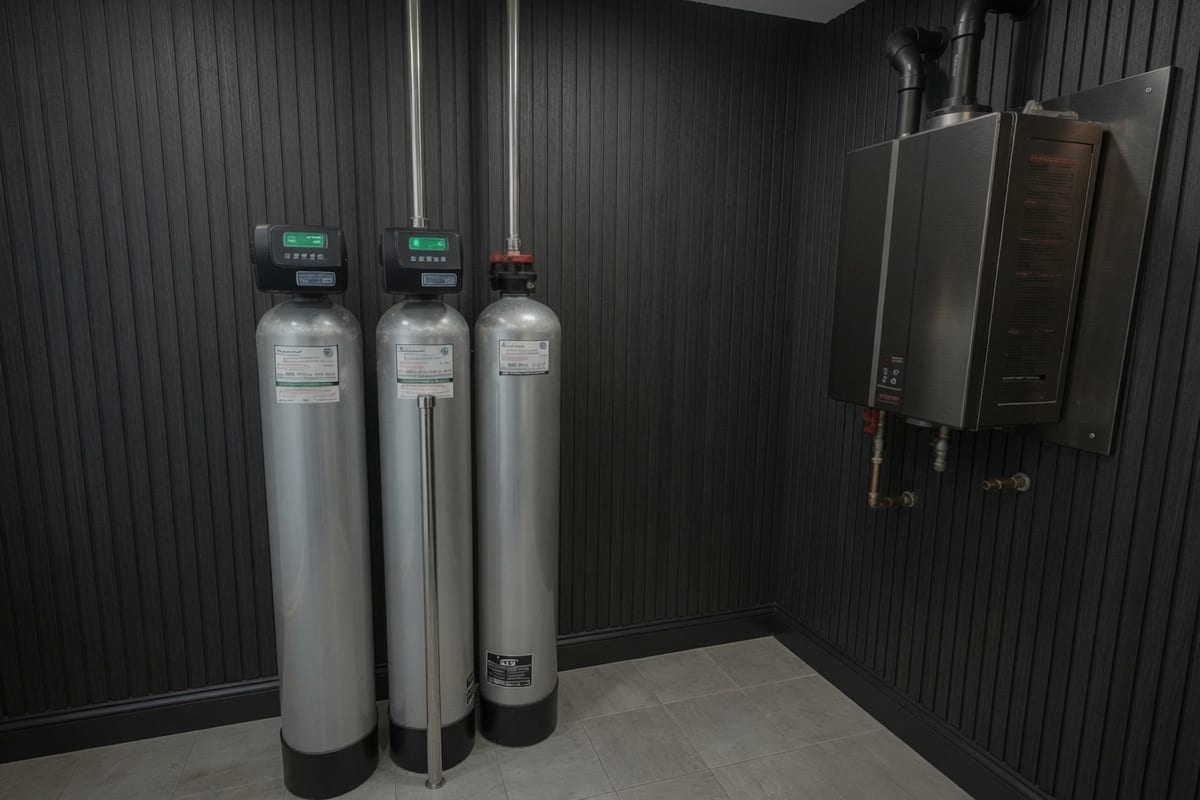
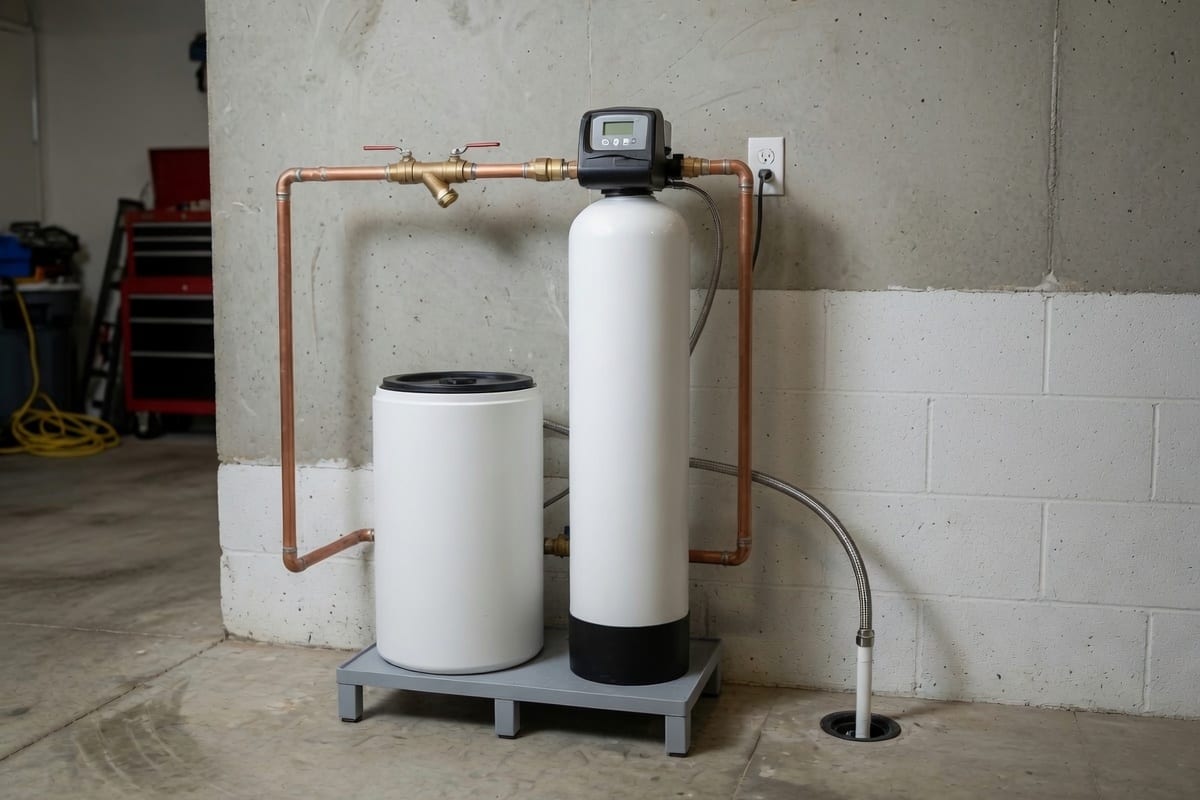
A like-for-like swap is a half-day job, and a replacement softener runs $1,500 to $3,500 installed in 2026 for a whole-home unit, because you are buying a system rather than a part, plus the labour to take the old one out.
The plumbing side is usually the easy half, because the hard part was done when the original went in. If a softener loop, a bypass and a drain line are already in the wall, the new unit lands on work that exists.
| Stage | What happens | Typical time |
|---|---|---|
| Shut off and bypass | Water off at the main, old unit put into bypass, lines drained down | 15 minutes |
| Disconnect and remove | Mineral tank, brine tank and drain line uncoupled and carried out | 30 to 45 minutes |
| Set the new unit | New tanks positioned, levelled, media loaded, tied into the existing loop | 1 to 2 hours |
| Drain and overflow | Drain line run to an approved receptor with an air gap, brine overflow fitted | 30 minutes |
| Program and start up | Measured hardness entered, regeneration settings made, a manual rinse cycle run | 45 minutes |
| Verify at a tap | Hardness measured downstream to confirm the unit is actually softening | 15 minutes |
Add time if the loop has to move, if the drain line does not meet the air gap requirement, or if the new unit has a different footprint and the space is tight.
Want the number for your own house rather than a range? Request a free consultation and we measure your water first, then put the price in writing.
Sizing the replacement: Raleigh city water or a well?
Size the new unit on a fresh hardness reading, never on the capacity of the one you are taking out. The old softener was sized against whatever number the original salesperson used, and on Raleigh Water that is frequently a number the utility does not report.
Raleigh Water publishes its own hardness plant by plant. The 2025 Annual Finished Water Quality Report prints 1.49 grains per gallon at E.M. Johnson and 1.44 at Dempsey E. Benton, and in the column where a legal limit would sit it prints one word about its own water: “Soft”. The 2025 Consumer Confidence Report gives 25.2 milligrams per litre as calcium carbonate system-wide, about 1.47 grains per gallon at 17.1 milligrams per litre to the grain. That conversion is ours; 1.49 and 1.44 are the utility’s own.
One system serves seven communities under public water system ID NC0392010: Raleigh, Garner, Wake Forest, Rolesville, Knightdale, Wendell and Zebulon. If your meter sits in any of them, “same size again” deserves a harder look, because there is very little hardness for the new unit to remove. We worked that through in do you need a softener on Raleigh city water.
A private well is a different job entirely.
| Your supply | Size the replacement on | The common mistake |
|---|---|---|
| A Raleigh Water meter | A measured reading, which here usually comes back near 1.5 grains | Matching the old capacity, which was set against a number nobody measured |
| A Wake, Chatham or Johnston county well | Your own measured hardness, with an allowance for measured iron | A neighbour’s reading, or a regional well figure that does not exist |
| A well that killed the last unit early | The same reading, plus pre-treatment ahead of the new softener | Replacing the appliance and leaving the cause sitting upstream of it |
Private wells around the Triangle commonly run far harder than city water, and it is worth being exact about the status of that: we do not have a representative local dataset that would predict your well’s hardness, and we are not aware of one covering Triangle private wells. The sampling panel the state requires after a new well is completed, set out in NCGS 87-97(h), names eighteen analytes plus bacterial indicators, and hardness is not among them. That is exactly why no state dataset exists, and why your well could land anywhere. Measure it.
Penn State Extension publishes the sizing arithmetic in a form anyone can follow: daily water use per person (it uses 75 gallons) multiplied by the number of people, multiplied by raw hardness in grains, gives grains per day. Divide the unit’s capacity by that and you have how often it will regenerate. A water testing visit gets you the hardness, iron and pH readings the calculation needs.
If the softener you are replacing failed early on a well, the iron reading matters more than the hardness one. Penn State Extension is direct: “red-oxidized iron (iron that has been exposed to air or chlorine) will clog the resin”, and filtration ahead of the softener “insures that oxidized iron is not processed in the softener”. A new unit on an untreated well buys the same failure twice, which is why well water treatment is sized as a train, not a single appliance.
Pro tip: Raleigh runs chloramine year round and converts the whole system to free chlorine for about five weeks in late winter, 26 February to 2 April in 2026. If your replacement includes a carbon stage ahead of the softener, specify catalytic carbon. Standard carbon only suits the burnout weeks and is the wrong media for the other forty-seven.
Who can legally replace a water softener in North Carolina?
North Carolina names whole-house water treatment work inside its plumbing contracting statute. NCGS 87-21(c) states that the Article covering plumbing, heating and fire sprinkler contracting applies to anyone in the business of plumbing, “which includes the installation or replacement of condensing units, air handlers, gas furnaces, package units, boilers, water heaters, heat exchangers, or whole-house water purification or treatment systems”.
That is worth reading twice, because a good deal of retailer copy asserts the opposite without citing anything. The North Carolina State Board of Examiners of Plumbing, Heating and Fire Sprinkler Contractors runs a public licence lookup at nclicensing.org, so whoever you hire, checking takes two minutes and is worth doing before you pay a deposit.
Permits are a separate question, and they are local. Requirements vary by parcel, scope and jurisdiction, and whether a like-for-like swap on an existing loop needs a plumbing permit is a determination the city or county inspections department makes, not the contractor. Ask your installer to state in writing which permits the job needs and who is pulling them. If the answer is none, ask for that in writing too.
What happens to the old water softener?
Disconnected, the old unit is three objects: a fibreglass-wrapped mineral tank holding a cubic foot or more of wet resin, a plastic brine tank, and a control valve. All of it is heavier than it looks, and none of it belongs at the kerb.
- Get removal priced in writing. Whether hauling the old unit away sits inside the quoted price or outside it is the most common surprise line on a replacement invoice.
- The mineral tank is the awkward one. Saturated resin holds a lot of water, so it wants draining and bypassing before anyone lifts it.
- Check the rules where you live. Bulky plastic and fibreglass are handled differently by the solid waste departments in Wake, Durham, Johnston and Chatham counties.
What should a replacement quote include?
A written price should name the unit, its capacity in grains, the valve, and the hardness reading it was sized against. Without that hardness number, the quote is a guess with a logo on it.
- Model, grain capacity, and whether the valve is metered or runs on a timer
- The measured hardness, iron and pH figures the sizing used
- Removal and disposal of the old unit, priced as its own line
- Drain line, air gap and any fittings the changeover needs
- Start-up, programming and a hardness check at a tap afterwards
Ongoing costs stay small: salt at $50 to $150 a year, and a resin change at $300 to $600 somewhere in the second decade, which our water softener maintenance cost guide breaks down. The Raleigh water filtration cost guide carries the full band for every system we install.
Frequently Asked Questions
How much does it cost to replace a water softener in Raleigh?
$1,500 to $3,500 installed for a whole-home unit in 2026, the same band as a first-time install, because you are buying a complete system either way. A straight swap onto an existing loop sits at the lower end; moving the loop, upsizing, or adding well pre-treatment pushes it up. Planning range, not a quote.
How long does it take to replace a water softener?
Most like-for-like swaps take three to five hours, with the water off for part of that. A changeover needing the loop moved, a new drain run, or a different footprint squeezed into a tight utility room can stretch into a second visit.
Can I replace a water softener myself in North Carolina?
NCGS 87-21(c) puts the installation or replacement of whole-house water purification or treatment systems inside the definition of plumbing contracting here, which is not what most retailer pages tell you. Whether an exemption reaches your situation is a question for the licensing board and your local inspections department, not for a vendor.
Do I need a permit to replace a water softener in NC?
It depends on the jurisdiction and the scope of the work, and the local inspections department makes that determination. A like-for-like swap on an existing loop can be treated one way in Garner and another a county over, so ask before the job.
Should I replace my softener with the same size unit?
Only if a fresh hardness reading supports it. The old capacity reflects whatever number was used when it was sold, and on well water around Wake Forest or the Chatham county fringe the reading can shift as the well ages. Measure, then size.
Is replacing a water softener worth it on Raleigh city water?
Often not, on hardness grounds. Raleigh Water’s own reports put the city at 1.49 and 1.44 grains per gallon and classify the water as soft, so a replacement unit has very little to remove. A free consultation and a reading at your tap will tell you whether the money is better spent on taste and odour treatment.
Sources and reporting dates
Water quality changes between reports, and an average does not describe every address on every day, so check the current source before acting on a figure here.
- Raleigh Water’s 2025 Consumer Confidence Report, 2025 Annual Finished Water Quality Report and 2026 monthly reports, at raleighnc.gov water reports. The hardness figures, the “Soft” classification and the 2026 chlorine burnout dates come from those.
- NCGS 87-21 and NCGS 87-97, for the plumbing contracting definition and the required new-well panel.
- Penn State Extension, Water Softening, for the sizing method and the oxidized iron guidance.
- Grains per gallon conversions at 17.1 milligrams per litre to the grain are ours, except 1.49 and 1.44, which Raleigh publishes in grains itself.
Replacing a water softener in Raleigh, Garner or Wake Forest
A replacement is worth doing properly once, because the unit going in now is the one the house lives with for the next decade. That starts with a hardness reading, not a catalogue page.
We size and install softeners across Raleigh, Garner, Knightdale and Durham, and on a city meter we will say plainly when the reading says you do not need one. Book a free consultation and we measure your water first, then give you an up-front written price covering the unit, the changeover and removal of the old one.
Call (984) 384-6991 or book a water softener replacement visit.