FHA, VA and USDA Well Water Test Rules in NC
Raleigh Water Pros • September 20, 2026 • 10 min read
Your offer is accepted, the appraisal is booked, and then the lender’s condition list comes back with a line about the well. That is usually the moment a buyer in Wake, Johnston or Chatham County goes looking for the FHA, VA and USDA well water test requirements, and it is the moment the wrong numbers start doing damage. Lender pages and lab pages repeat “90 days” or “120 days” as though one figure covered all three agencies. Two of the three handbooks say something else, and a test you thought had expired may be perfectly good.
Below are the handbook sections, the day counts as they read on 20 September 2026, who may take the sample, what to do if a result comes back bad with a closing date already on the calendar, and the part almost nobody states plainly: all three agencies hand the water quality standard to your county health department. That is why the panel a seller paid for in Clayton may not be the panel a lender accepts in Pittsboro.
Do FHA, VA and USDA loans require a well water test?
Not on every well, and that catches people out in both directions. Each agency sets its own trigger.
FHA lists them. HUD Handbook 4000.1 says a well water test is required for, “but not limited to,” properties that are newly constructed, where the appraiser has reported deficiencies with a well or the well water, where water is reported to be unsafe or known to be unsafe, or that are located in close proximity to dumps, landfills, industrial sites, farms (pesticides) or other sites that could contain hazardous wastes. “But not limited to” is doing real work there. Your lender and your county can both ask for more.
USDA treats a private well as something the lender must document. Under HB-1-3555 Chapter 12, the water quality of the well must meet the requirements of the state or local authority, and the lender retains that documentation in the loan file. On a USDA loan with an individual well, plan on a test.
VA routes it through the appraiser and the local authority. VA Pamphlet 26-7 Chapter 12 requires the appraiser to comment on any water supply issue and sends properties with an individual water supply to its own topic, where the standard is whatever the health authority having jurisdiction requires.
For the underlying state picture, our guide to well water testing in North Carolina walks through the panel North Carolina itself requires.
How old can the well water test be?
This is where the web is most often wrong. Three figures, each with the place it is written, checked on 20 September 2026.
| Loan type | How old the report may be | Where it says so |
|---|---|---|
| FHA | Up to 180 days old at the Disbursement Date | HUD Handbook 4000.1, II.A.3.a.ii(N)(2)(b), II.A.3.a.ii(N)(3)(b) and II.A.8.i.vii(A)(6)(b), Update 18, 12 August 2026 |
| USDA | No greater than 180 days old at loan closing | HB-1-3555, Chapter 12, paragraph 12.6, revised 5 May 2025 |
| VA | Valid 90 days from the date certified by the local health authority, unless the local authority indicates otherwise | VA Pamphlet 26-7, Chapter 12, Individual Water Supply, subsection f |
Three details are worth pausing on. FHA counts to the Disbursement Date, not the contract date and not the appraisal date, so a test taken early in a long build can still be inside the window at funding. USDA counts to loan closing. And the VA 90 days is the only place the familiar 90-day figure actually comes from, and even there the local authority can set something different.
One more thing if you are checking a lender’s citation: FHA renumbered this content. The well sections that older articles cite as II.A.3.a.ii(O) are now II.A.3.a.ii(N). The text is the same; the letter moved.
Want to know what your own well would need? Request a free consultation and we test your water first, then put a written price in front of you.
Does the well to septic distance still trigger a test?
Not by itself, and this is the second place older pages are out of date. HUD removed the requirement for a well water test where that distance is under 100 feet, aligning the trigger with its Minimum Property Requirements. Pages still telling buyers that a short setback automatically means a test are quoting a rule that has moved on.
The distances themselves also loosened in 2026. HUD granted a general waiver of the Individual Water Supply System well distance requirements for existing construction, provided the distances meet the local jurisdiction requirement and acceptable water testing results are documented. The form was signed 24 July 2026 and posted dated 27 July 2026. It does not touch the standards for newly constructed housing, which sit under a separate statute.
The practical read for a Triangle buyer: an existing home in Garner or Clayton whose well sits closer to the drain field than HUD’s table likes is no longer an automatic problem, provided the county is satisfied and the water tests clean. Your lender makes that call.
Why the test panel is a county decision in North Carolina
Here is the spine of the whole thing. All three agencies defer to local authority on what the water has to pass, and fall back to federal limits only when the local authority is silent.
HUD Handbook 4000.1 says the mortgagee must ensure water quality meets the requirements of the health authority with jurisdiction, and that where no local or state standards exist, the EPA National Primary Drinking Water regulations apply. VA Pamphlet 26-7 uses nearly identical wording, with EPA guidelines as the fallback. USDA says water quality must meet the requirements of the state or local authority, with EPA maximum contaminant levels where no specific requirements exist.
So the familiar coliform, nitrate, nitrite and lead panel that gets called “the FHA panel” appears in none of the three handbooks. It is convention, inherited from what a particular county or lab habitually runs. North Carolina’s own requirement sits elsewhere again: NCGS 87-97(h) makes the local health department test a newly constructed private drinking water well within 30 days of issuing its certificate of completion, for arsenic, barium, cadmium, chromium, copper, fluoride, lead, iron, magnesium, manganese, mercury, nitrates, nitrites, selenium, silver, sodium, zinc, pH and bacterial indicators. Eighteen items, and no hardness among them.
Pro tip: Before you pay a lab, call the environmental health office in the county the house sits in, not the county you live in, and ask what that office accepts for a mortgage water test. Wake, Johnston and Chatham are three offices with three sets of habits, and the answer takes one phone call. Requirements vary by parcel, scope and jurisdiction, and the county office or your lender makes the determination.
What happens if the well water test fails before closing?
A failed test is a delay rather than a dead deal, and the clock is the real enemy. The options, roughly in the order buyers use them:
- Confirm the result. Bacteria results can come from a sampling fault, and a clean resample by a disinterested third party is often the whole fix.
- Disinfect and retest. For a coliform positive, shock chlorination then a retest is the standard path. Our guide on what happens after a coliform positive well test has the NC sequence and the retest intervals the state publishes.
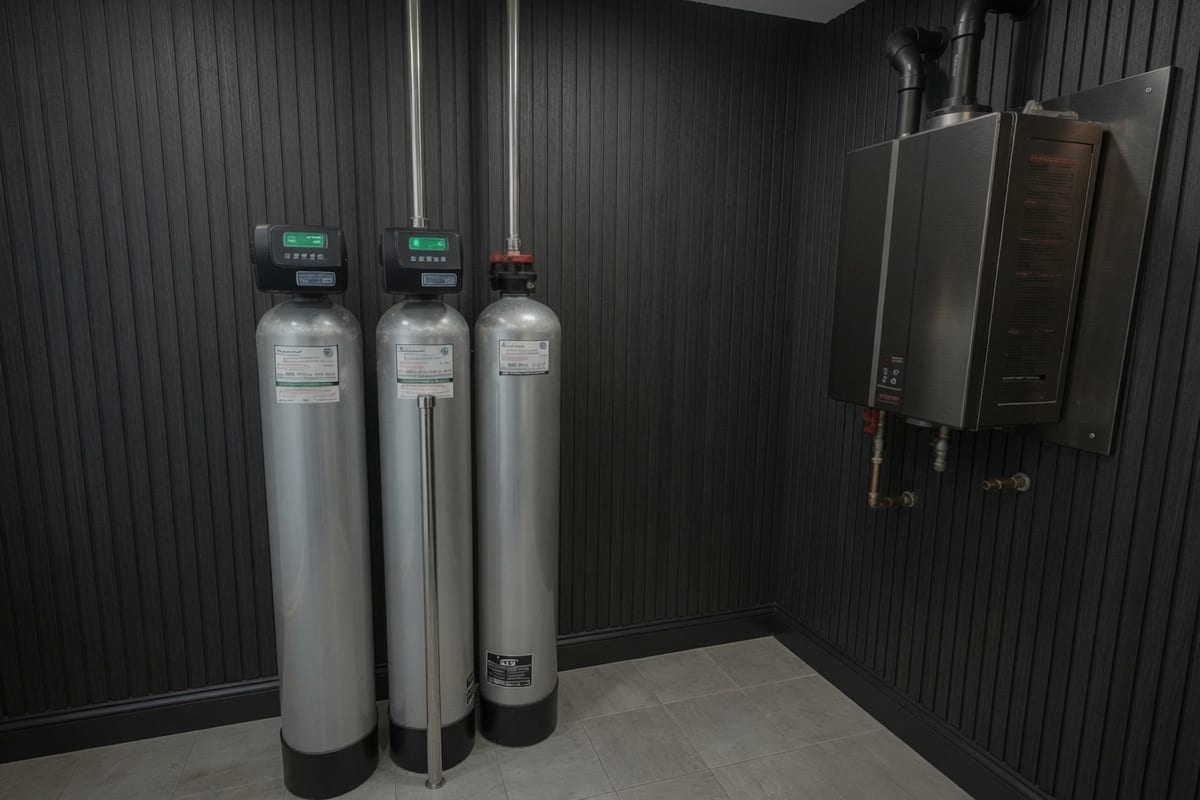
- Treat the water, then retest, then check what the lender will accept. For iron, sulfur, low pH or persistent bacteria, well water treatment and a passing test afterwards is the usual route. Do not assume it closes the file on its own: where a supply is continuously treated, acceptance still turns on the requirements of the applicable health authority and on the documentation the lender and that authority will take. Ask the loan officer what evidence they need, in writing, before you spend on equipment.
- Renegotiate. Who pays is a contract question, not a federal one.
Typical installed ranges in the Triangle:
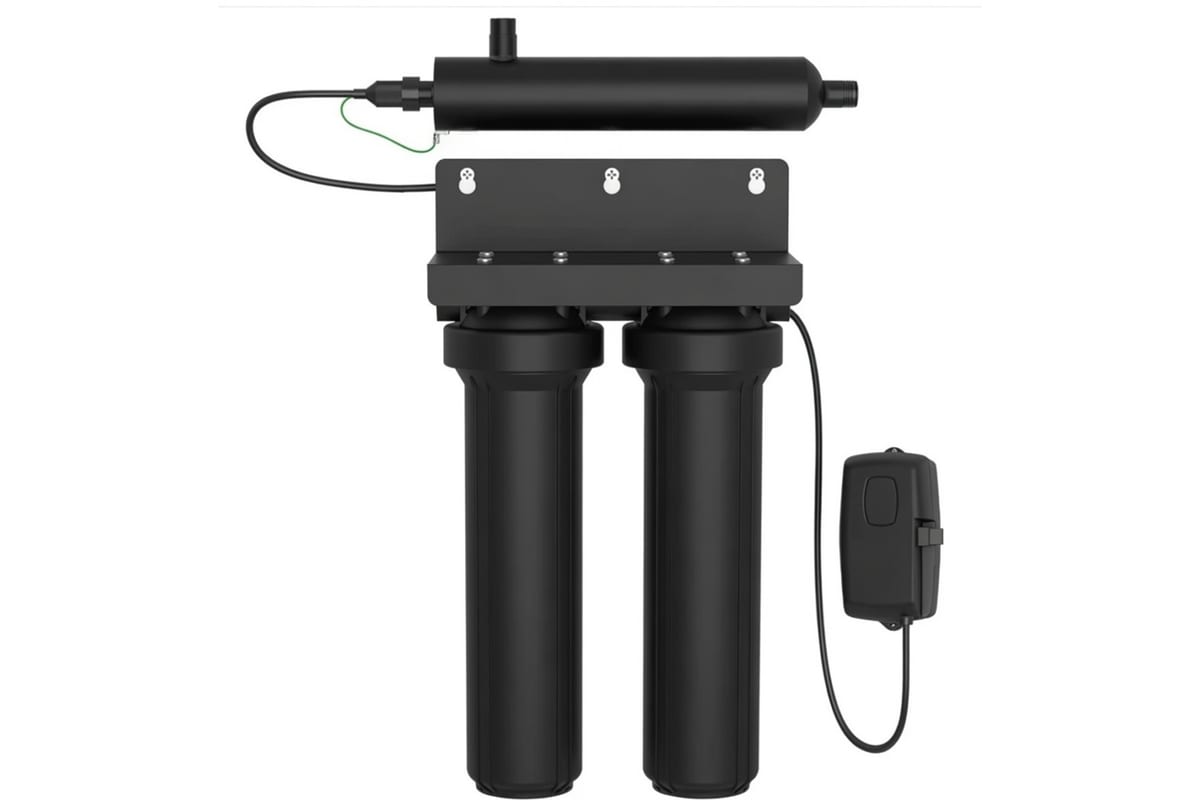
- UV disinfection: $700 to $1,500
- Iron and sulfur filter: $1,800 to $3,500
- Acid neutralizer: $1,200 to $2,200
Every figure here is a planning range and never a quote; the detail is on our water filtration cost page for Raleigh.
One North Carolina wrinkle before you hire anyone in a hurry. 21 NCAC 50 .0506(c) states that “the installation of a water purification system which interrupts the potable water supply does not constitute a minor repair or replacement within the meaning of G.S. 87-21(c).” That makes it plumbing contracting work under state rule, not a handyman job, which matters when a closing deadline is pushing everyone to move fast. We cover how to check that in who can legally install water treatment in NC.
Selling rather than buying? Our post on selling a home with well water covers that side.
Frequently Asked Questions
How old can a well water test be for an FHA loan?
Up to 180 days old at the Disbursement Date, per HUD Handbook 4000.1 sections II.A.3.a.ii(N)(2)(b), (N)(3)(b) and II.A.8.i.vii(A)(6)(b), as they read in Update 18. The 90-day and 120-day figures repeated elsewhere are not FHA’s. Because the count runs to disbursement rather than to contract, a spring test can still be valid at a summer closing.
Does the VA require a well water test in North Carolina?
VA requires the water to meet the health authority having jurisdiction, so your county environmental health office sets the panel. VA Pamphlet 26-7 Chapter 12 also puts a 90-day validity period on the result, measured from the date certified by the local health authority, “unless the local authority indicates otherwise.” In Wake or Johnston County that means the county, not the VA, decides what is tested.
Who can take the water sample for a USDA or FHA loan?
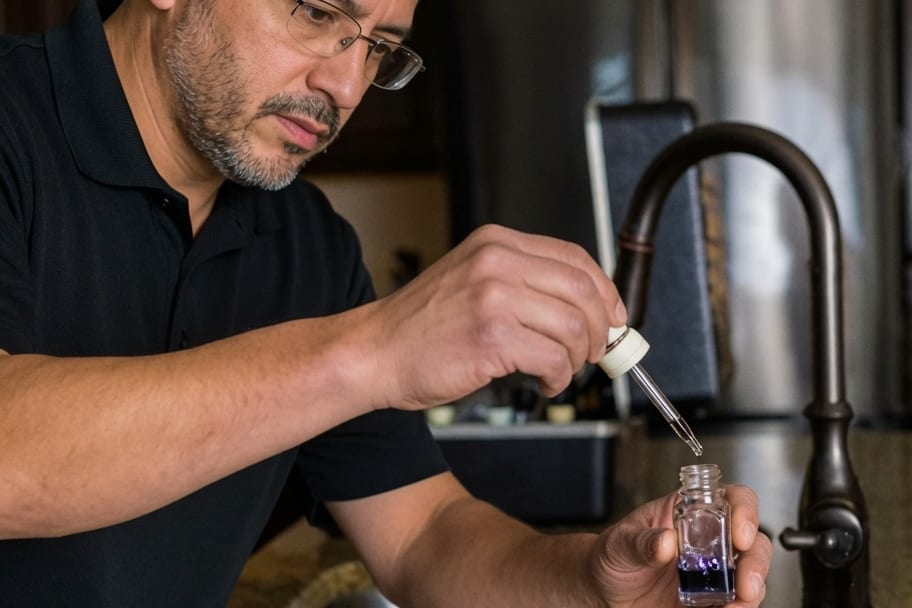
A disinterested third party, never the buyer or seller. HUD requires the sample to be collected and tested by the local health authority, a commercial testing laboratory, a licensed sanitary engineer, or another party acceptable to that authority, and says that at no time will the borrower, owner or other interested party collect or transport it. USDA requires the local health authority or a state certified laboratory. Our water testing service is built around that rule.
What does FHA test well water for?
Whatever the health authority with jurisdiction requires. FHA sets no national parameter list; it defers to local standards and falls back to the EPA National Primary Drinking Water regulations only where no local or state standard exists. That is why the answer genuinely changes between counties, and why “the FHA panel” is not a real thing.
Can the seller pay for the well water test?
Who pays is a contract term between buyer and seller, and it does not change the sampling rule. Whoever settles the invoice, the person collecting and transporting the sample must still be a disinterested third party. A seller in Fuquay-Varina cannot draw their own sample and hand it to the lab.
What if bacteria is the only thing that fails?
Bacteria is often the fastest failure to resolve. Disinfection and a clean retest clear many of them. Where a well keeps testing positive, that points at a casing, cap or grout defect, and chlorine does not fix a defect: correcting it is a certified well contractor’s work, not ours and not a filter’s. Once the well itself is sound, continuous UV disinfection is one option for a house in Wake Forest or the rural edge of Wake County, subject to the water being clear enough for the light to work, the right validated equipment, flow inside the rated range and the lamp maintained. It is a treatment that fits some situations, not a permanent answer to all of them.
Sources
All checked 20 September 2026. These are point-in-time readings of documents that change; follow the current handbook, and let your lender and county office make the determination.
- HUD Handbook 4000.1, Update 18, issued 12 August 2026: II.A.3.a.ii(N)(2)(b), (N)(3)(b) and II.A.8.i.vii(A)(6)(b) for the 180-day report age; II.A.3.a.ii(N)(2)(a) for the triggers, the disinterested third party rule and the health authority deference.
- HUD, Waiver of Individual Water Well Distance Requirements, signed 24 July 2026, posted dated 27 July 2026.
- USDA Rural Development HB-1-3555, Chapter 12, paragraph 12.6, revised 5 May 2025.
- VA Pamphlet 26-7, Revised, Chapter 12, Individual Water Supply topic, subsections a, b and f.
- NCGS 87-97(g) and (h), for the certificate of completion and the 18-parameter new well panel.
- 21 NCAC 50 .0506(c), NC Board of Examiners of Plumbing, Heating and Fire Sprinkler Contractors.
Getting a Triangle well ready for a loan closing
If you are buying or selling a well home in Garner, Clayton, Fuquay-Varina or Wake Forest and a lender condition has landed on your water, the useful first step is knowing what is actually in the well rather than guessing at the panel. We test your water first, explain which results a lender will care about, and give you an up-front written price on anything that needs fixing. Book a free consultation through our contact page or call (984) 384-6991, and we will work to your closing date rather than ours.