How Long Does a Water Softener Last in NC?
Raleigh Water Pros • September 20, 2026 • 10 min read
Type the question into a search box and every result agrees: ten to fifteen years. The review sites say it, the national installers say it, the manufacturers say it. As a planning number it is fine. It is also an average across the whole country, which means it describes almost nobody in North Carolina particularly well.
How long a water softener lasts here turns on one thing more than brand, price or maintenance: whether the water feeding it arrives through a city meter or comes out of your own well. Those two cases pull the number in opposite directions, and the gap is wide enough to make a single figure close to useless.
Below: what actually wears out and in what order, why a softener on Raleigh’s very soft city water outlives its usefulness rather than its parts, what a well carrying iron and grit does to resin, and what genuinely moves the number either way.
How long does a water softener last in NC?
Ten to fifteen years is the figure every national guide gives, and as a planning number it holds up, but North Carolina splits it in two. On a city meter here a softener usually reaches the top of that band, because there is so little hardness to remove. On a private well carrying iron and sediment the resin can be finished years earlier, and the cause almost always sits upstream of the softener rather than inside it.
| Your supply | What the resin handles | What to plan for |
|---|---|---|
| A Raleigh Water meter, about 1.5 grains | Very little. Iron and manganese are non-detect at both plants | The long end of the band, plus a fair question about whether the unit belongs there at all |
| A well with no measurable iron or grit | Hardness only, at your own reading | The published 10 to 15 years, with normal maintenance |
| A well with measurable iron or sediment | Hardness plus fouling the resin was never designed to take | Shorter, and by how much depends on the iron reading, not the calendar |
The third row is the one the national lifespan pages cannot write, because it rests on a number that only exists once somebody measures your water.
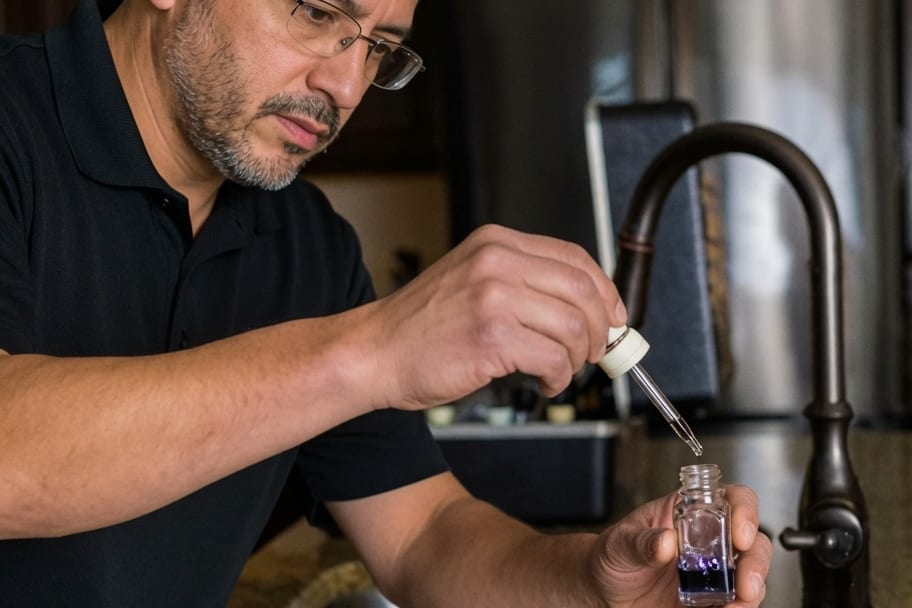
Want to know which row your house is on? Request a free consultation and we measure hardness and iron at your tap before anyone talks about equipment.
What actually wears out first?
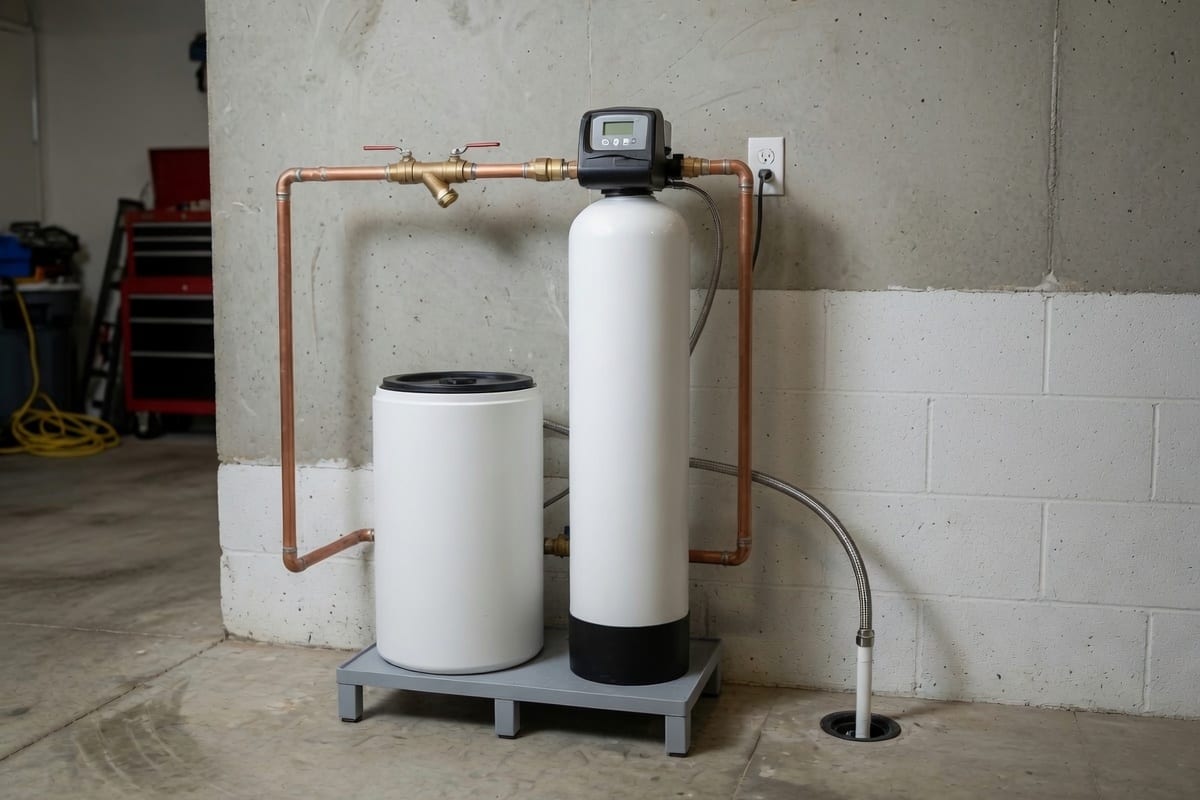
A softener is not one thing that dies at fifteen years, it is four things failing on four clocks. Only one is the resin, and it is usually the last to go.
| Part | What ends it | What you notice |
|---|---|---|
| Resin bed | Years of exchange cycles, plus fouling from iron | Water goes hard again, capacity drops between regenerations |
| Control valve | Seals, pistons and the board, worn by grit and time | Regenerating at odd hours, running constantly, or sticking |
| Brine valve and float | Salt mush and sediment settling in the tank | Standing water in the salt tank, or salt that stops going down |
| Tanks and fittings | Age, temperature swings in an unheated garage | Weeping fittings, cracks around the float housing |
The valve and brine assembly are serviceable, and our water softener repair cost guide prices each of them. Resin sets the unit’s real life, because once it is spent you are choosing between a resin change at $300 to $600 and a water softener replacement at $1,500 to $3,500 installed. Those are planning ranges rather than quotes, and the Raleigh water filtration cost guide carries the full bands.
Pro tip: write the install date on the mineral tank in permanent marker the day it goes in. The biggest unknown on most service calls is not what failed, it is how old the unit is, and without that date the repair-or-replace arithmetic cannot honestly be done.
Why does a softener on Raleigh city water last so long?
Because there is almost nothing for it to do. Raleigh Water publishes its hardness plant by plant: the 2025 Annual Finished Water Quality Report prints 1.49 grains per gallon at E.M. Johnson and 1.44 at Dempsey E. Benton, and in the column where a legal limit would sit it prints one word about its own water, “Soft”. The 2025 Consumer Confidence Report gives 25.2 milligrams per litre as calcium carbonate system-wide, about 1.47 grains per gallon at 17.1 milligrams per litre to the grain. That conversion is ours; 1.49 and 1.44 are the utility’s own.
The second half of the picture matters as much. Iron and manganese are both reported non-detect at both plants, and the 2026 monthly reports carry iron at less than 0.10 milligrams per litre every month. Nothing is arriving that fouls resin.
So a softener on a Raleigh Water meter cycles a very light load, and tends to run until the valve or the board gives up rather than the resin. That covers Garner, Knightdale, Wake Forest, Rolesville, Wendell and Zebulon too, all on the same public water system, NC0392010.
Here is the uncomfortable part: the thing that makes a Raleigh softener last is the same thing that makes it hard to justify buying one. We install softeners and will still say it plainly. At 1.5 grains there is not much work to be done, and we set the argument out in do you need a softener on Raleigh city water.
Why does well water shorten a softener’s life?
Iron is the mechanism to check first. Penn State Extension puts it in one line: “red-oxidized iron (iron that has been exposed to air or chlorine) will clog the resin”, and it recommends that filtration ahead of the unit “insures that oxidized iron is not processed in the softener”. A softener is an ion exchange appliance, not an iron filter, and asking it to be one is the most expensive mistake made on Triangle wells.
Sediment is the other mechanism, and we have no prevalence figure to offer for either: red clay grit out of a well can work through valve seals and pistons over time, and a prefilter is inexpensive insurance against it. What both mechanisms have in common is that neither is hardness, which is why a softener that failed early on well water is worth diagnosing rather than simply replacing with the same thing.
Private wells around the Triangle commonly run far harder than city water, and the status of that statement matters: we do not have a representative local dataset that would predict your well’s hardness, and we are not aware of one that covers Triangle private wells. The sampling panel the state requires after a new well is completed, set out in NCGS 87-97(h), names eighteen analytes plus bacterial indicators, and hardness is not among them. That is why no dataset exists, and why your well could land anywhere. Measure it, and measure iron and pH at the same time.
If your softener is failing early on a well around Clayton or Pittsboro, fix the cause before you buy the cure: iron and sulfur removal sized ahead of the softener, which our iron filter cost guide prices. Replace the unit without it and you have bought the same failure again.
What shortens a water softener’s life, and what extends it?
Most of this list is inside your control, and none of it is expensive next to a replacement.
| Shortens it | Extends it |
|---|---|
| Untreated iron on a well | Iron removal sized ahead of the softener |
| No prefilter on a gritty well | A prefilter changed on a schedule, not when noticed |
| Rock salt and the bridging that follows | Pellet salt, and a brine tank checked every few weeks |
| A timer valve regenerating on a clock | A metered valve regenerating on actual use |
| A unit sized against a guessed hardness figure | A unit sized against a measured one |
| A brine tank never cleaned out | A clear-out of the sludge every few years |
A metered valve regenerates only when the house has actually used its capacity, which means fewer cycles through the resin and less salt, and on an older timer unit that swap is often the best argument for replacing something that still technically works. Salt bridging matters too: a crust spanning the tank with an air gap under it means the unit cannot draw brine at all. Our water softener maintenance cost guide covers the annual cost of doing this properly, salt included at $50 to $150 a year.
Frequently Asked Questions
How long does a water softener last on well water?
Less time than on city water, and the gap is driven by iron rather than hardness. Measurable iron with no pre-treatment can take years off the resin, which is why we test iron before quoting well water treatment on any Pittsboro or Johnston county property. A clean well with hardness only should reach the standard band.
How do I know if the softener resin is finished?
The signal is capacity, not age: water goes hard again partway between regenerations, and keeps doing it after salt level, bridging and valve settings have been ruled out. Have hardness measured downstream of the unit right after a regeneration cycle. If it is still hard there, the bed is the problem.
Does soft city water make a softener last longer?
Yes, and that is the complication. On Raleigh Water’s 1.49 and 1.44 grains per gallon a softener cycles a very small load, so it tends to outlast the band while doing very little for you. Longevity is not the same as value.
Is it cheaper to replace the resin or the whole softener?
Resin alone runs $300 to $600 against $1,500 to $3,500 for a full unit installed, so the resin change looks cheaper until you factor in the age of the valve on top of it. Past about a decade, spending on resin often means paying twice inside two years. The repair cost guide has the decision rule.
How often should a water softener be serviced?
Once a year is a reasonable rhythm for a check of salt quality, brine draw, valve operation and output hardness, more often on a well with iron or grit. The visit earns its money by catching cheap failures before they become expensive ones.
Can a water softener last 20 years?
It happens, most often on soft city water with a metered valve and a household that keeps up with the salt. Do not plan around it. Plan around the band, keep the install date on the tank, and let a measured hardness reading tell you when the bed is done.
Sources and reporting dates
A plant average does not describe every address on every day, so check the current source before acting on a figure here.
- Raleigh Water’s 2025 Consumer Confidence Report, 2025 Annual Finished Water Quality Report and 2026 monthly reports, at raleighnc.gov water reports. The hardness figures, the “Soft” classification and the non-detect iron and manganese results come from those.
- NCGS 87-97, for the required new-well sampling panel and what it leaves out.
- Penn State Extension, Water Softening, for the oxidized iron guidance.
- The “10 to 15 years” figure is the consensus of national installer and review sites, not a published study. Grains per gallon conversions at 17.1 milligrams per litre to the grain are ours, except 1.49 and 1.44, which Raleigh publishes in grains itself.
Find out how much life your softener has left
Age alone does not answer this question. A hardness reading at the tap, an iron reading if you are on a well, and the date on the side of the tank will between them tell you whether you need a service visit, a resin change or a new unit.
We test, size and install softeners across Raleigh, Garner, Knightdale and Clayton, and we will say so when the sensible answer is to leave yours alone. Book a free consultation and you get an up-front written price with the hardness number it was based on printed on it.
Call (984) 384-6991 or book a water softener assessment.