Softened Water Tastes Salty? 6 Causes and the Fix
Raleigh Water Pros • September 20, 2026 • 10 min read
The water was fine last month. Now the kitchen tap tastes like the ocean, there is foam in the glass, and it is worst on the first draw of the morning or right after the unit has cycled overnight.
Softened water that tastes salty has a short list of causes, and almost none of them are the one people assume. The usual guess is that the softener is putting too much salt into the water. What is nearly always happening instead is that brine from the regeneration cycle is not leaving the resin tank and the drain on schedule, so a slug of it ends up in the house.
This guide covers all six, what each looks like, what you can check yourself, and where it stops being a homeowner job. Dollar figures are planning ranges, not quotes.
Why Does Softened Water Taste Salty?
A salty taste after softening is almost always brine reaching the tap, not sodium from the ion exchange itself. The two behave nothing alike. Brine is intermittent: sharp, obvious, tied to the regeneration cycle, sometimes with foam or a slick feel, and it fades over the next few draws. Ion exchange sodium is steady, mild and always there, and on most supplies nobody ever notices it.
| What you notice | Likely cause | Free to check? | If not that |
|---|---|---|---|
| Sharp salt right after a cycle, clearing by evening | Brine valve not shutting | Partly | Valve or float service |
| Brine tank half full of standing water | Drain line kinked or restricted | Yes | Drain line clearing |
| Short cycle, salt barely moving, water not soft either | Injector or venturi blocked | No | Injector clean-out |
| Salty every day, salt use very high | Salt dose set too high | Yes | Reprogram the valve |
| Started after a storm or a power blip | Regeneration interrupted | Yes | Manual regeneration |
| Salty at taps ahead of the softener too | Sodium in the source water | Yes | Lab test |
Pro tip: Taste the cold water at an outside spigot first. In most Triangle homes the hose bibs sit ahead of the softener, so that tap hands you untreated water for free. Salty there means the unit is not your problem.
Want someone to read the valve, the drain line and the water itself before any part gets replaced? Request a free consultation and the price goes in writing first.
The Six Causes, One at a Time
1. The brine valve is stuck or has failed
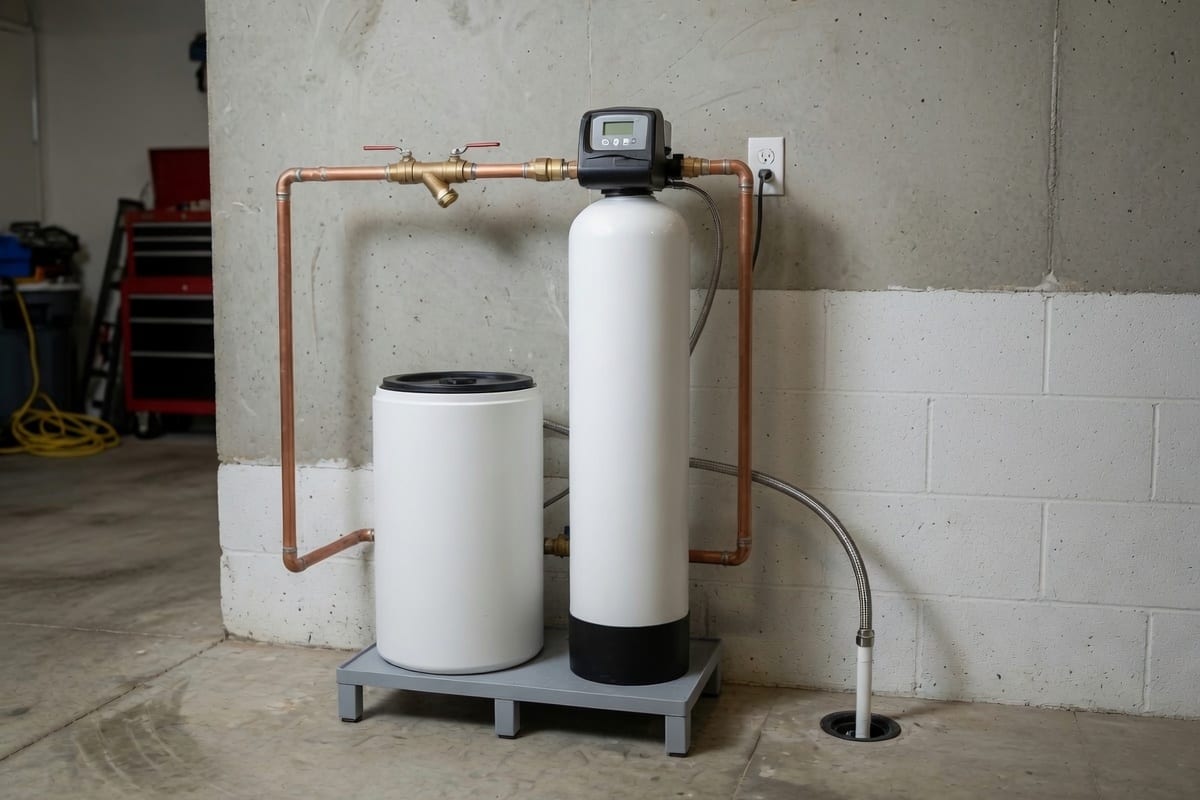
At the end of a regeneration the brine valve closes and stops the draw. If it hangs open, or the float that works it has failed, brine keeps moving into the resin tank after the rinse finishes. The tell is timing: sharpest on the first draw after a cycle, lighter by evening. Look in the brine tank the next morning, because a few inches of water is normal and half a tank is not. Replacing the valve or float is technician work, at the cheap end of the water softener repair cost range.
2. The drain line is kinked or restricted
The brine rinse only works if the waste can leave. A line crushed behind the unit, run too far uphill, or narrowed by salt fines slows the rinse until brine never clears the bed. Follow it from the valve head to where it discharges, looking for kinks, sharp bends and anything resting on it. Free to fix if it is simply pinched behind a shelf. If pressure dropped at the same time, that is a separate fault: see low water pressure through a softener.
3. The injector or venturi is blocked
The injector, often called the venturi, is the small nozzle that creates the suction to pull brine out of the tank. Sediment or salt fines partly plug it, the draw slows, and the rinse cannot clear what did reach the bed. Iron and red clay sediment are what foul injectors here, which is why a sediment prefilter earns its place ahead of a softener on a well: our well water treatment page covers the order the equipment goes in.
4. The salt dose is set too high
Every control valve carries a salt setting, in pounds per regeneration, driven by a hardness setting. Set both high and the unit loads more brine than the bed can rinse away in the time the cycle allows. Read the control head and compare it to what the water measures. This one is free to fix, and it is common on city water: Raleigh Water’s 2025 annual report puts hardness at 25.2 mg/L, about 1.5 grains per gallon, and prints the word “Soft” where a legal limit would normally sit (City of Raleigh, 2025 Water Quality Report). A unit programmed for 20 grains on that supply is dosing salt for a problem it does not have.
5. A power cut stopped the cycle partway
A regeneration that loses power mid brine draw leaves salt sitting in the resin tank until something finishes the job, which around here means the morning after a summer thunderstorm or an ice storm. Run a manual regeneration from the control head, then check the clock, because older timer units restart at the wrong hour after a blip. Both fixes are free.
6. The source water is high in sodium already
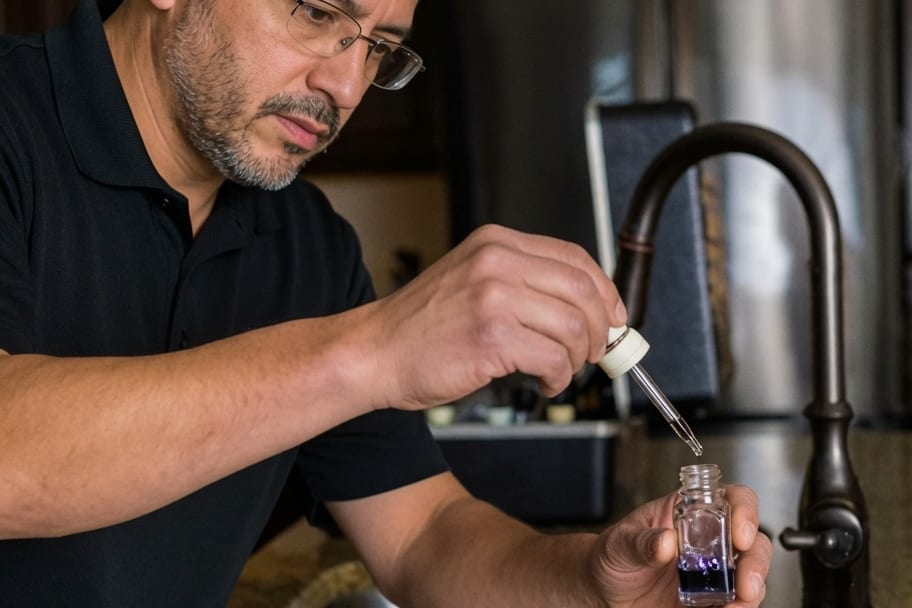
Not the softener’s fault at all, which is why the spigot test matters. NC State Extension lists sodium and chloride among the tests to run “in areas near seawater or salted roadways” where “your water tastes salty” (NC State Extension). If your well was drilled under the state sampling rule, sodium is on the required panel and the result may already sit in your county health department file; hardness and chloride are not (NCDHHS, 15A NCAC 18A .3800). Our water testing and analysis page covers what to ask a lab for. If the number is high, no softener helps, because ion exchange adds sodium rather than removing it.
Does a Water Softener Add Too Much Sodium?
A softener adds sodium in direct proportion to the hardness it removes, and the rate is published. Penn State Extension puts it at 7.5 milligrams of sodium per quart of softened water for every grain per gallon of hardness removed (Penn State Extension, Water Softening). Soft water in, almost nothing added; hard water in, a measurable rise.
| Hardness removed | Sodium added per quart of softened water |
|---|---|
| 1.5 grains per gallon (Raleigh Water’s published city figure) | about 11 mg |
| 10 grains per gallon | about 75 mg |
| 20 grains per gallon | about 150 mg |
A quart is close enough to a liter to compare these with published limits. EPA’s drinking water advisory for sodium, set on taste grounds rather than health, is 30 to 60 mg/L, and Raleigh Water’s finished water already carries 24.3 ppm before any softener touches it. Softening adds roughly another 12 and lands at the bottom of that taste band, which is why almost nobody on city water in Apex or Wake Forest ever tastes their softener.
Put the same unit on a well measuring 20 grains per gallon and it adds about 150 mg per quart, high enough for a sensitive palate to pick up. That is the one case where the softener really is making the water taste salty, and even then it reads as a steady background note, not the sharp slug that follows a cycle.
Which raises the number nobody in the Triangle can give you straight. Private wells around here commonly run far harder than city water, but we have no representative dataset that would predict yours, and the state’s required sampling panel for a new private well does not include hardness at all. Yours could land anywhere across that table, so measure what the softener is removing before arguing about what it is adding.
If anyone in the house is on a sodium-restricted diet, raise it with your doctor rather than with a filtration company. Potassium chloride is the alternative exchange salt, and our softener salt guide covers what it costs and what it changes.
What Can You Check Before You Call?
All four of these cost nothing.
- Taste the outside spigot. Hose bibs usually sit ahead of the softener. Salty there means the water, not the unit.
- Look in the brine tank the morning after a cycle. A few inches of water is normal, half a tank is not.
- Read the hardness and salt settings. Compare them to a measured number, not the installer’s guess.
- Run a manual regeneration and listen. A healthy cycle makes motor noise, then water movement including a slow brine draw. It also catches the power-cut case.
On city water in Wake Forest the settings check is usually the whole story, because an overset dose has almost no hardness to work on. On a well in Clayton or Fuquay-Varina the brine valve and the injector move to the top, because iron and sediment foul them. If the water is hard as well as salty, work the full softener troubleshooting list first.
A unit past about twelve years old with a failed brine assembly is usually a replacement conversation, and $1,500 to $3,500 installed is the planning band (Raleigh water filtration cost guide).
Frequently Asked Questions
Why does my water taste salty only after the softener regenerates?
Because brine is still sitting in the resin tank when the cycle ends, so the next draw carries it into the house. That points at a brine valve not shutting, a restricted drain line, or a blocked injector, in that order. Half a tank of standing water the next morning confirms it.
Is salty softened water safe to drink?
Brine breakthrough is a taste and equipment problem rather than a contamination one, but nobody should drink obviously salty water week after week, and it means the unit is not softening either. There is no federal limit for sodium in drinking water, and EPA’s 30 to 60 mg/L advisory is set on taste. Anyone on a sodium-restricted diet should raise it with their doctor.
How do I tell whether it is the softener or the water itself?
Taste the cold water at an outside spigot, which in most houses is plumbed ahead of the softener. Clean there and salty at the treated taps means the unit. Salty at both means getting sodium and chloride measured before anyone sells you equipment; our water softener repair and installation page explains where that split matters.
Can I stop the salty taste by using less salt?
Only if the dose was set too high to begin with, which is free to check. Lowering it on a correctly programmed unit just leaves hard water on top of the salty taste.
Does a softener make Raleigh city water taste salty?
Almost never, because there is so little hardness to remove. At Raleigh Water’s published 1.5 grains per gallon, softening adds roughly 11 mg of sodium per quart, well under what anyone tastes. A genuinely salty tap in Clayton or Garner is a brine fault or a source-water issue, and the Raleigh cost guide covers what each route runs to put right.
Will switching to potassium chloride fix the taste?
No, not if the cause is brine breakthrough: a potassium chloride slug tastes just as strong. It answers a dietary sodium question, not a mechanical one.
Get a Salty-Tasting Softener Diagnosed in the Triangle
Two of the six causes are free to rule out at the tank in ten minutes. Work the outside spigot, the brine tank and the control settings before you call anybody.
We install, size and service softeners across Raleigh, Garner, Apex, Clayton and the rest of the Triangle, and on well water we read the iron and the hardness first, because those set the salt dose and decide whether the injector keeps fouling. Water that tastes salty at every tap gets a lab test instead, because no softener fixes sodium in the source.
Call (984) 384-6991 or book a free consultation for an up-front written price.