Well Water Inspection Failed: What Buyers and Sellers Do
Raleigh Water Pros • September 20, 2026 • 10 min read
The email arrives eleven days before closing and it is one line long: the well water sample failed. Nobody on the thread says what failed, how long the fix takes, or who pays for it, and both agents are already talking about extensions.
A well water inspection failed is a schedule problem before it is a water problem. The water is usually fixable. The calendar is what kills deals: laboratory turnaround, the disinfection hold and the retest interval add up to more days than most contracts leave between inspection and closing.
Below: what “failed” normally means, who pays, how long each step takes against your closing date, when treatment equipment is a real remedy and when it is covering a well construction defect, and how to negotiate it. Earlier in the process? Our checklist for buying a house with well water covers the records to pull before an offer.
What does a failed well water test usually mean?
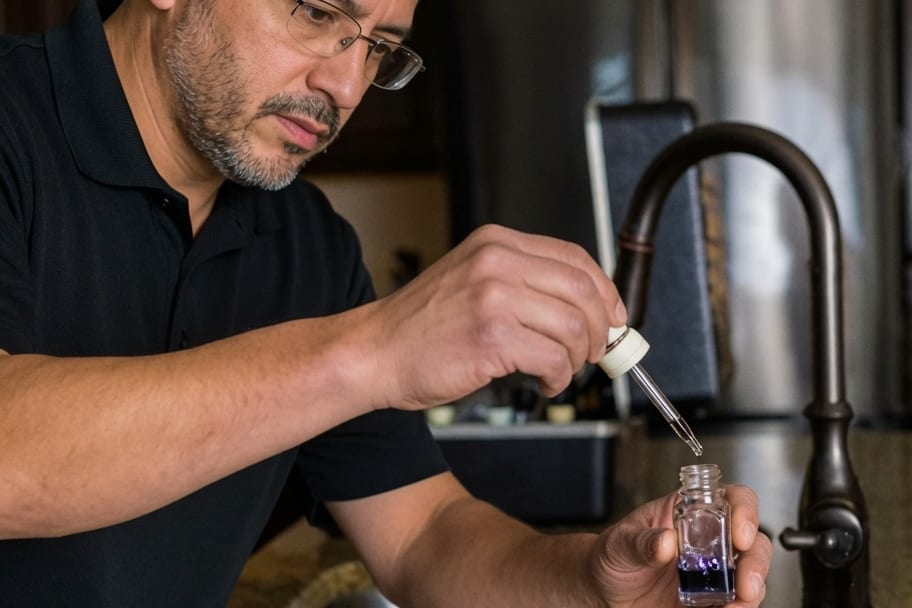
Most of the time it means total coliform was present. Sometimes it means nitrate above 10 mg/L. Occasionally it means a metal over its federal limit. Those carry very different consequences, so find out which one you have first.
| What failed | The reference number | What it usually points at |
|---|---|---|
| Total coliform present | any detection, on a lender’s sample | surface water reaching the well: cap, casing, seal or grout |
| E. coli or fecal coliform | any detection | fecal contamination, the urgent version of the same question |
| Nitrate | EPA maximum contaminant level, 10 mg/L as nitrogen | fertiliser, animal waste or on-site wastewater nearby |
| Arsenic | EPA maximum contaminant level, 0.010 mg/L | natural geology, well specific, not fixed by disinfection |
| Lead | EPA action level, 0.015 mg/L | usually plumbing or well components, not groundwater |
Bacteriological failures are the most common and the ones that most often clear. Our post on a coliform positive well test walks the first 24 hours in full.
Need the lab sheet read before the agents start negotiating? Request a free consultation and we will tell you which of those five rows you are on.
What happens next, and who pays?
North Carolina’s own guidance starts with a confirmation sample, not with a purchase. The NC Division of Public Health’s Biological Analysis Report, the form a well owner receives with a result, prints the recommendation for exactly this case: “It is recommended that your well water be re-tested to verify that the result is accurate.” The form carries separate boxes for an initial sample and a confirmation sample.
A single positive on a well that has never failed is a candidate for a bad sample, a dirty tap aerator or a wet week, not proof of a broken well.
Who pays is set by your purchase contract, not by statute. Three patterns turn up in Triangle deals: the seller cures the problem and pays for the retest, the seller credits the buyer at closing, or the price moves. Which one applies is a question for your agent and the closing attorney, so nothing here is legal advice.
How long does each step take against your closing date?
Plan on two to three weeks for a bacteriological cure and retest, and four to five weeks if anything other than bacteria is on the panel.
| Step | Realistic elapsed time |
|---|---|
| Initial bacteria result | usually about 48 hours after the sample reaches the lab |
| Any other test on the panel | 2 to 4 weeks, per Wake County |
| Confirmation sample, if taken first | add the bacteria turnaround again |
| Disinfecting the well | a day of work, plus a 24-hour chlorine hold |
| Flushing the chlorine out | hours to a day, longer on a low-yield well |
| Retest after disinfection | 24 hours after all chlorine has cleared (Wake County), or seven to ten days after disinfection (NC DEQ) |
| Retest result | the bacteria turnaround again |
Wake County’s instruction to people buying and selling homes is to “Allow 4-5 weeks minimum for testing,” observed on its well water testing page on 20 September 2026. That is the county saying, before anything goes wrong, that the clock does not fit a two-week inspection period.
The two retest intervals above are both published and they do not agree. The 24-hour version asks whether the chlorine is gone; the seven-to-ten-day version asks whether the bacteria come back. Our post on UV versus shock chlorination sources both and explains why the longer wait tells you more, which is the trade you are making against a closing date.
Pro tip: ask for the extension before you need it, not after the retest fails. Written at the same time as the repair request it costs nothing and buys the seven-to-ten-day interval that actually proves something. Asking on the day of closing costs you the stronger position.
Why does the well keep failing after shock chlorination?
Because a repeat positive after disinfection is a well construction problem, and chlorine does not fix a defect. That comes straight from the state.
The NC Division of Public Health’s Biological Analysis Report says it in the letter a homeowner receives: coliform bacteria in well water “indicate that the well may have structural problems or that the well was not properly disinfected.” On the retest it is more specific still: “There may be a problem with the construction of the well, the groundwater source, or operation of the well. The well needs to be inspected by the local health department or a local well contractor.”
NC DEQ’s disinfection handout is just as direct: “you must identify and remedy the source of the bacteria to keep the problem from recurring.” It adds that “usually a properly constructed well can be effectively disinfected,” and if bacteria remain, “you may need to have the well inspected.”
The defects behind a repeat positive are physical, not chemical:
- A well cap that is cracked, loose, missing its gasket or sitting at or below grade
- Casing that is corroded, split at a joint, or terminating too low
- A failed annular seal or grout, so surface water tracks down the outside of the casing
- A wellhead that floods, or sits downhill of a drainfield, a pasture or a regraded driveway
A certified well contractor fixes those, with the county health department inspecting first. We do not drill wells, work on pumps or pressure tanks, or touch casings, caps or grout, and no equipment we could sell you will close a failed grout seal.
Shock chlorination itself is a published procedure rather than a service we sell, and the dosing is not something to take from a page like this one: it depends on the concentration of the product and the volume of water in your well. Wake County and NC DEQ both publish the complete method, contact time and retest interval, and your county health department can tell you if it wants it done differently. If you would rather not handle concentrated chlorine at all, which is reasonable, a certified well contractor does this work.
When is treatment equipment a real remedy?
After the well has been inspected and any defect repaired, and never instead of that.
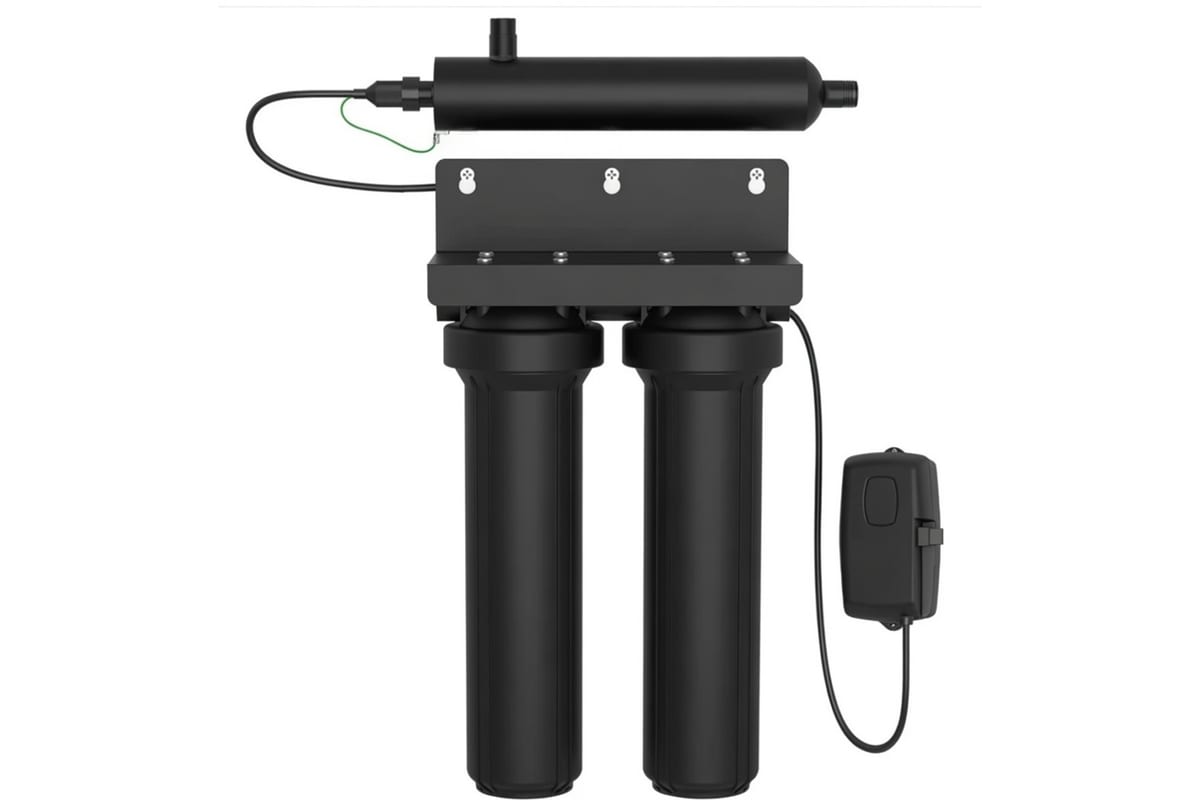
The legitimate case: the wellhead checks out, the well was disinfected, the retest is clean, and the buyer still wants continuous protection because the well is shallow, old or takes surface water after a hard rain. That is what UV water purification is for, at $700 to $1,500 installed here. It needs clear water, so sediment or colour means prefiltration ahead of the lamp.
The papering-over version: the well has failed twice, nobody has looked at the casing, and someone proposes a UV lamp so the next sample passes. That lamp treats the symptom and leaves the defect in the ground for the next owner, and it is the version that gets written into a repair addendum under time pressure.
For non-bacterial failures, equipment is often the correct answer rather than a workaround.
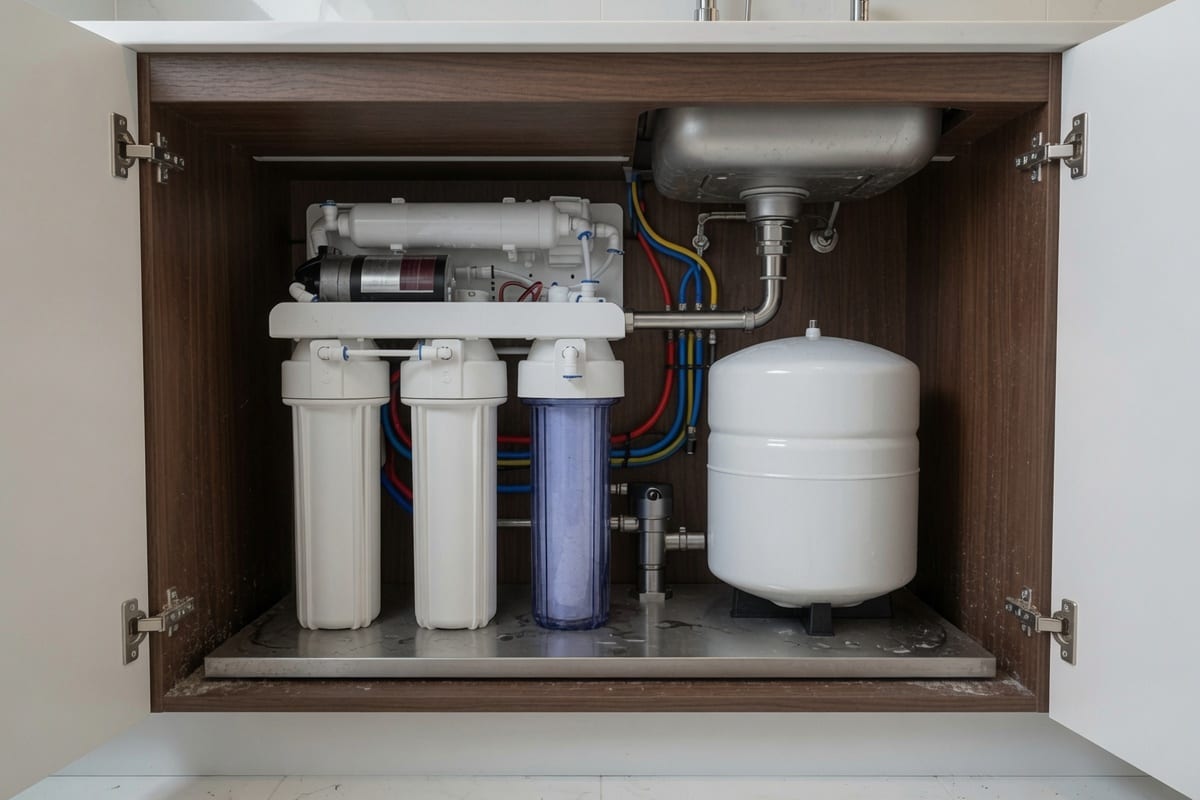
Nitrate above 10 mg/L is usually handled at the tap with under-sink reverse osmosis at $350 to $900 installed.
Staining or a sulfur smell is a whole-house iron and sulfur filter at $1,800 to $3,500.
Every figure here is a planning range and never a quote; the Raleigh water filtration cost guide shows what moves each one.
How do you negotiate a failed well water test?
Separate three questions: what is wrong, what fixing it costs, and who carries it. Deals stall when those get argued as one.
Get the well inspected before anyone agrees what to install. An addendum that names a product before a person has looked at the wellhead commits both sides to a remedy that may not match the fault. A better one names the outcome, a clean retest on a stated interval, and leaves the method to the contractor.
For sellers the cheapest position is the early one. Our guide to selling a home with well water in Raleigh covers disclosure and pre-listing testing: a positive found in March is a different conversation from the same positive eleven days out.
Frequently Asked Questions
What does it mean when a well water test fails for a home sale?
Almost always that total coliform bacteria were detected, an indicator that surface water is reaching the well rather than proof anyone is sick. NC’s Biological Analysis Report recommends a confirmation sample first. Nitrate over 10 mg/L and a metal over its federal limit are the less common failures, and neither responds to disinfection.
Who pays to fix a failed well water test, the buyer or the seller?
Your purchase contract decides, not North Carolina law, so this is a question for your agent and the closing attorney rather than a water company. Around Clayton and Johnston County the common outcomes are a seller-funded cure with a retest, a closing credit, or a price adjustment.
How long does it take to fix a failed well water test before closing?
Two to three weeks is realistic for a bacteriological cure: disinfection with its 24-hour hold, flushing, the retest interval, then the laboratory turnaround. Wake County tells buyers and sellers to “Allow 4-5 weeks minimum for testing” once anything beyond bacteria is on the panel.
The well tested positive again after shock chlorination. What now?
Stop chlorinating and get the well inspected. NC’s Biological Analysis Report says a repeat positive means “there may be a problem with the construction of the well, the groundwater source, or operation of the well,” and that a local health department or well contractor needs to inspect it. A third round of chlorine treats a symptom that will keep coming back.
Can a UV system make a failed well pass?
It can produce a clean sample, which is not the same thing. UV disinfects water flowing through the chamber and does nothing to a cracked casing upstream. After a repair it is a sound buy at $700 to $1,500 installed; instead of one it hands the defect to the next owner. Water testing before and after tells the two cases apart.
Do you perform shock chlorination on wells in the Triangle?
No. Chlorinating a well, extending a casing and replacing a cap belong to a certified well contractor, with your county health department inspecting. We size, install and service treatment equipment in Garner, Fuquay-Varina and across Wake County.
Sources
Agency guidance and county fees change. Confirm the current version before acting on any of it.
- NC Division of Public Health, Biological Analysis Report, read 20 September 2026: the confirmation sample and what a repeat positive means.
- NC DEQ Aquifer Protection Section, How to Disinfect Your Water Well, read 20 September 2026: the seven-to-ten-day retest.
- Wake County, Well Chlorination and Disinfection Guidelines, observed 20 September 2026: doses, the 24-hour hold, flushing, below-grade caps.
- Wake County, well water testing, observed 20 September 2026: turnarounds and “Allow 4-5 weeks minimum for testing”.
- EPA, National Primary Drinking Water Regulations, read 20 September 2026: nitrate, arsenic and the lead action level.
Getting a failed well water inspection resolved in the Triangle
The order that works: confirm the result, inspect the wellhead, repair what is found, disinfect, retest on the longer interval if the calendar allows, and only then decide what equipment the house needs.
We test water and install treatment across Raleigh, Garner, Clayton and Wake Forest, and we are straight about the line: wells, casings and caps belong to a well contractor, water treatment is ours. Call (984) 384-6991 or book a free consultation for an up-front written price on what the results actually call for.